
Xiaomi 17 Ultra vs iPhone 18 Pro Max: Which flagship phone is better?
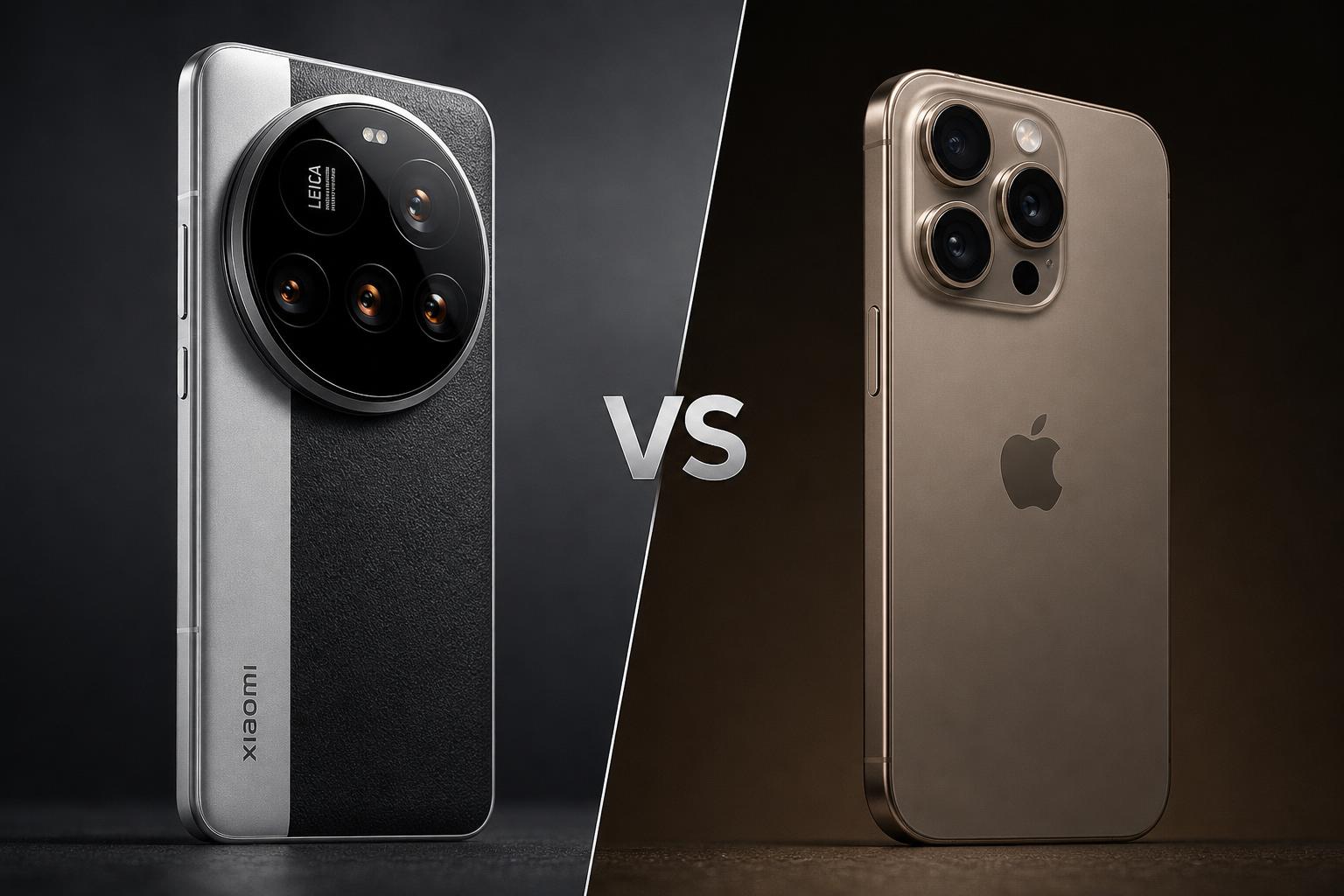
The Xiaomi 17 Ultra and Apple iPhone 18 Pro Max are large, premium smartphones aimed at buyers who want flagship performance, advanced cameras and high-end displays. They take noticeably different approaches. Xiaomi puts substantial emphasis on photography hardware, optical zoom, battery capacity and charging speed. Apple focuses on video production, sustained performance, software integration and broad support.
The Xiaomi 17 Ultra launched globally on February 28, 2026. It starts at £1,299, €1,499 or AU$1,799 with 16GB of RAM and 512GB of storage, although there is no official U.S. availability verified in the research. The iPhone 18 Pro Max was released on September 18, 2026, with a U.S. starting price of $1,299 for 256GB. Both are large 6.9-inch phones with IP68 water and dust resistance, but their camera systems, charging arrangements and software ecosystems are substantially different.
Quick verdict
The Xiaomi 17 Ultra is the more compelling choice for photography enthusiasts and buyers who value a large main camera sensor, long-range optical zoom, generous included storage, a 6000mAh battery and very fast charging. Its 200MP mechanical optical telephoto and 1-inch main camera give it a particularly ambitious still-photography specification.
The iPhone 18 Pro Max is the safer all-round choice for most U.S. buyers and the stronger option for professional video. It has official U.S. availability, Apple’s established ecosystem and service support, long published battery-life ratings, and a creator-focused recording feature set that includes ProRes RAW, Apple Log 2, Genlock and external 4K/120fps recording.
Choose Xiaomi if camera hardware, charging speed and storage matter most and the phone is officially supported in your region. Choose Apple if video production, Apple device integration, predictable support or U.S. carrier compatibility is the priority.
Key specifications comparison
| Specification | Xiaomi 17 Ultra | Apple iPhone 18 Pro Max |
|---|---|---|
| Release | February 28, 2026 | September 18, 2026 |
| Starting price | £1,299 / €1,499 / AU$1,799 for 16GB/512GB | $1,299 for 256GB in the U.S. |
| Display | 6.9-inch HyperRGB OLED, 2608 × 1200, adaptive 1–120Hz | 6.9-inch Super Retina XDR OLED, 2868 × 1320, ProMotion up to 120Hz |
| Peak brightness | Up to 3500 nits multi-scenario peak | Up to 3000 nits outdoor peak |
| Processor | Qualcomm Snapdragon 8 Elite Gen 5 | Apple A20 Pro |
| RAM and storage | 16GB LPDDR5X; 512GB or 1TB | 256GB, 512GB, 1TB or 2TB; RAM not published by Apple |
| Rear cameras | 50MP 1-inch main, 200MP mechanical optical telephoto, 50MP ultrawide | 48MP main, 48MP ultrawide, 48MP 4x telephoto |
| Battery and charging | 6000mAh; 90W wired; 50W wireless | Up to 30 hours typical use; up to 50% in around 15 minutes with a compatible 60W-capable adapter |
| Weight | 218.4g or 219g, depending on colour | 249g |
| Water resistance | IP68 | IP68 |
| Software | HyperOS 3 | iOS 27 |
Design and build
Both phones are large, premium devices with 6.9-inch screens and IP68 water and dust resistance. Neither is a compact flagship, so buyers who prefer smaller phones should consider their size and weight carefully before choosing either model.
The Xiaomi 17 Ultra measures 162.9 × 77.6 × 8.29mm. It weighs 218.4g in black or white and 219g in Starlit Green. Its construction uses an aluminum frame and composite-fiberglass back. That makes it slightly thinner and substantially lighter than the iPhone 18 Pro Max, although the Xiaomi remains a large camera-focused phone.
The iPhone 18 Pro Max measures 163.4 × 78.0 × 8.75mm and weighs 249g. It uses an aluminum unibody with Ceramic Shield front and back. The additional weight is noticeable on the specification sheet: the iPhone is roughly 30g heavier than the Xiaomi. That may matter to buyers who regularly use a phone one-handed or carry it for long periods.
Apple’s listed model uses dual eSIM and does not support a physical SIM card. Xiaomi’s global network compatibility varies by country and carrier, and regional differences can affect bands, services and accessories. The Xiaomi also includes an IR blaster, dual stereo speakers and USB-C. The iPhone has USB-C with USB 3 speeds up to 10Gb/s, MagSafe and Qi2 wireless charging up to 25W, and a LiDAR Scanner.
Display
The Xiaomi 17 Ultra and iPhone 18 Pro Max both use large OLED displays with adaptive refresh rates reaching 120Hz. Both should therefore be suitable for smooth scrolling, video and demanding games based on their listed display features, although no directly comparable hands-on or independent display test is being claimed here.
Xiaomi specifies a 6.9-inch HyperRGB OLED panel with a 2608 × 1200 resolution, 12-bit colour, DCI-P3 coverage, Dolby Vision and HDR10+. Its adaptive 1–120Hz LTPO refresh rate is designed to vary according to the content, while its listed multi-scenario peak brightness reaches 3500 nits.
The iPhone 18 Pro Max has a 6.9-inch Super Retina XDR OLED display with 2868 × 1320 resolution at 460 pixels per inch. It supports ProMotion up to 120Hz, an Always-On display, Dynamic Island and HDR. Apple specifies up to 3000 nits outdoor peak brightness.
On paper, Xiaomi has the higher stated peak brightness, while Apple offers a higher listed resolution and additional interface features such as the Always-On display and Dynamic Island. The difference between the two is unlikely to be decided by refresh rate, since both reach 120Hz; buyers should instead consider the wider phone ecosystem and camera requirements alongside the display specifications.
Performance
The Xiaomi 17 Ultra uses Qualcomm’s Snapdragon 8 Elite Gen 5 Mobile Platform, built on a 3nm process. Its CPU has two cores reaching up to 4.6GHz and six cores reaching up to 3.62GHz, alongside an Adreno GPU. Xiaomi also specifies 3D Dual-Channel IceLoop cooling.
The phone includes 16GB of LPDDR5X RAM and either 512GB or 1TB of UFS 4.1 storage. That is a generous baseline, particularly for buyers who store high-resolution photos, video or large games locally.
The iPhone 18 Pro Max uses Apple’s A20 Pro chip. Its listed hardware includes a six-core CPU, seven-core GPU with Neural Accelerators, a dual 16-core Neural Engine, hardware-accelerated ray tracing and next-generation vapor-chamber cooling. Apple offers 256GB, 512GB, 1TB and 2TB storage options, but does not publish a RAM capacity on its official technical-specifications page.
Both phones therefore have current flagship platforms and dedicated cooling or efficiency features. The Xiaomi provides a clearly stated 16GB of RAM, while the iPhone offers a 2TB maximum storage option and specific graphics features such as hardware ray tracing. No directly comparable independent benchmark result was verified for this comparison, so it would not be appropriate to declare a numerical performance winner.
For demanding games and applications, the iPhone’s A20 Pro, Neural Accelerators, ray tracing and vapor chamber make it a strong specification-led option. The Xiaomi’s Snapdragon platform, Adreno graphics and dedicated cooling also target demanding workloads. Actual results may vary by application, software version and region.
Camera and graphics
Xiaomi 17 Ultra: photography-led hardware
The Xiaomi 17 Ultra has the more unusual still-photography specification. Its Leica camera system combines a 50MP 1-inch main camera with an f/1.67 aperture and optical image stabilisation, a 200MP mechanical optical telephoto with OIS, and a 50MP 14mm ultrawide camera. The telephoto covers 75–100mm and offers up to 17.2x optical-level zoom. There is also a 50MP autofocus front camera.
This configuration gives Xiaomi a clear hardware advantage for buyers who prioritise sensor size, high-resolution telephoto photography and long-range optical zoom. The 1-inch main sensor is particularly notable on a smartphone, while the mechanical telephoto is a specialised feature that distinguishes the phone from more conventional multi-camera designs.
For video, the Xiaomi supports rear recording up to 8K at 30fps, 4K Dolby Vision up to 120fps and 4K/120fps Log recording. Feature availability and the practical workflow can vary by software version and region, but the listed modes give the phone a broad high-resolution video specification as well as its photography focus.
iPhone 18 Pro Max: professional video tools
The iPhone 18 Pro Max uses a 48MP Pro Fusion camera system. It includes a 48MP main camera with a variable f/1.48–f/4.0 aperture and second-generation sensor-shift optical image stabilisation, a 48MP ultrawide and a 48MP 4x telephoto. Apple specifies optical-quality 8x telephoto output. The front camera is an 18MP Center Stage camera.
Apple’s strongest advantage is its documented professional video workflow. The iPhone supports 4K Dolby Vision up to 120fps, ProRes up to 4K/120fps with external recording, ProRes RAW, Apple Log 2 and Genlock. These tools are aimed at creators who need advanced capture, editing and synchronisation options rather than simply high-resolution video recording.
The choice is therefore less about a single camera winner and more about the type of content being created. Xiaomi is the more compelling specification-led choice for still photography and long-range optical zoom. Apple is the stronger fit for professional video production and users already working with Apple devices and services.
Battery and charging
The Xiaomi 17 Ultra has a 6000mAh typical Xiaomi Surge battery. It supports 90W wired HyperCharge, 50W wireless HyperCharge and up to 22.5W wired reverse charging. These are substantially faster advertised charging rates than those listed for the iPhone, and the Xiaomi is the clear choice for buyers who value rapid top-ups and a larger stated battery capacity.
The iPhone 18 Pro Max has a built-in rechargeable lithium-ion battery. Apple rates it for up to 30 hours of typical use, up to 45 hours of video playback and up to 40 hours of streamed video playback. It can reach up to 50% charge in around 15 minutes when used with a compatible USB-C cable and a 60W-capable adapter. It also supports MagSafe and Qi2 wireless charging up to 25W.
These specifications should be interpreted carefully. Xiaomi’s battery capacity and charging rates are not directly comparable with Apple’s published endurance figures, and no directly comparable battery test was verified. The Xiaomi wins on capacity and charging speed on paper. Apple provides the more standardised official endurance claims.
Software and features
The Xiaomi 17 Ultra runs HyperOS 3 and includes Xiaomi HyperAI, Gemini integration, HyperIsland and HyperConnect. Xiaomi notes that feature availability varies by region and language. The phone also includes an IR blaster, which may be useful for controlling compatible equipment, and Wi-Fi 7 capability, Bluetooth 6.0 and USB-C.
The iPhone 18 Pro Max runs iOS 27 and includes Apple Intelligence, Siri AI, Face ID, satellite emergency features and Apple ecosystem integration. Its software experience is particularly relevant to buyers who already use Apple products and want continuity across devices and services. The phone also supports Wi-Fi 7 and Bluetooth 6.
There are practical regional considerations for both models. Xiaomi’s AI features, included charger, network bands and software services may vary by region. The iPhone 18 Pro Max listed here uses dual eSIM and has no physical SIM support. Buyers should check local carrier compatibility before ordering either phone, especially if importing the Xiaomi.
Price and value
The Xiaomi 17 Ultra costs £1,299, €1,499 or AU$1,799 for 16GB of RAM and 512GB of storage. A 1TB version costs £1,499, €1,699 or AU$1,999. No official U.S. availability was verified, so U.S. buyers may not receive the same official warranty, carrier support or service access associated with a locally sold flagship.
The iPhone 18 Pro Max starts at $1,299 in the U.S. with 256GB of storage. It is also available with 512GB, 1TB and 2TB, although the verified research does not provide prices for those higher-capacity versions. Its broad U.S. carrier availability and established Apple service support make the ownership proposition more predictable for American buyers.
Value depends heavily on location and priorities. Xiaomi offers twice the starting storage capacity of the iPhone and includes 16GB of RAM, as well as a larger battery and faster charging. Its camera hardware is also more ambitious in areas such as sensor size and optical telephoto zoom. Apple’s value comes from official availability, ecosystem integration, video-production features and a documented support path.
Xiaomi 17 Ultra: pros and cons
Pros
- Highly specialised Leica camera system with a 1-inch main camera.
- 200MP mechanical optical telephoto with OIS and up to 17.2x optical-level zoom.
- 6000mAh battery with 90W wired and 50W wireless charging.
- Very bright 6.9-inch OLED display with adaptive 1–120Hz refresh rate.
- 16GB of RAM and at least 512GB of storage.
- Lighter and thinner than the iPhone 18 Pro Max.
Cons
- No official U.S. availability was verified.
- Large, heavy camera-focused design despite weighing less than the iPhone.
- Regional differences may affect network bands, AI features, included charger and services.
- No directly comparable official battery-endurance test figure was verified.
iPhone 18 Pro Max: pros and cons
Pros
- Extensive creator video support, including ProRes RAW, Apple Log 2 and Genlock.
- Up to 2TB storage option.
- Apple A20 Pro with hardware ray tracing and Neural Accelerators.
- Official U.S. availability and established Apple service and ecosystem support.
- Published ratings of up to 30 hours of typical use and 45 hours of video playback.
- MagSafe and Qi2 wireless charging, Face ID and satellite emergency features.
Cons
- Higher starting price than Xiaomi in regions where both have official pricing.
- Heavier at 249g.
- Substantially slower advertised wired and wireless charging than Xiaomi.
- Apple does not publish RAM capacity on its official technical specifications page.
- No physical SIM card support on the listed models.
Which phone is better for different buyers?
Best for most U.S. buyers: iPhone 18 Pro Max
The iPhone 18 Pro Max is the better general recommendation for most U.S. buyers because official U.S. availability, carrier support, service access and Apple ecosystem integration reduce purchasing uncertainty. It also offers a balanced flagship package covering performance, display, cameras, battery ratings and software.
Best for photography enthusiasts: Xiaomi 17 Ultra
The Xiaomi 17 Ultra is the more interesting choice for still photography. Its 1-inch main camera, 200MP mechanical optical telephoto and up to 17.2x optical-level zoom are more specialised than the iPhone’s camera arrangement. Buyers should confirm regional support before importing one.
Best for professional video: iPhone 18 Pro Max
The iPhone is the stronger choice for creators who need ProRes RAW, Apple Log 2, Genlock, Dolby Vision or external 4K/120fps recording. Those features make it particularly suitable for an Apple-centred production workflow.
Best for battery capacity and charging: Xiaomi 17 Ultra
Xiaomi wins if the deciding factors are a large stated battery and rapid charging. Its 6000mAh battery, 90W wired charging and 50W wireless charging are well ahead of the iPhone’s listed charging rates. Apple remains attractive for buyers who prefer its official endurance ratings.
Best for value: Xiaomi 17 Ultra where officially supported
Where it is sold and supported officially, the Xiaomi offers more base storage, stated RAM, faster charging and more ambitious camera hardware. The iPhone can be the better value for buyers who place a high value on Apple support, ecosystem features and professional video tools.
Final verdict
The Xiaomi 17 Ultra and iPhone 18 Pro Max are both premium flagships, but they are designed around different priorities. Xiaomi offers the more striking hardware package for photography, with a 1-inch main camera and a 200MP mechanical optical telephoto, while also delivering a larger battery, faster charging and 512GB of storage as standard.
Apple answers with a more established and predictable ecosystem, broad U.S. availability, long published battery ratings and a deeper set of professional video tools. Its A20 Pro platform and cooling system also make it a strong option for demanding applications and games, although no direct benchmark winner can be claimed from the verified research.
For most U.S. buyers, the iPhone 18 Pro Max is the safer overall purchase. For photography-focused buyers in a supported market, the Xiaomi 17 Ultra may offer better hardware value. The final decision should come down to camera style, video requirements, charging preferences, storage needs and the availability of official support in your country.
FAQs
Is the Xiaomi 17 Ultra cheaper than the iPhone 18 Pro Max?
Prices are listed in different regional currencies. Xiaomi starts at £1,299, €1,499 or AU$1,799 with 16GB of RAM and 512GB of storage. The iPhone 18 Pro Max starts at $1,299 in the U.S. with 256GB. Xiaomi may offer stronger specification value where both phones are officially sold, but there is no verified official U.S. price or availability for the Xiaomi.
Which phone has the better camera?
The Xiaomi 17 Ultra has the more specialised still-photography hardware, including a 1-inch 50MP main camera and 200MP mechanical optical telephoto. The iPhone 18 Pro Max has the more extensively documented professional video feature set, including ProRes RAW, Apple Log 2 and Genlock. The better choice depends on whether still photography or advanced video is more important.
Which phone charges faster?
The Xiaomi 17 Ultra charges faster on paper. It supports 90W wired HyperCharge and 50W wireless HyperCharge. The iPhone 18 Pro Max can reach up to 50% in around 15 minutes with a compatible 60W-capable adapter and cable, and supports MagSafe and Qi2 wireless charging up to 25W.
Which phone has the longer battery life?
There is no directly comparable verified battery test for both phones. Xiaomi has the larger stated 6000mAh battery, while Apple publishes ratings of up to 30 hours of typical use, 45 hours of video playback and 40 hours of streamed video playback. Xiaomi leads on capacity; Apple provides the clearer official endurance figures.
Is the iPhone 18 Pro Max heavier than the Xiaomi 17 Ultra?
Yes. The iPhone 18 Pro Max weighs 249g. The Xiaomi 17 Ultra weighs 218.4g in black or white and 219g in Starlit Green, making the iPhone approximately 30g heavier.
Which phone is better for gaming?
Both use flagship processors and dedicated cooling features. The iPhone has an A20 Pro chip with hardware-accelerated ray tracing, Neural Accelerators and vapor-chamber cooling. Xiaomi uses Snapdragon 8 Elite Gen 5 with an Adreno GPU and 3D Dual-Channel IceLoop cooling. No directly comparable independent benchmark result was verified, so neither can be declared the definite gaming winner from these specifications alone.
Sources
- Xiaomi Global: Xiaomi 17 Ultra specifications
- Xiaomi Global: Xiaomi 17 Ultra product page
- Xiaomi Global: Xiaomi 17 Ultra FAQ
- TechRadar: Xiaomi 17 Ultra review
- Apple: iPhone 18 Pro and iPhone 18 Pro Max technical specifications
- Apple Newsroom: iPhone 18 Pro and iPhone 18 Pro Max
- Apple: Shop iPhone 18 Pro and iPhone 18 Pro Max