
Samsung Galaxy S26 Ultra vs Xiaomi 17 Ultra: Which Flagship Phone Is Better?
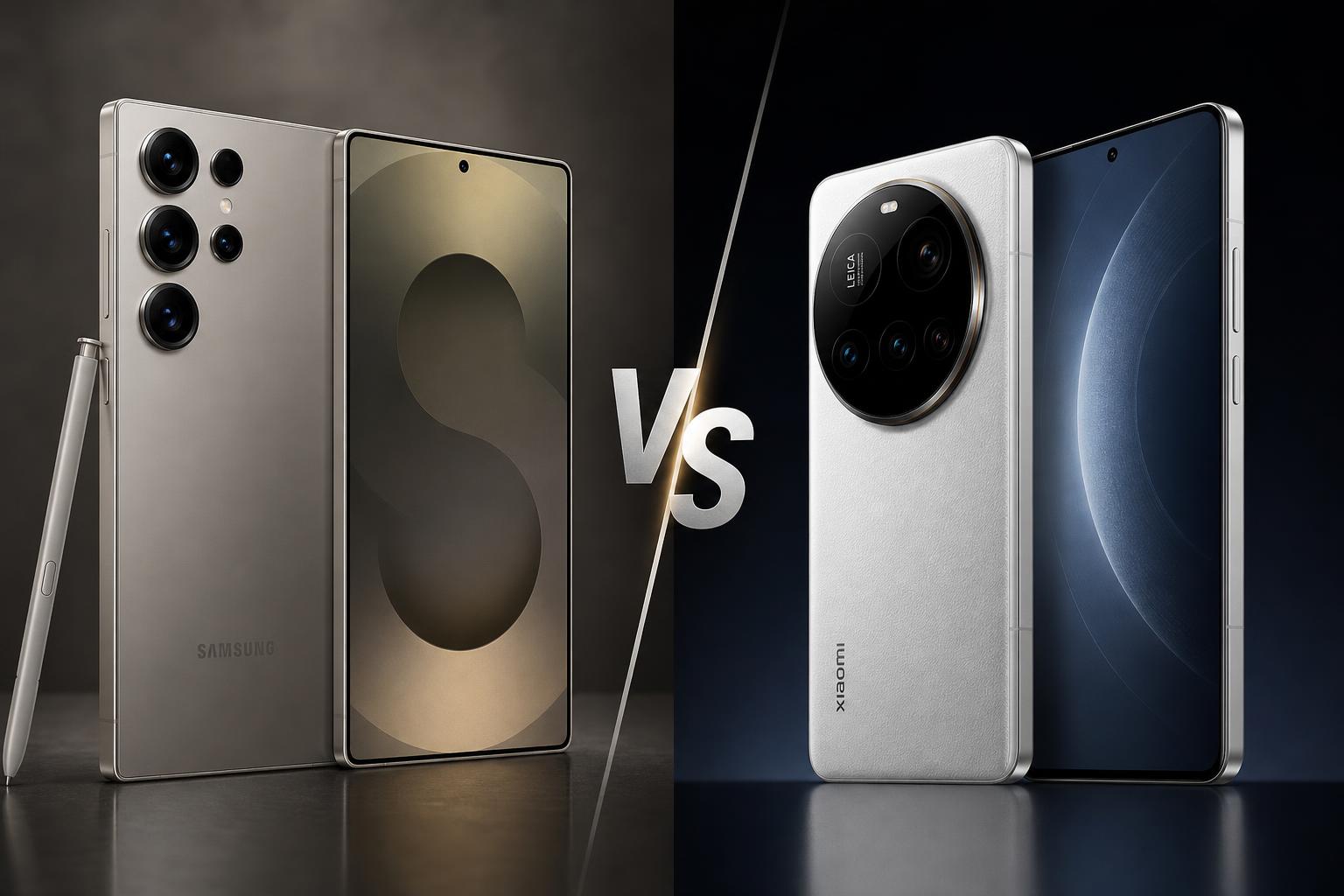
The Samsung Galaxy S26 Ultra and Xiaomi 17 Ultra are two of the most ambitious Android flagships of 2026. Both use Qualcomm’s Snapdragon 8 Elite Gen 5 platform, both offer 120Hz displays and both target buyers who want premium cameras, high-end performance and advanced software features.
However, they take different approaches. Samsung focuses on a complete productivity and ecosystem experience, adding an integrated S Pen, Samsung DeX, built-in Privacy Display technology and a documented seven-year update commitment. Xiaomi puts more emphasis on camera hardware, battery capacity, charging speed and Leica-developed imaging features.
There is also an important availability difference. The Galaxy S26 Ultra has official United States availability, while no official US price or availability for the Xiaomi 17 Ultra was verified in the research for this comparison. That makes the Xiaomi more compelling on paper for European buyers, but Samsung the safer choice for many US customers.
Quick verdict
The Samsung Galaxy S26 Ultra is the better all-round choice for most United States buyers. It is thinner and lighter, has a sharper QHD+ display, includes an S Pen, supports DeX and offers seven years of OS and security updates. Its official US availability and carrier support also matter when choosing a long-term flagship.
The Xiaomi 17 Ultra is the more exciting hardware proposition for photography-focused buyers. It has a 1-inch main camera sensor, a 200MP telephoto with mechanical optical zoom, a larger 6000mAh battery, 90W wired charging and 50W wireless charging. Its global configuration also starts with 16GB of RAM and 512GB of storage. The trade-offs are greater weight, a lower stated display resolution, regional software differences and the lack of verified official US availability.
Key specifications comparison
| Specification | Samsung Galaxy S26 Ultra | Xiaomi 17 Ultra |
|---|---|---|
| Release | March 11, 2026 | February 28, 2026 global launch; December 2025 Chinese mainland launch |
| Display | 6.9-inch QHD+ Dynamic AMOLED 2X, 1–120Hz, up to 2600 nits, built-in Privacy Display | 6.9-inch Xiaomi HyperRGB OLED, 2608 x 1200, 1–120Hz, up to 3500 nits, 12-bit color |
| Processor | Snapdragon 8 Elite Gen 5 for Galaxy, 3nm | Snapdragon 8 Elite Gen 5, 3nm, up to 4.6GHz prime-core frequency |
| Memory and storage | 12GB with 256GB or 512GB; 16GB with 1TB | 16GB LPDDR5X with 512GB or 1TB UFS 4.1 |
| Rear cameras | 200MP wide, 50MP ultrawide, 10MP 3x telephoto, 50MP 5x telephoto | 50MP 1-inch Leica main, 200MP Leica 75–100mm telephoto, 50MP ultrawide |
| Battery and charging | 5000mAh; up to 75% in approximately 30 minutes with Super Fast Charging 3.0 | 6000mAh; 90W wired and 50W wireless HyperCharge |
| Software | Android 16 with One UI 8.5; seven years of OS and security updates | Xiaomi HyperOS 3 with Xiaomi HyperAI |
| Dimensions and weight | 163.6 x 78.1 x 7.9mm; 214g | 162.9 x 77.6 x 8.29mm; 218.4–219g |
| Starting official price | $1,399.99 for 256GB in the US; 512GB listed at $1,599.99 on Samsung’s November 2026 MSRP | €1,499 global launch price; UK pricing from £1,299 to £1,499 depending on configuration |
Design and build
The Galaxy S26 Ultra has the slimmer and lighter design of these two phones. It measures 7.9mm thick and weighs 214g, compared with 8.29mm and approximately 218.4–219g for the Xiaomi 17 Ultra. That difference is not enormous, but it may be noticeable if the phone is carried throughout the day or used one-handed.
Samsung’s most distinctive physical feature is the integrated S Pen. This gives the Galaxy S26 Ultra a built-in stylus for note-taking and productivity tasks without requiring a separate accessory. Samsung also includes DeX, allowing the phone to play a more desktop-oriented role within the company’s wider ecosystem.
The Galaxy also has a built-in Privacy Display. This is designed to make content harder for people beside you to view, which can be useful for messages, work information or financial details in public places. Samsung’s research notes that the feature can reduce viewing angles and may affect brightness or clarity in some situations, so it is a practical feature rather than an unconditional display upgrade.
The Xiaomi 17 Ultra has a more camera-focused design. Its large Leica camera module reflects the phone’s emphasis on photography hardware, but it also adds bulk to the rear. Xiaomi lists IP68 water and dust resistance, while the available research does not identify an equivalent Galaxy S26 Ultra protection specification in the verified product details provided here.
On connectivity, Xiaomi lists Wi-Fi 7 capability and Bluetooth 6.0. Dual-SIM and eSIM configurations vary by region. Samsung has official unlocked availability and carrier support in the United States, which is a significant practical advantage for American buyers.
Display
Samsung offers the sharper display specification. The Galaxy S26 Ultra uses a 6.9-inch QHD+ Dynamic AMOLED 2X panel with a 1–120Hz adaptive refresh rate and up to 2600 nits peak brightness. The QHD+ resolution should appeal to buyers who prioritise maximum image sharpness, particularly for text, detailed photographs and other fine content.
The built-in Privacy Display gives Samsung a feature that Xiaomi does not match in the verified specifications. It is particularly relevant to commuters, frequent travellers and professionals who regularly use their phones in shared spaces. The possible compromises are reduced viewing angles and the potential effect on brightness or clarity in some situations.
Xiaomi uses a 6.9-inch HyperRGB OLED display with a 2608 x 1200 resolution, a 1–120Hz refresh rate and a stated multi-scenario peak brightness of up to 3500 nits. It also supports 12-bit color, HDR10+ and Dolby Vision. On the published numbers, Xiaomi has the advantage in peak brightness and color depth, while Samsung leads in resolution and privacy functionality.
Both phones therefore have a strong display case, but they suit different priorities. Choose Samsung for QHD+ sharpness and a hardware privacy mode. Choose Xiaomi for the higher stated brightness, 12-bit color and Dolby Vision support.
Performance
Both flagships use a 3nm Snapdragon 8 Elite Gen 5 platform, so their core silicon is closely matched. Samsung uses a Galaxy-customized version called Snapdragon 8 Elite Gen 5 for Galaxy. Xiaomi lists a prime-core frequency of up to 4.6GHz and an Adreno GPU.
In everyday use, the processor choice alone does not create a clear winner based on the verified information. Both phones are positioned as high-performance devices for demanding applications, multitasking and gaming, but no directly comparable independent benchmark results were provided in the research.
Xiaomi has an advantage in standard memory for its global models. The Xiaomi 17 Ultra comes with 16GB of LPDDR5X RAM and either 512GB or 1TB of UFS 4.1 storage. Samsung offers 12GB of RAM with 256GB or 512GB, while the 1TB Galaxy configuration increases memory to 16GB.
Xiaomi also advertises a 3D dual-channel IceLoop cooling system. Samsung’s advantages are less about headline memory and more about software and ecosystem integration, including One UI, Galaxy AI, DeX and the company’s US support network.
For raw platform potential, this is close to a tie. Xiaomi provides more RAM and storage at the starting global configuration, while Samsung offers a more established combination of regional support, productivity features and software integration for US users.
Camera and video features
The Xiaomi 17 Ultra has the more ambitious camera hardware. Its main camera uses a 50MP 1-inch Leica sensor with optical image stabilisation. A larger sensor can be an important foundation for photography, although final image results also depend on processing, lenses and shooting conditions.
Xiaomi’s standout component is its 200MP Leica telephoto camera with optical image stabilisation and mechanical optical zoom across a 75–100mm range. The phone also has a 50MP 14mm ultrawide camera and a 50MP autofocus front camera. Leica features and controls add to its appeal for buyers who want a camera-focused flagship rather than a general-purpose phone with capable cameras.
The Galaxy S26 Ultra takes a different approach with four rear cameras: a 200MP f/1.4 wide camera with autofocus, a 50MP f/1.9 ultrawide with autofocus, a 10MP 3x telephoto with autofocus and a 50MP 5x telephoto with autofocus. It supports 3x and 5x optical zoom, 2x and 10x optical-quality zoom and up to 100x digital zoom.
Samsung’s dedicated 3x and 5x telephoto cameras provide a versatile range for portraits, distant subjects and travel photography. Its strengths also include low-light processing, AI editing, stabilisation and a broad set of software features. The integrated S Pen could be useful for camera-related workflows and editing, although the verified information does not establish specific S Pen camera controls.
For video, Samsung supports 8K recording at 30fps and 4K video at 120fps in Pro Video. Xiaomi supports 8K video at 30fps, 4K Dolby Vision up to 120fps and Log video up to 4K at 120fps. Xiaomi is therefore particularly attractive to creators who want a large main sensor, mechanical optical zoom, Leica modes and advanced video formats. Samsung is the more balanced option for users who value a wider range of cameras, AI editing and Samsung’s productivity ecosystem.
Battery and charging
Xiaomi has the clear hardware advantage in battery capacity and charging speed. The Xiaomi 17 Ultra has a 6000mAh typical Surge battery, 90W wired HyperCharge and 50W wireless HyperCharge. These specifications make it the stronger choice for buyers who prioritise shorter charging times and a larger battery reserve.
The Galaxy S26 Ultra uses a 5000mAh typical battery. Samsung claims up to 31 hours of video playback and says Super Fast Charging 3.0 can reach up to 75% charge in approximately 30 minutes. Those manufacturer claims are not directly comparable with Xiaomi’s battery and charging specifications because testing methods and conditions may differ.
On hardware capacity and charging speed, Xiaomi wins. Samsung’s battery case is based more on its published video-playback claim, its thinner and lighter body, and its wider availability of compatible support and accessories in the United States.
Software and features
The Galaxy S26 Ultra runs Android 16 with One UI 8.5. It includes Galaxy AI features, Photo Assist and Now Brief, as well as Now Nudge. Samsung also commits to seven years of OS and security updates, which is one of the phone’s strongest long-term advantages.
The integrated S Pen expands the phone beyond standard touch input. It can make the Galaxy more useful for handwritten notes, marking up information and other productivity tasks. Samsung DeX adds another differentiator by supporting a desktop-style experience within the Samsung ecosystem.
The Xiaomi 17 Ultra runs Xiaomi HyperOS 3 and includes Xiaomi HyperAI features. Google Gemini and Circle to Search are available depending on region, language, device and compatible apps. This regional variation matters for international buyers because AI functionality may not be identical across markets.
Xiaomi’s software is closely connected to its Leica camera system and high-end imaging controls. However, buyers moving from Samsung or stock Android may need time to adjust to HyperOS. Regional differences can also affect eSIM support, network bands, AI features, charger inclusion and other compatibility details.
Samsung is the stronger choice for long-term software certainty, updates, productivity and a consistent US ecosystem. Xiaomi remains appealing to buyers who prioritise camera tools and hardware specifications, particularly in markets where the phone is officially sold and supported.
Price and value
The Galaxy S26 Ultra starts at $1,399.99 in the United States for the 256GB model. Samsung’s November 2026 MSRP lists the 512GB version at $1,599.99. The current US MSRP is higher than the launch price reported by major reviews, so shoppers should distinguish between launch pricing and the official MSRP listed in the available research.
The Xiaomi 17 Ultra launched globally at €1,499. Official Xiaomi UK pricing ranges from £1,299 to £1,499 depending on configuration. There is no official United States price or availability verified for the Xiaomi 17 Ultra, so its European pricing should not be converted into a direct US comparison.
On hardware per euro or pound, Xiaomi offers a persuasive package: 16GB of RAM, 512GB of base storage in global models, a 6000mAh battery, faster charging and more specialised camera hardware. For European buyers who can obtain the phone through official local channels, it may offer more headline hardware for the money.
Samsung is the safer value for United States customers. Its price includes access to official US availability, carrier compatibility, unlocked models, Samsung support, DeX, the S Pen and a seven-year software-support commitment. Those features may matter more over several years than the Xiaomi’s stronger camera and charging specifications.
Samsung Galaxy S26 Ultra: pros and cons
Pros
- Sharper QHD+ display with a 1–120Hz adaptive refresh rate.
- Distinctive built-in Privacy Display.
- Integrated S Pen and Samsung DeX.
- Versatile four-camera system with dedicated 3x and 5x telephoto cameras.
- Seven years of OS and security updates.
- Official US availability, carrier support and unlocked models.
- Thinner and lighter than the Xiaomi 17 Ultra.
Cons
- Smaller battery and slower charging than the Xiaomi on paper.
- The 10MP 3x telephoto is less ambitious than Xiaomi’s 200MP optical-zoom telephoto.
- Higher current US MSRP than the launch price reported by major reviews.
- The large camera island can make the phone wobble on flat surfaces.
- Privacy Display may reduce viewing angles and affect brightness or clarity in some situations.
Xiaomi 17 Ultra: pros and cons
Pros
- 6000mAh battery with 90W wired and 50W wireless charging.
- Large 1-inch Leica main camera sensor.
- 200MP telephoto with 75–100mm mechanical optical zoom.
- 16GB of RAM and 512GB base storage in the global configuration.
- Very bright stated 3500-nit display with 12-bit color.
- Leica imaging features and advanced video formats.
- IP68 water and dust resistance.
Cons
- No official United States availability or US price was verified.
- Slightly thicker and heavier than the Galaxy S26 Ultra.
- Large camera module adds bulk.
- HyperOS may require adjustment for users coming from Samsung or stock Android.
- Regional differences may affect eSIM, network bands, AI features and charger inclusion.
- Lower global display resolution than the Galaxy S26 Ultra.
Which phone is better for different buyers?
Best for most United States buyers: Samsung Galaxy S26 Ultra
The Galaxy S26 Ultra is the safer recommendation in the US because it has official availability, carrier compatibility, unlocked models and Samsung support. Its seven-year update commitment, S Pen, DeX and Privacy Display also make it a more complete long-term device.
Best for camera-focused buyers: Xiaomi 17 Ultra
The Xiaomi 17 Ultra is the better choice for buyers who prioritise camera hardware above everything else. Its 1-inch Leica main sensor, 200MP mechanical optical-zoom telephoto and Leica features give it a more specialised photographic identity.
Best for battery life and charging: Xiaomi 17 Ultra
The 6000mAh battery, 90W wired charging and 50W wireless charging give Xiaomi the clear hardware advantage. Samsung publishes a strong video-playback claim, but Xiaomi is the better fit for buyers who value capacity and charging speed.
Best for productivity: Samsung Galaxy S26 Ultra
The integrated S Pen, Samsung DeX, Galaxy AI tools and long update commitment make Samsung the stronger productivity phone. It is also the more natural choice for buyers already using other Galaxy devices.
Best value for European hardware enthusiasts: Xiaomi 17 Ultra
For European buyers who can purchase the Xiaomi through official local channels, its 16GB RAM, 512GB starting storage, larger battery and more advanced camera hardware make it attractive on specifications per pound or euro.
Final verdict
The Samsung Galaxy S26 Ultra and Xiaomi 17 Ultra are both high-end Android flagships, but they are optimised for different priorities. Samsung delivers the more rounded ownership experience: a sharper display, slimmer body, integrated S Pen, DeX, Privacy Display, official US support and seven years of updates.
Xiaomi delivers the more aggressive hardware package. It has the larger battery, much faster charging, more RAM and storage at the global starting configuration, a 1-inch main camera and a 200MP mechanical optical-zoom telephoto. For photography enthusiasts and European buyers who want maximum hardware, it is the more exciting option.
For most United States shoppers, choose the Samsung Galaxy S26 Ultra. Choose the Xiaomi 17 Ultra if camera hardware, battery capacity and charging speed matter more than official US availability, Samsung’s ecosystem and long-term software certainty.
FAQs
Which phone has the better camera, the Galaxy S26 Ultra or Xiaomi 17 Ultra?
The Xiaomi 17 Ultra has the more ambitious camera hardware, including a 1-inch Leica main camera and a 200MP telephoto with mechanical optical zoom. The Galaxy S26 Ultra has a versatile four-camera system with dedicated 3x and 5x telephoto cameras, as well as Samsung’s AI editing, stabilisation and processing features.
Which phone has the longer software support?
The Samsung Galaxy S26 Ultra has a documented commitment to seven years of OS and security updates. The verified research does not provide an equivalent duration for the Xiaomi 17 Ultra.
Does the Xiaomi 17 Ultra have a bigger battery?
Yes. The Xiaomi 17 Ultra has a 6000mAh typical battery, compared with 5000mAh for the Galaxy S26 Ultra. Xiaomi also supports 90W wired and 50W wireless charging, while Samsung claims up to 75% charge in approximately 30 minutes with Super Fast Charging 3.0.
Which phone is better for the display?
Samsung offers the higher QHD+ resolution and a built-in Privacy Display. Xiaomi offers a higher stated peak brightness of up to 3500 nits, 12-bit color, HDR10+ and Dolby Vision. The better choice depends on whether you prioritise sharpness and privacy or brightness and color depth.
Is the Xiaomi 17 Ultra officially available in the United States?
No official United States price or availability was verified in the research used for this comparison. The Galaxy S26 Ultra has official US availability, including unlocked models and carrier support.
Which phone is better for productivity?
The Galaxy S26 Ultra is better suited to productivity because it includes an integrated S Pen, Samsung DeX, Galaxy AI features and a seven-year update commitment. The Xiaomi 17 Ultra is more strongly focused on camera hardware and imaging features.