Google Pixel 11 vs Samsung Galaxy S26: Which Flagship Phone Is Better?
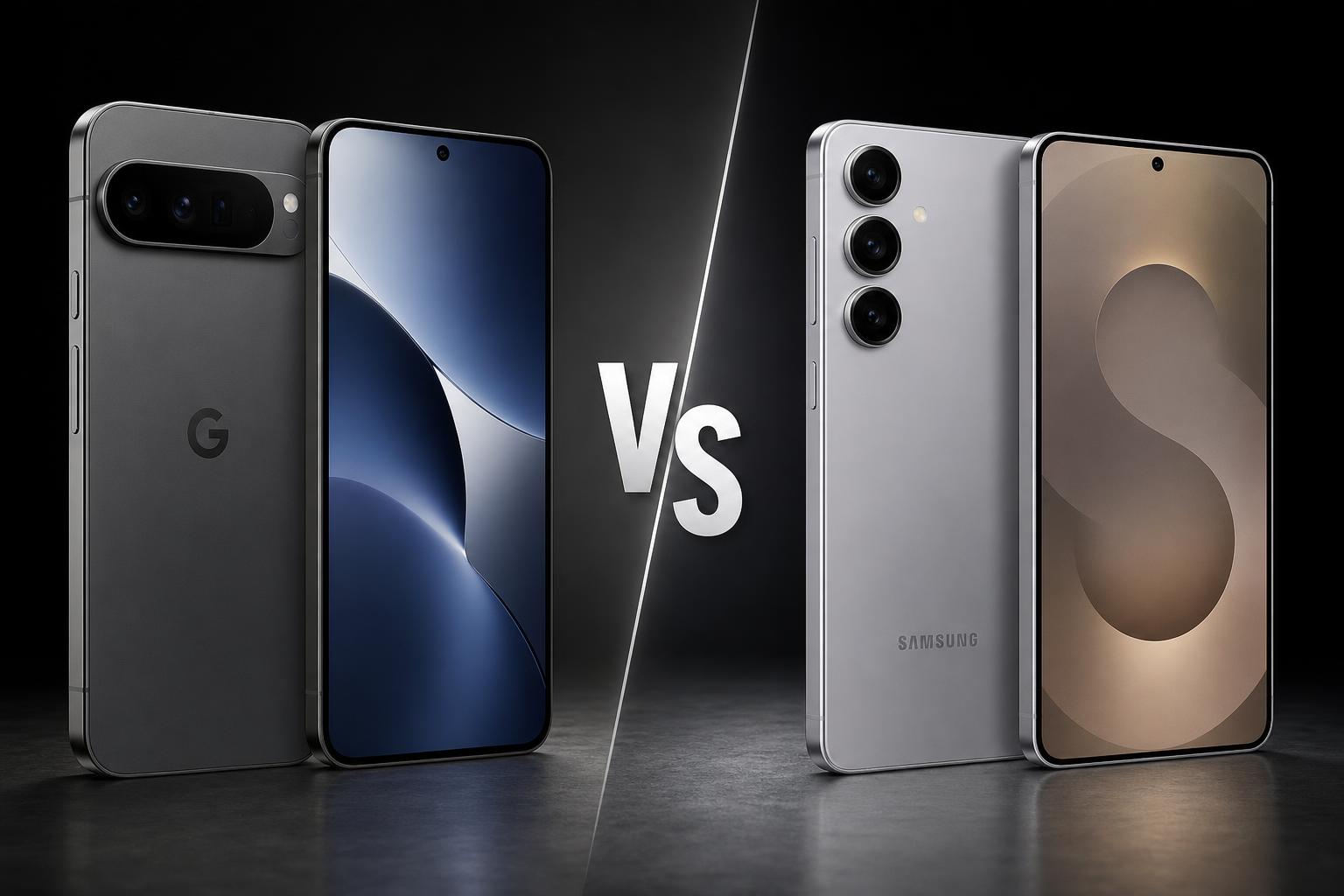
The Google Pixel 11 and Samsung Galaxy S26 are closely matched compact flagship smartphones. Both have 6.3-inch displays, 12GB of RAM, up to 512GB of storage, 120Hz refresh rates and long-term software support. Their starting prices are also almost identical in the US.
The differences are more important than the headline similarities. The Pixel 11 focuses on Google's Tensor G6 processor, Gemini features, computational photography and a larger rated battery. The Galaxy S26 uses a Snapdragon 8 Elite Gen 5 for Galaxy processor in the US, offers a more conventional multi-camera system with a dedicated 3x telephoto lens, and adds IP68 water and dust resistance.
This comparison uses the verified specifications and official claims available for both phones. It does not treat battery-life claims based on different testing methods as directly comparable, and no directly comparable official benchmark results were verified.
Quick verdict
The Samsung Galaxy S26 is the better fit for buyers who want a high-end conventional processor, IP68 protection and broader native camera hardware. Its dedicated 3x telephoto camera, 8K video recording and Snapdragon 8 Elite Gen 5 for Galaxy platform give it a strong specification-sheet advantage for performance-focused users and creators.
The Google Pixel 11 is the more appealing choice for users who prioritise Google's AI features, computational photography, a larger rated battery and Pixelsnap wireless charging. It also has a brighter listed display and launches with Android 17, Gemini Intelligence and Google's Pixel software experience.
At full US starting MSRP, there is no clear value winner: the Pixel 11 starts at $899, while the Galaxy S26 starts at $899.99. Promotional pricing and trade-in offers can change the calculation considerably, so check the final cost rather than relying only on the headline price.
Key specifications comparison
| Feature | Google Pixel 11 | Samsung Galaxy S26 |
|---|---|---|
| Release date | August 20, 2026 | March 11, 2026 |
| US starting price | $899 | $899.99 |
| Display | 6.3-inch Actua OLED, 2424 x 1080, 60–120Hz | 6.3-inch FHD+ Dynamic AMOLED 2X, 2340 x 1080, adaptive 1–120Hz |
| Peak brightness | Up to 3000 nits | Up to 2600 nits |
| Processor | Google Tensor G6 | Snapdragon 8 Elite Gen 5 for Galaxy in the US |
| RAM and storage | 12GB; 256GB or 512GB | 12GB; 256GB or 512GB |
| Rear cameras | 48MP main; 5x telephoto; up to 30x Super Zoom | 50MP wide; 12MP ultra-wide; 10MP telephoto; 3x optical zoom; up to 30x digital zoom |
| Battery | 4985mAh typical; 30+ hours claimed | 4300mAh typical; up to 30 hours of video playback claimed |
| Wired charging | Up to 55% in about 30 minutes with a 30W USB-C PPS charger or higher | Charger sold separately; wireless charging supported |
| Wireless charging | Qi2.2 Pixelsnap up to 25W | Wireless charging and Wireless PowerShare |
| Software | Android 17; Gemini Intelligence | Android 16 and One UI 8.5 at launch; One UI 9 rollout began September 16, 2026 |
| Update promise | Seven years of OS, security and Pixel Drop updates | Seven generations of OS upgrades and seven years of security updates |
| Water and dust resistance | An equivalent rating was not verified in the reviewed official sources | IP68 |
| Weight | 6.9 ounces | 167g for the US Sub6 model |
Design and build
Both phones target buyers who want flagship features without moving to a larger 6.7-inch-class handset. Each has a 6.3-inch display, making the two models broadly similar in footprint from a usage perspective.
The Pixel 11 is listed at 6.0 x 2.8 x 0.3 inches and 6.9 ounces. That makes it a relatively light option on paper. Google also highlights the compact form factor as one of the phone's strengths. The Galaxy S26 measures 149.6 x 71.7 x 7.2mm and weighs 167g for the US Sub6 model. Samsung's phone is therefore specified as thinner than the Pixel 11's listed 0.3-inch thickness, although the measurements are presented in different unit formats.
The biggest verified build difference is protection. The Galaxy S26 has an IP68 water and dust-resistance rating. An equivalent IP rating for the Pixel 11 was not verified in the official sources reviewed for this comparison. That does not establish that the Pixel 11 lacks protection, but buyers who specifically require a published IP68 rating have clearer information with the Samsung.
Both phones include modern connectivity and security features, although their selections differ. The Pixel 11 includes USB-C 3.2, Wi-Fi 6E, Bluetooth 6, dual eSIM, stereo speakers, satellite SOS, fingerprint unlock and face unlock. The Galaxy S26 includes 5G, Wi-Fi 7, Bluetooth 6.0 and Samsung Knox security features. Wi-Fi 7 gives Samsung the newer stated wireless standard, while Pixel buyers may value the combination of dual eSIM and satellite SOS.
Display
The Pixel 11 has a 6.3-inch Actua OLED display with a 2424 x 1080 resolution, 422 pixels per inch and a 60–120Hz Smooth Display refresh rate. Google lists peak brightness of up to 3000 nits and Gorilla Glass Victus 2 protection.
The Galaxy S26 uses a 6.3-inch FHD+ Dynamic AMOLED 2X panel with a 2340 x 1080 resolution and an adaptive 1–120Hz refresh rate. Samsung lists peak brightness of up to 2600 nits. Both displays should therefore offer smooth scrolling and animation at up to 120Hz, while the Galaxy S26 can reduce its refresh rate to 1Hz according to the listed specification.
On the published numbers, the Pixel 11 has the brighter display and slightly higher resolution. Its stated 3000-nit peak is 400 nits higher than the Galaxy S26's 2600-nit figure. That could make the Pixel attractive for users who spend time outdoors, although peak brightness figures alone do not establish real-world visibility in every situation.
Samsung's panel specification is more detailed in naming the Dynamic AMOLED 2X technology, while Google uses the Actua OLED designation. There is no verified information here to establish a decisive winner for colour accuracy, viewing angles or everyday panel quality. On the available specifications, the Pixel 11 leads on brightness and resolution, while the Galaxy S26 matches it on maximum refresh rate and specifies a broader adaptive range.
Performance
The Google Pixel 11 uses Google's Tensor G6 processor. The Galaxy S26 uses the Snapdragon 8 Elite Gen 5 for Galaxy in the US, although Samsung's processor configuration may vary by market.
These processors reflect different priorities. The Galaxy S26's Snapdragon platform is positioned as a high-end general-purpose flagship processor, making the Samsung the more straightforward choice for buyers who place a premium on conventional performance specifications. The Pixel 11's published materials place greater emphasis on on-device AI, Gemini Intelligence and Pixel-specific experiences.
That distinction should not be overstated. The verified research does not include directly comparable official benchmark results, so it is not possible to establish a definitive performance winner from the available evidence. The Galaxy S26 has the stronger specification-sheet case for users seeking top-tier general-purpose processing, particularly in the US, while the Pixel 11 is designed around Google's AI-focused software and imaging features.
Both phones have 12GB of RAM and offer 256GB or 512GB of storage. Neither model has more than 512GB listed in the verified specifications. The Pixel 11's 512GB version uses Zoned UFS, while the Galaxy S26's reviewed specifications do not identify an equivalent storage detail.
Camera and graphics
Pixel 11 camera approach
The Pixel 11 has a new 48MP main sensor and a 5x telephoto lens. Google lists up to 30x Super Zoom, upgraded image processing and Gemini-powered camera features. This is a camera system built around computational photography and AI as much as the underlying camera hardware.
For buyers who prefer point-and-shoot processing, Google's approach may be attractive. The verified information specifically highlights Pixel computational photography and AI features, rather than focusing only on sensor resolution or video recording modes. The Pixel 11 is also the more obvious option for users already interested in Gemini Intelligence and Google's wider AI ecosystem.
Galaxy S26 camera approach
The Galaxy S26 has a 50MP wide camera, a 12MP ultra-wide camera and a 10MP telephoto camera. That telephoto lens provides 3x optical zoom, with 2x optical-quality zoom also listed, and the phone supports up to 30x digital zoom. Samsung also lists 8K video recording at 30 frames per second and a 12MP selfie camera.
The Samsung therefore offers the more explicitly versatile camera hardware on paper. Its dedicated ultra-wide camera gives it a perspective the Pixel specifications do not list, while the dedicated telephoto lens provides a defined 3x optical zoom range. The 8K video mode also makes the Galaxy S26 the more clearly specified option for video-focused creators.
The choice is not simply megapixels versus megapixels. The Pixel 11 has a 48MP main camera compared with Samsung's 50MP wide camera, but Google's stated strengths are its image processing, Gemini-powered features and Super Zoom. The Galaxy S26 has more clearly documented native camera versatility and video capability. Without comparable camera testing results, the research does not prove which phone produces better images in every lighting condition.
Battery and charging
The Pixel 11 has a typical 4985mAh battery, compared with 4300mAh for the Galaxy S26. Google claims more than 30 hours of battery life for the Pixel 11, while Samsung claims up to 30 hours of video playback for the Galaxy S26.
The Pixel has the larger rated capacity and the more broadly worded battery-life claim, so it is the stronger choice on the available battery specifications. However, the two official claims use different testing methods and are not directly comparable. Google's general battery-life claim does not prove that the Pixel will always outlast the Galaxy S26 in every type of use, just as Samsung's video-playback figure does not describe every mixed-use scenario.
Wired charging is another point of difference. Google says the Pixel 11 can reach up to 55% in about 30 minutes when used with a 30W USB-C PPS charger or higher. The required 30W charger is sold separately. The Pixel also supports Qi2.2 Pixelsnap wireless charging at up to 25W.
Samsung confirms wireless charging and Wireless PowerShare for the Galaxy S26, but the verified specification set does not provide an equivalent maximum wireless charging speed in this comparison. The Galaxy S26 charger is also sold separately. Buyers should include the cost of a compatible charger when comparing the total purchase price of either phone.
Software and features
The Pixel 11 launched with Android 17, Gemini Intelligence and Google's Pixel software features. Google promises seven years of OS, security and Pixel Drop updates. Pixel Drops are part of the long-term feature-update commitment and help distinguish the Pixel software experience from standard Android releases.
The Galaxy S26 launched with Android 16 and One UI 8.5. Samsung began rolling out One UI 9 to the Galaxy S26 on September 16, 2026. The phone includes Galaxy AI features and Samsung Knox security tools. Samsung promises seven generations of OS upgrades and seven years of security updates.
Both phones therefore offer unusually long support commitments. The wording is slightly different: Google combines OS, security and Pixel Drop updates across seven years, while Samsung specifies seven generations of OS upgrades plus seven years of security updates. Neither phone has a clear support-length advantage based on these published commitments.
The more meaningful choice is the interface and AI ecosystem. Pixel 11 is the natural fit for buyers who prefer Google's Android approach, Gemini features and computational photography. Galaxy S26 is better suited to users who already use Samsung devices or want One UI, Galaxy AI and Knox features. The research does not verify identical feature availability across all markets, so buyers should check regional support before purchasing for a particular AI function.
Price and value
The Google Pixel 11 starts at $899 in the US. Google Store displayed temporary promotional pricing from $389 after an eligible trade-in on November 14, 2026. Because that figure depends on trade-in eligibility and was temporary, it should not be treated as the standard purchase price.
The Samsung Galaxy S26 starts at $899.99 in the US. Samsung's US store displayed temporary promotional pricing from $849.99 for the 256GB model on November 14, 2026. As with Google's offer, availability and final eligibility may depend on the promotion and purchase conditions.
At full MSRP, the difference is only 99 cents, making the two phones effectively tied on starting price. The better value depends on what you value most: Samsung's processor, IP68 rating and camera versatility, or Google's AI experience, larger rated battery and Pixelsnap charging.
Trade-ins and carrier promotions can change the result. The verified research shows Google's displayed trade-in-dependent price was substantially lower than its normal MSRP on the stated date, while Samsung's listed temporary offer was more modest. These offers are time-sensitive, so compare the final price after trade-in, storage selection, taxes and any required accessories.
Google Pixel 11: pros and cons
Pros
- Seven years of OS, security and Pixel Drop updates.
- Large 4985mAh typical battery and a claimed 30-plus hours of battery life.
- Strong computational-photography and AI feature set.
- Qi2.2 Pixelsnap wireless charging at up to 25W.
- Compact 6.3-inch form factor and relatively low listed weight.
- Higher listed peak brightness than the Galaxy S26.
Cons
- Official specifications do not establish a performance advantage over the Galaxy S26.
- Maximum listed storage is 512GB.
- The 30W wired charger is sold separately.
- Google's battery claim is not directly comparable with Samsung's video-playback claim.
- An equivalent IP rating was not verified in the reviewed official sources.
Samsung Galaxy S26: pros and cons
Pros
- Snapdragon 8 Elite Gen 5 for Galaxy in the US model.
- More versatile listed camera hardware, including an ultra-wide and dedicated 3x telephoto camera.
- 120Hz Dynamic AMOLED 2X display with up to 2600 nits peak brightness.
- IP68 water and dust resistance.
- Seven generations of OS upgrades and seven years of security updates.
- 8K video recording at 30fps.
Cons
- Smaller 4300mAh typical battery than the Pixel 11.
- Maximum listed storage is 512GB.
- The charger is sold separately.
- Processor configuration may vary by market.
- Samsung's video-playback claim is not directly comparable with Google's general battery-life claim.
Which phone is better for different buyers?
Choose the Google Pixel 11 if you prioritise AI and Pixel photography
The Pixel 11 is the better match for users who want Google's Gemini Intelligence, Pixel Drops and computational-photography features. Its 5x telephoto, Super Zoom and upgraded image processing also make it appealing to buyers who prefer Google's approach to image enhancement and AI-assisted camera features.
Choose the Samsung Galaxy S26 if you want conventional flagship performance
For US buyers who want a high-end processor platform, the Galaxy S26 has the clearer specification advantage with Snapdragon 8 Elite Gen 5 for Galaxy. No directly comparable official benchmarks were verified, but the Samsung is the more natural pick for performance-focused buyers based on its listed platform.
Choose the Pixel 11 if battery capacity matters most
The Pixel 11 has the larger rated battery at 4985mAh and supports up to 25W Qi2.2 Pixelsnap wireless charging. Google's claim of more than 30 hours also makes it attractive, although the different official testing methods mean this is not definitive proof that it will last longer in every scenario.
Choose the Galaxy S26 for camera versatility and video
The Galaxy S26 is the better fit for creators who want a dedicated 3x telephoto camera, an ultra-wide camera, 8K video recording and a clearly specified native zoom system. The Pixel 11 remains a strong alternative for computational photography and AI-assisted editing, but Samsung lists the broader conventional camera hardware.
Choose either for long-term software support
Both manufacturers offer seven-year-class support. Google promises seven years of OS, security and Pixel Drop updates, while Samsung promises seven generations of OS upgrades and seven years of security updates. The decision here should be based more on interface preference and ecosystem than on support duration.
Final verdict
The Google Pixel 11 and Samsung Galaxy S26 are closely matched on price, size, memory and long-term support, but they are not identical propositions.
The Galaxy S26 is the stronger all-round specification choice for buyers who want a high-end conventional processor, IP68 protection and a more versatile camera system. Its dedicated telephoto camera, ultra-wide camera and 8K video support give it the broader native imaging toolkit, while its US Snapdragon configuration makes it the more obvious performance-focused option.
The Pixel 11 is better for buyers who value Google's software experience, Gemini Intelligence, computational photography and a larger rated battery. It also offers the higher listed peak brightness and up to 25W Qi2.2 Pixelsnap wireless charging.
At full US MSRP, neither phone clearly beats the other on value. The right purchase depends on which strengths matter most and which trade-in or promotional deal is available when you buy. Choose the Galaxy S26 for hardware versatility and conventional flagship performance; choose the Pixel 11 for AI-led features, Pixel photography and battery capacity.
FAQs
Is the Google Pixel 11 cheaper than the Samsung Galaxy S26?
The Pixel 11 starts at $899 in the US, while the Galaxy S26 starts at $899.99. That makes their full starting prices effectively identical. Temporary promotions can change the result: Google displayed trade-in-dependent pricing from $389 on November 14, 2026, while Samsung displayed a temporary $849.99 price for the 256GB Galaxy S26 on the same date.
Which phone has the better camera system?
The Galaxy S26 has the more versatile camera hardware on paper, with a 50MP wide camera, 12MP ultra-wide camera, 10MP 3x telephoto camera and 8K video recording. The Pixel 11 focuses on computational photography, a new 48MP main sensor, a 5x telephoto lens, up to 30x Super Zoom and Gemini-powered camera features. The available research does not include directly comparable camera test results.
Which has the better battery?
The Pixel 11 has the larger rated battery at 4985mAh, compared with 4300mAh for the Galaxy S26. Google claims more than 30 hours of battery life, while Samsung claims up to 30 hours of video playback. Because those claims use different testing methods, the Pixel has the stronger capacity specification but a definitive real-world winner cannot be established from the official claims alone.
Which phone is faster?
The US Galaxy S26 uses the Snapdragon 8 Elite Gen 5 for Galaxy, while the Pixel 11 uses Google's Tensor G6. The Samsung has the clearer specification-sheet advantage for conventional flagship performance, but no directly comparable official benchmark results were verified. Tensor G6 is designed around AI and Pixel experiences, so the best choice also depends on the type of performance you value.
Do both phones offer long-term software support?
Yes. Google promises seven years of OS, security and Pixel Drop updates for the Pixel 11. Samsung promises seven generations of OS upgrades and seven years of security updates for the Galaxy S26. Their software interfaces and AI ecosystems differ, but both provide a long support period.
Does either phone include a charger?
The Pixel 11's 30W USB-C PPS charger is sold separately. The Galaxy S26 charger is also sold separately. Add the cost of a compatible charger when comparing the total price of either phone.
Sources
- Google Pixel 11 Specs: Details, Camera, & Security — Google Store
- Google introduces Pixel 11, Pixel 11 Pro and Pixel 11 Pro XL — Google
- Buy the new Pixel 11 phones and Pixel Watch 5 today — Google
- Samsung Unveils Galaxy S26 Series: The Most Intuitive Galaxy AI Phone Yet — Samsung Newsroom
- Galaxy S26 & S26+ | Galaxy AI — Samsung
- Samsung Begins Official Rollout of One UI 9 — Samsung Newsroom