
Apple iPhone 18 Pro vs Samsung Galaxy S26 Ultra: Which flagship phone is better?
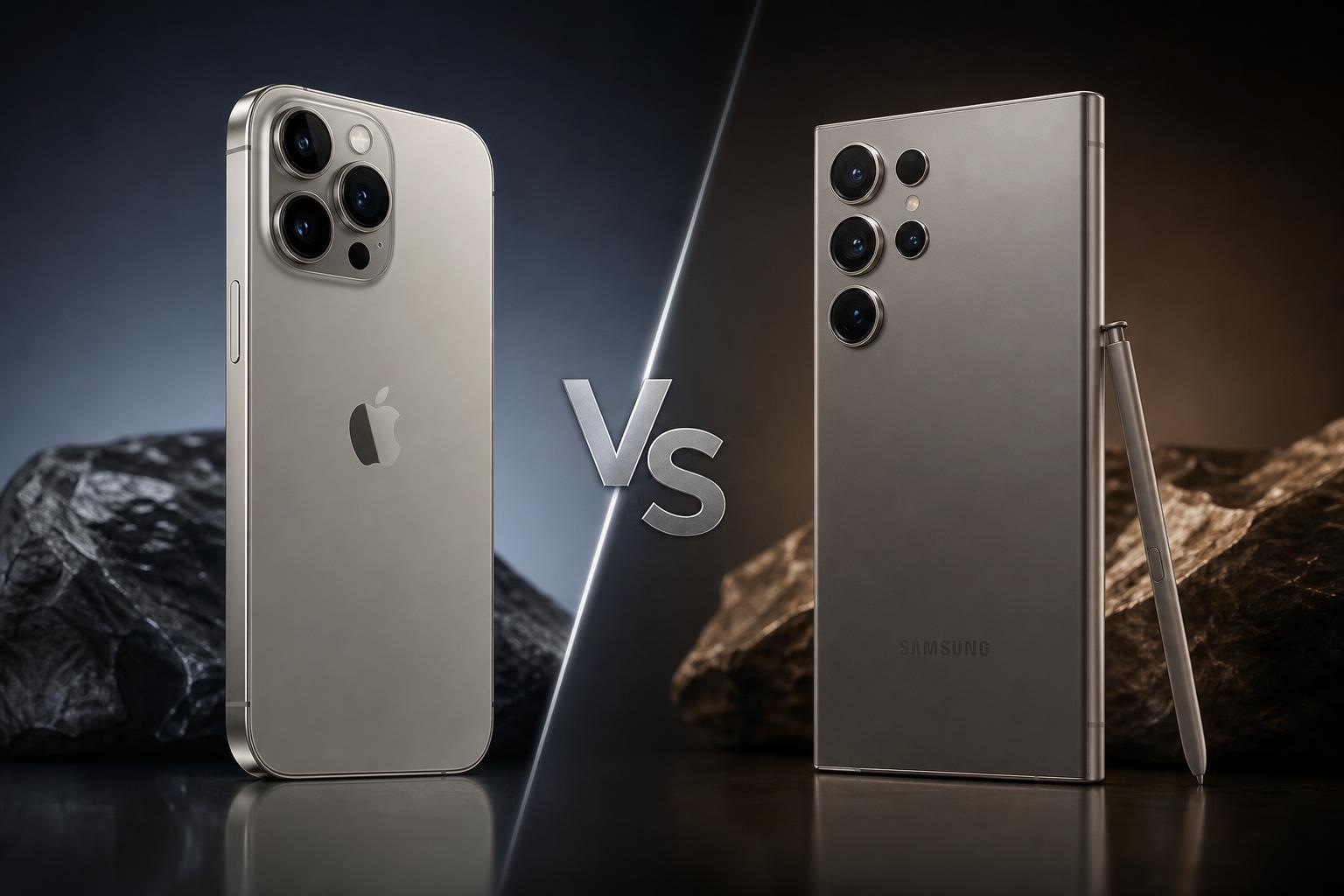
The Apple iPhone 18 Pro and Samsung Galaxy S26 Ultra are high-end smartphones aimed at different types of buyer. Apple focuses on a compact Pro design, its A20 Pro platform and a camera system with extensive professional video tools. Samsung takes a larger, more feature-rich approach, combining a 6.9-inch display, a 5,000 mAh battery, dedicated telephoto cameras, S Pen support and a broad set of Galaxy AI features.
The iPhone 18 Pro was released on September 18, 2026, while the Galaxy S26 Ultra was released on March 11, 2026. Both offer premium displays, IP68 water and dust resistance, Wi-Fi 7, Bluetooth 6-class connectivity and USB-C, but their strengths are notably different.
Quick verdict
The iPhone 18 Pro is the better choice for buyers who want a smaller and lighter flagship, prefer iOS, or need advanced video features such as ProRes RAW, Apple Log 2, genlock and 4K Dolby Vision recording at up to 120 frames per second. It also has the lower official starting price, at $1,199 for 256GB in the United States.
The Samsung Galaxy S26 Ultra is the stronger option for buyers who want the largest display, an integrated S Pen, more published RAM, a 5,000 mAh battery, faster stated wired charging and a more extensive hardware feature set. Its official starting price is $1,299.99, although Samsung’s current listed promotional price for the 256GB model is $1,099.99.
Neither phone is universally better. The right choice depends on whether you value Apple’s compact design and professional video workflow or Samsung’s large screen, long-range camera hardware, Android flexibility and built-in S Pen.
Key specifications comparison
| Specification | Apple iPhone 18 Pro | Samsung Galaxy S26 Ultra |
|---|---|---|
| Release date | September 18, 2026 | March 11, 2026 |
| Official starting price | $1,199 for 256GB | $1,299.99 for 256GB |
| Current listed promotion | Not specified | $1,099.99 for 256GB |
| Display | 6.3-inch Super Retina XDR all-screen OLED | 6.9-inch QHD+ Dynamic AMOLED 2X |
| Refresh rate | ProMotion adaptive refresh rate up to 120Hz | Adaptive refresh rate from 1Hz to 120Hz |
| Brightness | Up to 3,000 nits outdoor peak | 2,600 nits peak |
| Processor | Apple A20 Pro; 6-core CPU and 7-core GPU | Snapdragon 8 Elite Gen 5 for Galaxy |
| RAM and storage | RAM not officially specified; 256GB, 512GB, 1TB or 2TB | 12GB RAM with 256GB or 512GB; 16GB RAM with 1TB |
| Rear cameras | 48MP variable-aperture main, 48MP ultrawide and 48MP telephoto | 200MP wide, 50MP ultrawide, 10MP 3x telephoto and 50MP 5x telephoto |
| Front camera | 18MP Center Stage | 12MP |
| Battery and charging | Up to 24 hours typical use; up to 50% in around 15 minutes with compatible 60W-capable adapter or higher | 5,000 mAh; up to 60W wired charging and up to 25W wireless charging |
| Operating system | iOS 27 with Apple Intelligence and Siri AI | Android 16 with One UI 8.5, Galaxy AI, Bixby, Gemini and Perplexity integration |
| Dimensions and weight | 150.0 x 71.9 x 8.75 mm; 211g | 163.6 x 78.1 x 7.9 mm; 214g |
| Special features | LiDAR Scanner, Ceramic Shield 2, Ceramic Shield back and dual eSIM | Integrated S Pen support, Privacy Display and UWB |
Design and build
The iPhone 18 Pro is the more compact phone of the two. It measures 150.0 x 71.9 x 8.75mm and weighs 211g. Its aluminum unibody construction is paired with Ceramic Shield 2 on the front and a Ceramic Shield back. That gives it a smaller overall footprint than the Galaxy S26 Ultra, which measures 163.6 x 78.1 x 7.9mm and weighs 214g.
Although the weight difference is only 3g, the Galaxy’s greater height and width will be more noticeable when it is held or carried. The larger body is used for its 6.9-inch display, 5,000 mAh battery and integrated S Pen support. The S Pen is an important differentiator because it gives the Galaxy S26 Ultra a built-in stylus experience that the iPhone does not offer.
Both phones have IP68 water and dust resistance, USB-C and Wi-Fi 7. The Galaxy also includes UWB, while the iPhone includes a LiDAR Scanner. Apple’s phone uses dual eSIM and does not support a physical SIM card. That may suit buyers who are comfortable with eSIM, but it is a consideration for anyone who regularly moves a physical SIM between devices.
The Galaxy S26 Ultra is available in Cobalt Violet, White, Black, Sky Blue, Pink Gold and Silver Shadow. Apple’s verified information supplied here does not specify iPhone 18 Pro colour options.
Display
Samsung wins on screen size and resolution. The Galaxy S26 Ultra has a 6.9-inch QHD+ Dynamic AMOLED 2X display, making it better suited to large-screen activities such as watching video, editing content, reading and using the S Pen. It also has an integrated Privacy Display, which is a distinctive feature for people who often use their phone in public spaces.
The iPhone 18 Pro has a smaller 6.3-inch Super Retina XDR all-screen OLED display with a 2622-by-1206 resolution at 460 pixels per inch. It includes ProMotion with an adaptive refresh rate of up to 120Hz and an Always-On display. The smaller panel should appeal to buyers who want a premium screen without moving to an oversized phone.
Both phones support adaptive refresh rates up to 120Hz, so both are specified to provide smooth scrolling and motion. Apple rates the iPhone 18 Pro for up to 3,000 nits outdoor peak brightness, while Samsung specifies 2,600 nits peak brightness for the Galaxy S26 Ultra. These figures are supplied by the manufacturers and are not a substitute for directly comparable independent display testing.
Choose the Galaxy if screen size, QHD+ resolution and Privacy Display matter most. Choose the iPhone if you prefer a more compact handset but still want a high-resolution OLED panel, 120Hz ProMotion and Always-On functionality.
Performance
The iPhone 18 Pro uses Apple’s A20 Pro processor. Its specification includes a 6-core CPU, a 7-core GPU with Neural Accelerators, a Dual 16-core Neural Engine and hardware-accelerated ray tracing. Apple also pairs the platform with Apple Intelligence and Siri AI in iOS 27.
The Galaxy S26 Ultra uses the Snapdragon 8 Elite Gen 5 for Galaxy, manufactured on a 3nm process. Samsung offers 12GB of RAM with the 256GB and 512GB versions, while the 1TB version includes 16GB of RAM. That gives the Galaxy a clearly published memory advantage for buyers who prioritise multitasking specifications or want the highest-capacity configuration.
Apple does not officially specify the iPhone 18 Pro’s RAM capacity, so the published memory figures are not directly comparable. There are also no independent benchmark results in the verified research for this comparison. It would therefore be misleading to declare one phone the overall performance winner based on benchmark claims.
In practical terms, the iPhone is aimed at users who value Apple’s A20 Pro platform, Neural Engine and hardware-accelerated ray tracing. The Galaxy is aimed at users who prefer Snapdragon hardware, up to 16GB of RAM and Android multitasking. Both are positioned as flagship platforms, but the software ecosystems and memory approaches are different.
Camera and graphics features
iPhone 18 Pro cameras
The iPhone 18 Pro has a 48MP Pro Fusion camera system comprising a 48MP variable-aperture main camera, a 48MP ultrawide and a 48MP telephoto camera. It offers up to 8x optical-quality zoom and up to 40x digital zoom. The front camera is an 18MP Center Stage camera.
Apple’s strongest advantage is its professional video feature set. The iPhone supports ProRes RAW, Apple Log 2, genlock and 4K Dolby Vision video at up to 120 frames per second. These features are especially relevant to creators who need a more advanced capture and production workflow rather than simply a high-resolution still camera.
The variable aperture on the main camera is another notable specification. However, the verified research does not provide sample images or independent camera testing, so image quality should not be inferred solely from the camera resolutions or feature list.
Galaxy S26 Ultra cameras
The Galaxy S26 Ultra takes a different approach. Its rear system includes a 200MP wide camera, a 50MP ultrawide, a 10MP 3x telephoto and a 50MP 5x telephoto. It supports 3x and 5x optical zoom, 2x and 10x optical-quality zoom and up to 100x digital zoom. The front camera is 12MP.
This dedicated dual-telephoto arrangement gives the Galaxy a clear hardware focus on varied focal lengths and long-range photography. It also supports 8K video recording at 30 frames per second and 4K Pro Video at 120 frames per second. Samsung’s comparison information also highlights its APV professional video codec and built-in AI editing tools.
The two manufacturers use different terminology for some zoom modes, so their stated zoom figures should not be treated as directly equivalent. The iPhone is the more compelling choice for the listed professional video formats and workflow tools. The Galaxy is better suited to buyers who prioritise a 200MP main camera, dedicated 3x and 5x telephoto cameras, high-resolution still photography and 100x digital zoom.
Battery and charging
Samsung provides a battery capacity for the Galaxy S26 Ultra: 5,000 mAh. The phone supports Super Fast Charging 3.0 at up to 60W and can reach up to 75% in around 30 minutes. It also supports up to 25W wireless charging and Wireless PowerShare. The power adapter is sold separately.
Apple does not publish the iPhone 18 Pro’s battery capacity in the verified specifications. Instead, Apple rates it for up to 24 hours of typical use, up to 36 hours of video playback and up to 33 hours of streamed video playback. With a compatible 60W-capable adapter or higher, it can reach up to 50% charge in around 15 minutes.
The Galaxy is the clearer choice if you want a specified high-capacity battery, 60W wired charging, wireless charging up to 25W and reverse charging through Wireless PowerShare. The iPhone still offers strong manufacturer-rated playback figures and rapid charging to 50%, but its battery capacity is not officially disclosed here. Both charging comparisons depend on the appropriate compatible accessories.
Software and features
The iPhone 18 Pro runs iOS 27 with Apple Intelligence and Siri AI. Its software experience is closely tied to Apple’s ecosystem, and the phone also includes features relevant to creators, such as ProRes RAW, Apple Log 2 and genlock support. A LiDAR Scanner is included as part of the hardware specification.
The Galaxy S26 Ultra runs Android 16 with Samsung’s One UI 8.5. Its software feature set includes Galaxy AI, Bixby, Gemini and Perplexity integration. The phone also combines those services with S Pen support and the integrated Privacy Display. This makes it the more feature-heavy option for users who want built-in stylus tools, multiple AI services and more hardware controls.
There is no single winner between iOS and Android. Buyers already invested in either Apple or Samsung’s wider ecosystem may find that staying with the same platform is more convenient. The iPhone is the more natural fit for users who want iOS 27 and Apple Intelligence, while the Galaxy suits users who prefer Android 16, One UI and Samsung’s wider Galaxy AI feature set.
Price and value
The iPhone 18 Pro starts at $1,199 in the United States for 256GB. That is the lower official starting price of the two phones, and the base capacity is the same 256GB as Samsung’s entry model.
The Galaxy S26 Ultra has an official starting price of $1,299.99 for 256GB. Samsung’s current listed promotional price is $1,099.99 for the 256GB model, which is lower than Apple’s official starting price while that promotion is available. Promotional pricing can change, so buyers should check the current Samsung listing before purchasing.
Price alone does not settle the comparison. The Galaxy includes 12GB of RAM in its 256GB and 512GB versions, a 5,000 mAh battery, a larger QHD+ display, S Pen support and a dedicated multi-camera zoom system. The iPhone offers a lower official entry price, storage options up to 2TB, advanced video formats and a smaller design.
For creators, the iPhone’s video tools may justify its price even where the Galaxy offers more hardware features. For buyers who want the largest possible screen and a broad set of built-in capabilities, the Galaxy may provide stronger hardware value, particularly when its $1,099.99 promotional price is available.
Pros and cons
Apple iPhone 18 Pro
Pros:
- Smaller and lighter than the Galaxy S26 Ultra.
- 6.3-inch OLED display with ProMotion up to 120Hz, Always-On functionality and up to 3,000 nits outdoor peak brightness.
- 48MP camera system with a variable-aperture main camera.
- Extensive professional video features, including ProRes RAW, Apple Log 2, genlock and 4K Dolby Vision up to 120fps.
- A20 Pro includes a dedicated Neural Engine and hardware-accelerated ray tracing.
- Lower official starting price than the Galaxy S26 Ultra.
- Storage options extend to 2TB.
Cons:
- Smaller display than the Galaxy S26 Ultra.
- Apple does not officially specify the RAM capacity.
- Its base official price is higher than Samsung’s current listed promotional price.
- No physical SIM card support.
- It does not include an equivalent to Samsung’s integrated S Pen.
Samsung Galaxy S26 Ultra
Pros:
- Large 6.9-inch QHD+ 120Hz display.
- Integrated Privacy Display.
- Dedicated 3x and 5x telephoto cameras, plus up to 100x digital zoom.
- 5,000 mAh battery with up to 60W wired charging.
- Up to 16GB RAM and 1TB storage.
- Integrated S Pen support.
- Broad software feature set including Galaxy AI, Bixby, Gemini and Perplexity integration.
- Wireless charging up to 25W and Wireless PowerShare.
Cons:
- Larger and slightly heavier than the iPhone 18 Pro.
- Higher official launch price than the iPhone.
- Samsung’s zoom terminology is not directly comparable with Apple’s optical-quality zoom claims.
- Power adapter is sold separately.
Which phone is better for different buyers?
Choose the iPhone 18 Pro if you want a compact flagship
The iPhone 18 Pro is the better fit if you want high-end specifications in a smaller body. It is shorter and narrower than the Galaxy S26 Ultra and weighs slightly less. Its 6.3-inch display remains large enough for everyday use while avoiding the larger footprint of Samsung’s Ultra model.
Choose the Galaxy S26 Ultra for the biggest screen
The Galaxy S26 Ultra is the obvious choice for buyers who want a 6.9-inch panel, QHD+ resolution and a built-in Privacy Display. Its large screen also works particularly well with the integrated S Pen, making it a more versatile device for writing, annotation and other stylus-led tasks.
Choose the iPhone for professional video
Creators who need ProRes RAW, Apple Log 2, genlock, Dolby Vision and 4K recording at up to 120fps should choose the iPhone 18 Pro. The Galaxy S26 Ultra remains capable with 8K recording, 4K Pro Video at 120fps and Samsung’s APV professional video codec, but Apple’s listed format and workflow support is more extensive for the specific professional video requirements covered here.
Choose the Galaxy for zoom and camera versatility
The Galaxy S26 Ultra is better for buyers who prioritise a 200MP main camera, dedicated 3x and 5x telephoto cameras, 8K video and long-range zoom modes. The iPhone’s variable-aperture 48MP system is highly feature-rich, but the Galaxy provides more dedicated telephoto hardware.
Choose the Galaxy for battery hardware and charging
The Galaxy is the clearer battery choice based on its specified 5,000 mAh capacity, up to 60W wired charging, up to 25W wireless charging and Wireless PowerShare. Apple’s rated playback figures are strong, but Apple does not publish the iPhone 18 Pro’s battery capacity in the verified information.
Choose the iPhone for the lower official starting price
The iPhone 18 Pro starts at $1,199 for 256GB, compared with the Galaxy S26 Ultra’s official $1,299.99 starting price. However, Samsung’s current listed promotional price is $1,099.99, so the Galaxy may be the better value when that offer is available.
Final verdict
The iPhone 18 Pro and Samsung Galaxy S26 Ultra are both premium flagship phones, but they prioritise different experiences. The iPhone 18 Pro is the more compact option and has the stronger list of professional video features, including ProRes RAW, Apple Log 2, genlock and 4K Dolby Vision at up to 120fps. It also has the lower official starting price and storage options up to 2TB.
The Galaxy S26 Ultra is the more expansive hardware package. It has the larger QHD+ display, integrated Privacy Display, S Pen support, a specified 5,000 mAh battery, faster stated wired charging, up to 16GB of RAM and a camera system with dedicated 3x and 5x telephoto cameras. Its official starting price is higher, but Samsung’s listed promotion can make it less expensive than the iPhone at the time of checking.
Overall, choose the iPhone 18 Pro for a smaller design, iOS and a professional video workflow. Choose the Galaxy S26 Ultra for the biggest screen, S Pen functionality, battery hardware, Android multitasking and a more versatile dedicated zoom system.
FAQs
Is the iPhone 18 Pro cheaper than the Galaxy S26 Ultra?
The iPhone 18 Pro has the lower official starting price: $1,199 for 256GB in the United States. The Galaxy S26 Ultra officially starts at $1,299.99 for 256GB, but Samsung’s current listed promotional price is $1,099.99 for that model. Promotional prices may change.
Which phone has the larger display?
The Samsung Galaxy S26 Ultra has the larger display at 6.9 inches. It uses a QHD+ Dynamic AMOLED 2X panel. The iPhone 18 Pro has a 6.3-inch Super Retina XDR all-screen OLED display.
Which has the better camera?
It depends on the type of photography or video you prioritise. The iPhone 18 Pro is better suited to professional video features such as ProRes RAW, Apple Log 2, genlock and 4K Dolby Vision up to 120fps. The Galaxy S26 Ultra is better suited to buyers who want a 200MP main camera, dedicated 3x and 5x telephoto cameras, 8K video and up to 100x digital zoom. The verified research does not include independent image-quality testing.
Which phone has better battery specifications?
The Galaxy S26 Ultra has the clearer battery hardware advantage on paper, with a specified 5,000 mAh battery, up to 60W wired charging, up to 25W wireless charging and Wireless PowerShare. Apple does not publish the iPhone 18 Pro’s battery capacity, but rates it for up to 24 hours of typical use and up to 36 hours of video playback.
Does the iPhone 18 Pro include a physical SIM slot?
No. The iPhone 18 Pro supports dual eSIM and does not support a physical SIM card. The verified specifications supplied for the Galaxy S26 Ultra list USB-C and other connectivity features but do not provide a physical SIM detail for comparison.
Which phone is better for gaming and performance?
There is no directly comparable independent benchmark data in the verified research. The iPhone 18 Pro uses the A20 Pro with a 6-core CPU, 7-core GPU, Neural Accelerators, a Dual 16-core Neural Engine and hardware-accelerated ray tracing. The Galaxy S26 Ultra uses the Snapdragon 8 Elite Gen 5 for Galaxy and offers up to 16GB of RAM. The better choice depends on whether you prefer Apple’s platform and iOS or Samsung’s Snapdragon hardware and Android multitasking.