
Apple iPhone 18 Pro vs Google Pixel 11 Pro: Which flagship phone is better?
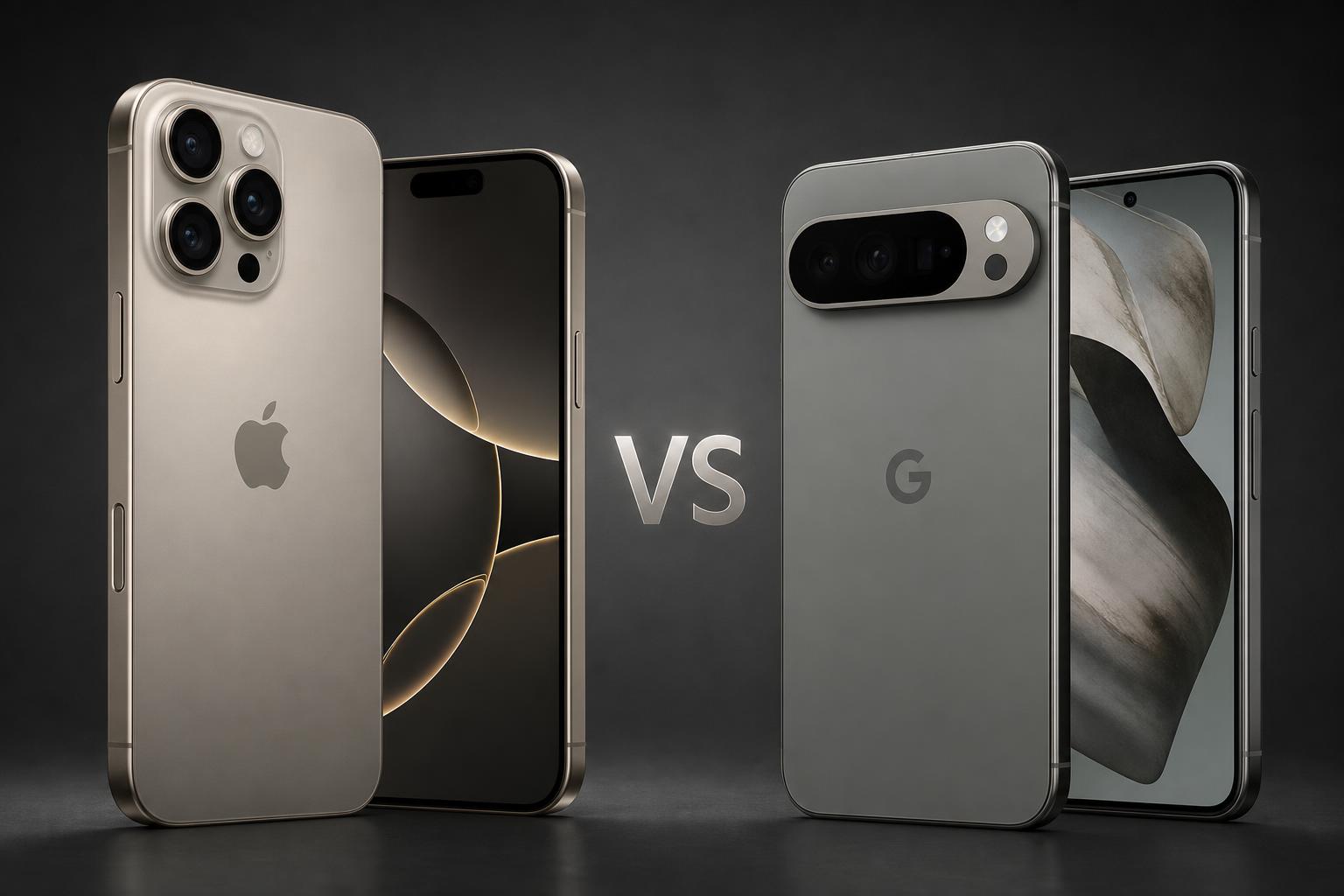
The Apple iPhone 18 Pro and Google Pixel 11 Pro are compact flagship smartphones with 6.3-inch OLED displays, premium construction, advanced camera systems and high-end software features. They take notably different approaches: Apple focuses on performance, video production and close hardware-software integration, while Google puts Gemini intelligence, computational photography and long-term software support at the centre of the Pixel experience.
The iPhone 18 Pro starts at $1,199 in the United States, making it $100 more expensive than the Pixel 11 Pro's $1,099 starting price. That premium buys Apple’s A20 Pro chip, a creator-focused video system and access to features such as ProRes RAW. Google's phone counters with a brighter claimed peak display, a 5x telephoto camera, a seven-year update commitment and a strong selection of AI-assisted tools.
Quick verdict
The iPhone 18 Pro is the better overall choice for performance, video creation and Apple ecosystem integration. Its A20 Pro processor has a verified advantage over the Pixel 11 Pro in published major-publication benchmark testing, and its camera system supports variable aperture, Dolby Vision video up to 4K at 120 fps, ProRes and ProRes RAW.
The Google Pixel 11 Pro is the better-value option. It costs less to start, includes seven years of operating system, security and Pixel Drop updates, and offers a brighter claimed peak display. It is also the more natural choice for buyers who prioritise Android, Gemini Intelligence, computational photography and features such as Magic Capture and Instant Night Sight.
There is no definitive battery winner based on the available official figures because Apple and Google use different testing methods. The Pixel claims 30-plus hours, while Apple lists up to 24 hours of typical use and up to 36 hours of video playback.
Key specifications comparison
| Feature | Apple iPhone 18 Pro | Google Pixel 11 Pro |
|---|---|---|
| US starting price | $1,199 | $1,099 |
| Release date | September 18, 2026 | August 20, 2026 |
| Display | 6.3-inch Super Retina XDR all-screen OLED, 2622 x 1206, 460 ppi, up to 120Hz | 6.3-inch Super Actua LTPO OLED, 1280 x 2856, 495 ppi, 1-120Hz |
| Peak brightness | Up to 3,000 nits outdoor peak | Up to 3,600 nits peak; up to 2,400 nits HDR |
| Processor | Apple A20 Pro | Google Tensor G6 with Titan M3 |
| Storage and memory | 256GB, 512GB, 1TB or 2TB; Apple does not publish an official RAM figure | 256GB with 12GB RAM; 512GB or 1TB with 16GB RAM |
| Rear cameras | 48MP variable-aperture Fusion Main, 48MP Fusion Ultra Wide and 48MP Fusion Telephoto with 4x optical telephoto | 50MP wide, 48MP ultrawide with Macro Focus and 48MP 5x telephoto |
| Front camera | 18MP Center Stage | 42MP autofocus |
| Video | Dolby Vision up to 4K at 120 fps; ProRes and ProRes RAW | 8K video, Video Boost, Magic Capture and Instant Night Sight |
| Battery claims | Up to 24 hours typical use; up to 36 hours video playback | 4,850mAh typical battery; 30-plus hours claimed |
| Charging | 50% in approximately 15 minutes with a compatible 60W or higher adapter; MagSafe and Qi2 up to 25W | Up to 55% in approximately 30 minutes with a compatible 30W USB-C PPS charger; Pixelsnap Qi2.2 up to 25W |
| Software | iOS 27 with Apple Intelligence and Siri AI | Android 17 with Gemini Intelligence |
| Durability and materials | Aluminum unibody, Ceramic Shield 2 front, Ceramic Shield back, IP68 | Aluminum construction, Gorilla Glass Victus 2 with anti-scratch shield, IP68 |
Design and build
Both phones are compact premium models built around 6.3-inch displays, so neither is the larger option in its respective range. Both also use aluminum construction and carry IP68-rated durability. The distinction is mainly in materials, styling and weight.
The iPhone 18 Pro measures 150.0 x 71.9 x 8.75mm and weighs 211 grams. Apple uses an aluminum unibody, Ceramic Shield 2 on the front and a Ceramic Shield back. It also includes Face ID, a LiDAR Scanner and a USB-C port. In the United States, it is dual eSIM only and does not support a physical SIM card.
The Pixel 11 Pro weighs approximately 7.2 ounces, which is around 204 grams, although Google's supplied dimensions are approximately 6.0 x 2.8 x 0.3 inches rather than a directly matching millimetre specification. Its design includes Google's distinctive camera bar, Gorilla Glass Victus 2 with an anti-scratch shield and built-in Google Pixelsnap magnets. The phone is also eSIM-only and IP68-rated.
The small weight difference is worth noting, but it is not enough by itself to decide the purchase. The iPhone is lighter according to the supplied specifications, while the Pixel offers a camera-bar design and native Pixelsnap magnetic accessory support. Buyers should also remember that neither US model supports a physical SIM card.
Display
Both phones use high-resolution OLED panels with adaptive refresh rates that can reach 120Hz. That should make supported scrolling, animations and compatible games appear smoother than on a conventional 60Hz display, although the two manufacturers describe their implementations differently.
The iPhone 18 Pro has a 6.3-inch Super Retina XDR all-screen OLED display with a 2622 x 1206 resolution and 460 pixels per inch. Apple includes ProMotion adaptive refresh up to 120Hz, an Always-On display and Dynamic Island. Its outdoor peak brightness is rated at up to 3,000 nits.
The Pixel 11 Pro uses a 6.3-inch Super Actua LTPO OLED panel with a 1280 x 2856 resolution and 495 pixels per inch. Its Smooth Display adjusts between 1Hz and 120Hz. Google quotes up to 2,400 nits for HDR brightness and up to 3,600 nits peak brightness, giving the Pixel the higher claimed maximum on paper.
In practical terms, the Pixel has the advantage in quoted peak brightness and pixel density. The iPhone counters with its Always-On display, Dynamic Island and ProMotion branding, as well as a very high 3,000-nit outdoor peak. Both are well specified for viewing photos, video and everyday content, but the brightness figures should not be treated as identical testing measurements because the manufacturers present them differently.
Performance
Performance is the clearest hardware advantage for the iPhone 18 Pro. It uses Apple's A20 Pro, a chip with a 6-core CPU, 7-core GPU with Neural Accelerators, dual 16-core Neural Engine and hardware-accelerated ray tracing. Published benchmark testing from a major technology publication places the iPhone 18 Pro ahead of the Pixel 11 Pro in processor and graphics performance.
The Pixel 11 Pro uses Google's Tensor G6 with a Titan M3 security coprocessor. It remains designed for responsive everyday use and puts particular emphasis on on-device Gemini AI, but benchmark results trail current flagship competitors. That means the Pixel can still be a sensible choice for normal communication, browsing, photography and media, but it is not the stronger option for demanding sustained CPU or GPU workloads.
Storage choices are broader on the iPhone. Apple offers 256GB, 512GB, 1TB and 2TB configurations, although it does not publish an official RAM figure. The Pixel starts with 256GB and 12GB of RAM, while its 512GB and 1TB versions include 16GB of RAM.
For gaming, intensive editing or buyers who simply want the strongest verified performance, the iPhone 18 Pro is the safer recommendation. The Pixel 11 Pro's appeal is less about benchmark leadership and more about the way its Tensor platform supports Google's AI features.
Camera and graphics
The camera comparison depends heavily on what you want to create. Apple has built the iPhone 18 Pro around video production and manual control, while Google puts greater emphasis on computational photography, zoom reach and AI-assisted capture.
iPhone 18 Pro cameras
The iPhone 18 Pro has a 48MP Pro Fusion system consisting of a 48MP variable-aperture Fusion Main camera, a 48MP Fusion Ultra Wide and a 48MP Fusion Telephoto with 4x optical telephoto. The variable-aperture main camera gives users additional control over exposure and depth of field, which is particularly relevant to people who want more deliberate control over the appearance of their images.
For video, the iPhone supports Dolby Vision up to 4K at 120 frames per second, as well as ProRes and ProRes RAW. Those formats make it the more capable choice for creators who need advanced capture and post-production options. The 18MP Center Stage front camera is also included for selfies and video calls.
Pixel 11 Pro cameras
The Pixel 11 Pro has a triple rear camera system with a 50MP wide camera, 48MP ultrawide with Macro Focus and a 48MP 5x telephoto. Google lists up to 120x Pro Zoom, while the front camera is a 42MP autofocus unit.
Its feature set is built around Google's computational photography strengths. Video Boost, Magic Capture and Instant Night Sight are among the named tools, and the phone supports 8K video. The higher-resolution telephoto and autofocus front camera are notable on paper, especially for buyers who value long-range framing or front-facing photography.
Overall, the iPhone is the stronger creator phone for advanced video formats, high frame rates and manual camera control. The Pixel is compelling for computational photography, long-range zoom and AI-assisted capture. Neither camera system is automatically best for every buyer: the right choice depends on whether your priority is production flexibility or Google's automated image processing and smart features.
Battery and charging
Battery comparisons require caution because the official claims are not measured in the same way. Apple rates the iPhone 18 Pro for up to 24 hours of typical use, up to 36 hours of video playback and up to 33 hours of streamed video playback. Google rates the Pixel 11 Pro for 30-plus hours and lists a typical 4,850mAh battery.
Those figures cannot be treated as a direct laboratory comparison. A typical-use claim, a video-playback claim and a manufacturer-rated endurance figure can involve different test conditions. On the available evidence, there is no definitive battery winner.
The iPhone has the faster advertised wired charging rate. Apple says it can reach 50% in approximately 15 minutes with a compatible 60W or higher adapter. It also supports MagSafe and Qi2 wireless charging up to 25W.
The Pixel 11 Pro can reach up to 55% in approximately 30 minutes with a compatible 30W USB-C PPS charger. Its Pixelsnap Qi2.2 wireless charging also reaches up to 25W. Therefore, the iPhone is the stronger choice if rapid wired top-ups matter most, while both offer similarly quoted maximum wireless charging speeds.
Software and features
The iPhone 18 Pro runs iOS 27 with Apple Intelligence and Siri AI. Apple's wider ecosystem integration, FaceTime, satellite safety features, Face ID and privacy-focused Apple Intelligence features are important reasons to choose it. However, some Apple Intelligence and Siri AI capabilities are rolling out in beta or have availability limitations, so buyers should not assume every announced feature is universally available in every situation.
The Pixel 11 Pro runs Android 17 with Gemini Intelligence. Its software identity is centred on Google's AI services, including Magic Capture, HiLight, Circle to Search and Instant Night Sight. The phone also includes six months of Google AI Pro with an eligible purchase, according to the supplied research.
Google has a particularly clear long-term support promise: seven years of operating system, security and Pixel Drop updates. That is a major advantage for buyers who intend to keep their phone for many years. Apple offers deep integration between its hardware and software, but the supplied research does not specify a comparable fixed update term for the iPhone 18 Pro.
Software preference will therefore be decisive. iOS is the better fit for shoppers already using Apple devices and services, while Android 17 and Gemini are more attractive to buyers who want Google's AI tools and a longer stated update commitment.
Price and value
The Google Pixel 11 Pro has the lower official US starting price at $1,099. The iPhone 18 Pro starts at $1,199, a $100 difference before considering storage or accessories. The Pixel's lower entry price, seven-year update commitment and included six months of Google AI Pro with an eligible purchase make it the stronger value proposition for many buyers.
Storage pricing is especially important for the Pixel. Its 512GB and 1TB configurations include 16GB of RAM, but the supplied research notes that higher-storage configurations have a substantial price increase. Google also offers a 256GB model with 12GB of RAM.
The iPhone's value argument is based less on its entry price and more on what it offers at the premium end: stronger verified performance, a broad storage range up to 2TB, advanced video formats, variable aperture and close integration across Apple's hardware and software. If you will use those capabilities, the extra $100 can be easier to justify. If you mainly want a high-end Android phone with powerful AI tools and long support, the Pixel is the more economical starting point.
Pros and cons
Apple iPhone 18 Pro
- Pros: Stronger verified CPU and GPU performance than the Pixel 11 Pro; advanced Dolby Vision, ProRes and ProRes RAW video; variable-aperture main camera; excellent Apple ecosystem integration; lower weight than the Pixel according to the supplied specifications; storage options up to 2TB.
- Cons: Higher starting price; no physical SIM card support in the United States; Apple does not publish an official RAM figure; some Apple Intelligence and Siri AI features have beta or availability limitations.
Google Pixel 11 Pro
- Pros: Lower official starting price; brighter claimed peak display; seven years of OS, security and Pixel Drop updates; strong Gemini integration; 48MP 5x telephoto and 42MP autofocus front camera; 16GB RAM on 512GB and 1TB configurations.
- Cons: Tensor G6 benchmark performance trails current flagship competitors; slower advertised wired charging than the iPhone; no physical SIM card support; battery claims are not directly comparable with Apple's figures; higher-storage versions have a substantial price increase.
Which phone is better for different buyers?
Best for performance
Choose the iPhone 18 Pro. Its A20 Pro chip and published benchmark advantage make it the stronger option for demanding applications, graphics-heavy workloads and buyers who want the most performance headroom.
Best for video creators
Choose the iPhone 18 Pro. Dolby Vision up to 4K at 120 fps, ProRes, ProRes RAW and the variable-aperture main camera give it the more production-focused toolkit.
Best for computational photography and AI-assisted images
Choose the Pixel 11 Pro. Its Magic Capture, Instant Night Sight, Video Boost and up to 120x Pro Zoom make it a strong match for buyers who prefer Google's computational approach and automated assistance.
Best value
Choose the Pixel 11 Pro. It starts $100 below the iPhone 18 Pro and includes Google's seven-year update commitment. Its higher-storage versions should be checked carefully because they carry a substantial price increase.
Best for Apple users
Choose the iPhone 18 Pro. Its iOS 27 software, Apple Intelligence, FaceTime, Face ID, satellite safety features and wider Apple ecosystem integration make it the more seamless option for existing Apple customers.
Best for Android and Gemini users
Choose the Pixel 11 Pro. Android 17, Gemini Intelligence, Circle to Search, Pixelsnap accessories and Google's long update promise make it the natural choice for buyers already invested in Google's services or who prefer Android.
Best for battery life
There is no verified overall winner. Google claims 30-plus hours for the Pixel 11 Pro, while Apple lists up to 24 hours of typical use and up to 36 hours of video playback. Because these are not equivalent tests, battery life should not be decided from the headline numbers alone.
Final verdict
The iPhone 18 Pro is the more capable all-round flagship if your priorities are performance, advanced video, camera control and Apple ecosystem integration. Its higher price is supported by the A20 Pro processor, stronger verified benchmark results and a particularly sophisticated video feature set.
The Google Pixel 11 Pro is the smarter value choice and arguably the more distinctive Android phone. It offers a lower starting price, a brighter claimed display, long-term software support, Gemini Intelligence and useful computational photography tools. It is especially attractive for buyers who do not need class-leading benchmark performance or professional video formats.
In short, buy the iPhone 18 Pro for maximum performance and creator-focused video. Buy the Pixel 11 Pro for value, Android, Google's AI features and seven years of stated updates.
Frequently asked questions
Is the iPhone 18 Pro more powerful than the Pixel 11 Pro?
Yes. Based on published major-publication benchmark testing in the supplied research, the iPhone 18 Pro has higher processor and graphics performance. It uses Apple's A20 Pro, while the Pixel 11 Pro uses Google's Tensor G6.
Which phone has the better display?
It depends on the feature you value. The Pixel 11 Pro has higher pixel density and the higher claimed peak brightness at up to 3,600 nits. The iPhone 18 Pro offers a 3,000-nit outdoor peak, ProMotion up to 120Hz, an Always-On display and Dynamic Island. Both use OLED panels with adaptive refresh rates up to 120Hz.
Is the Pixel 11 Pro cheaper than the iPhone 18 Pro?
Yes. The Pixel 11 Pro starts at $1,099 in the United States, while the iPhone 18 Pro starts at $1,199. The Pixel's higher-storage configurations have a substantial price increase, so the starting-price advantage may change depending on the capacity you need.
Which phone is better for video?
The iPhone 18 Pro is the stronger choice for video production. It supports Dolby Vision up to 4K at 120 fps, ProRes and ProRes RAW, and it has a variable-aperture main camera. The Pixel 11 Pro supports 8K video and includes Video Boost, but its strengths are more focused on computational photography and AI-assisted capture.
Which phone will receive updates for longer?
The Pixel 11 Pro has a clearly stated seven-year commitment covering OS, security and Pixel Drop updates. The supplied research does not give a fixed comparable update period for the iPhone 18 Pro.
Do either of these US models support a physical SIM card?
No. The iPhone 18 Pro does not support a physical SIM card in the United States, and the Pixel 11 Pro is also eSIM-only.