
iPhone 18 Pro Max vs Samsung Galaxy S26 Ultra: Which flagship is better?
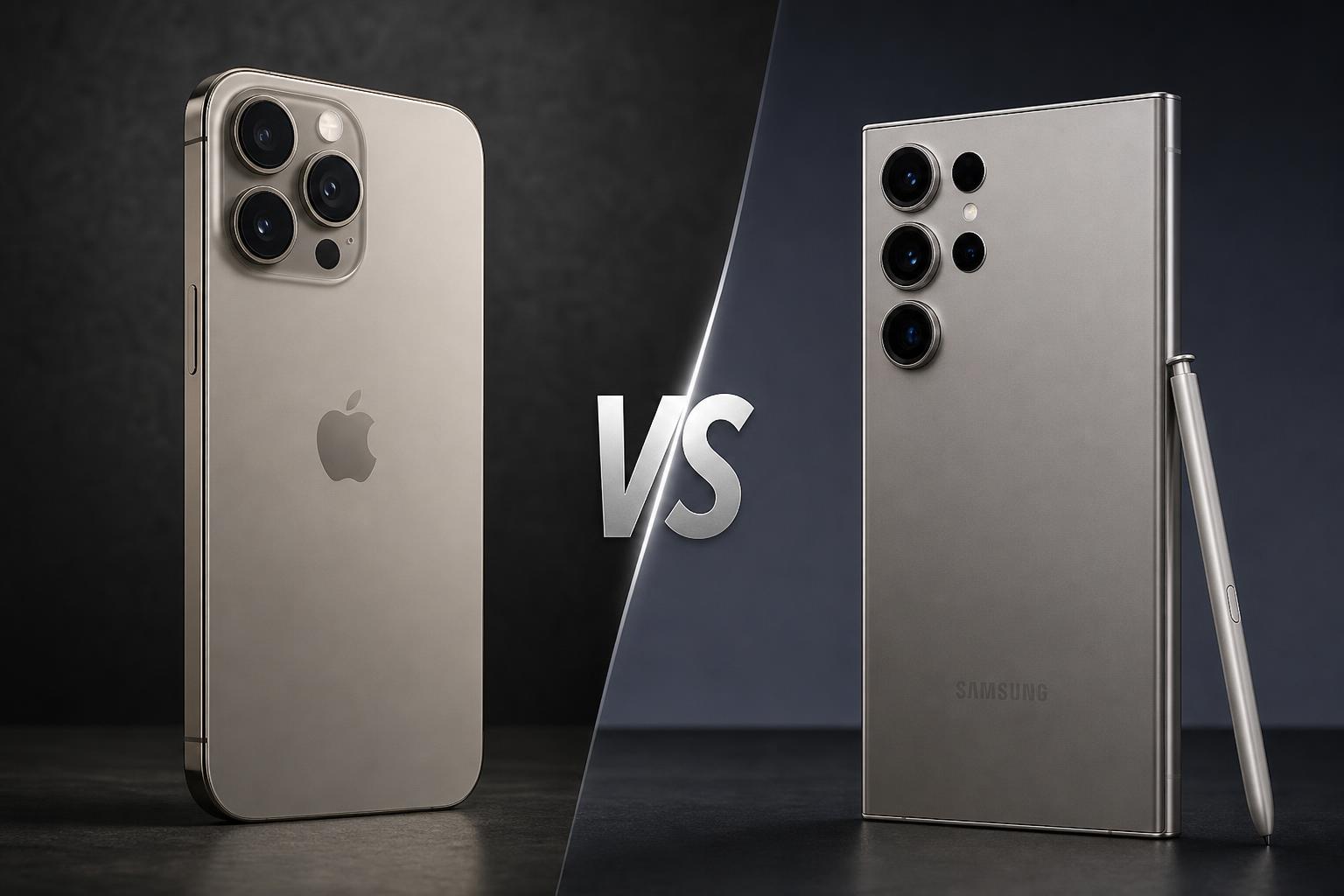
The iPhone 18 Pro Max and Samsung Galaxy S26 Ultra are two of the most feature-rich phones in their respective ecosystems. Both have 6.9-inch displays, flagship processors, advanced camera systems and starting prices close to $1,300 in the U.S. However, their priorities are different. Apple puts particular emphasis on video capture, Apple Intelligence, battery playback ratings and deep integration with its wider hardware and services ecosystem. Samsung counters with an integrated S Pen, more varied telephoto hardware, a built-in Privacy Display, DeX and faster specified wired charging.
This comparison uses the verified manufacturer specifications and pricing available in the supplied research. The iPhone 18 Pro Max is announced for general availability on September 18, 2026, while the Galaxy S26 Ultra was released on March 11, 2026.
Quick answer: the Galaxy S26 Ultra is the more versatile choice for buyers who want a stylus, zoom hardware, Android flexibility and immediate availability. The iPhone 18 Pro Max is the stronger fit for Apple users, professional video creators and anyone who values a 45-hour manufacturer-rated video-playback figure or up to 2TB of storage. Performance is best treated as a tie because no directly comparable independent benchmark result is included in the verified research.
Key specifications comparison
| Specification | Apple iPhone 18 Pro Max | Samsung Galaxy S26 Ultra |
|---|---|---|
| Starting price | $1,299 for 256GB | $1,299.99 for 256GB |
| Availability | Announced; general availability from September 18, 2026 | Released March 11, 2026 |
| Display | 6.9-inch Super Retina XDR all-screen OLED; 2868 x 1320; 460 ppi; up to 120Hz; up to 3,000 nits outdoor brightness | 6.9-inch QHD+ Dynamic AMOLED 2X; 3120 x 1440; adaptive 1Hz–120Hz; up to 2,600 nits peak brightness; Privacy Display |
| Processor | Apple A20 Pro; 6-core CPU; 7-core GPU; dual 16-core Neural Engine; hardware ray tracing | Snapdragon 8 Elite Gen 5 for Galaxy; 3nm process |
| RAM and storage | RAM not officially specified; 256GB, 512GB, 1TB or 2TB | 12GB RAM with 256GB or 512GB; 16GB RAM with 1TB |
| Rear cameras | 48MP Fusion Main with variable aperture; 48MP Fusion Ultra Wide; 48MP Fusion Telephoto; up to 8x optical-quality telephoto and 40x digital zoom | 200MP Wide AF; 50MP Ultra Wide AF; 10MP 3x telephoto; 50MP 5x telephoto; up to 100x digital zoom |
| Video | ProRes and ProRes RAW; up to 4K Dolby Vision at 120fps on the Main camera | 4K at 120fps and 8K at 30fps |
| Battery and charging | Up to 30 hours typical use; up to 45 hours video playback; up to 40 hours streamed video playback; up to 50% in around 15 minutes with a compatible 60W-capable adapter or higher | 5,000mAh typical capacity; up to 60W wired; up to 25W wireless; Wireless PowerShare |
| Dimensions and weight | 163.4 x 78.0 x 8.75mm; 249g | 163.6 x 78.1 x 7.9mm; 214g |
| Notable features | iOS 27, Apple Intelligence, Siri AI, Face ID, satellite emergency features, MagSafe and USB-C | Android 16, One UI 8.5, Galaxy AI, integrated S Pen, DeX, Privacy Display and IP68 resistance |
Design and build
The iPhone 18 Pro Max uses an aluminum unibody design with Ceramic Shield 2 on the front and a Ceramic Shield back. It measures 163.4 x 78.0 x 8.75mm and weighs 249g. That makes it a substantial phone, particularly in the hand, although its dimensions are close to Samsung's larger Ultra model. Apple also includes IP68 water and dust resistance, Face ID, MagSafe and USB-C connectivity.
The Galaxy S26 Ultra is slimmer and notably lighter. It measures 163.6 x 78.1 x 7.9mm and weighs 214g. Its biggest physical differentiator is the integrated S Pen, which is stored within the phone rather than requiring a separate accessory. That makes the Galaxy especially relevant to buyers who regularly write notes, annotate documents, draw, translate content or use screen-capture tools.
Both phones provide IP68 water and dust resistance, but the construction details differ. Apple specifies its aluminum unibody and Ceramic Shield materials, while the supplied Samsung research identifies the Galaxy's Ultra design without providing a comparable front-and-back material description. The Galaxy is 35g lighter than the iPhone 18 Pro Max and 0.85mm slimmer, which may matter to people who carry their phone all day.
Samsung also adds a Privacy Display. This is a built-in display feature rather than an optional accessory and is one of the clearest functional differences between the two designs. It may appeal to commuters, frequent travellers and people who view sensitive information in public. Apple instead focuses on its established ecosystem of MagSafe accessories and satellite emergency features.
Display
Both phones use large 6.9-inch OLED-class displays with adaptive refresh rates reaching 120Hz. The iPhone 18 Pro Max has a 2868 x 1320 resolution at 460 pixels per inch, ProMotion adaptive refresh, an Always-On display and up to 3,000 nits of outdoor brightness. The Galaxy S26 Ultra has a higher QHD+ 3120 x 1440 resolution, an adaptive refresh range from 1Hz to 120Hz, up to 2,600 nits of peak brightness and its built-in Privacy Display.
The Galaxy has the clearer advantage on listed resolution. Its QHD+ panel provides more pixels than the iPhone's 2868 x 1320 display, although the practical difference will depend on viewing distance, content and personal preference. Samsung also states a 1Hz minimum refresh rate, while Apple's research confirms adaptive refresh up to 120Hz but does not provide an equivalent minimum figure.
Brightness is less straightforward. Apple's specification lists up to 3,000 nits of outdoor brightness, while Samsung lists up to 2,600 nits peak brightness. These labels are not necessarily measured in identical conditions, so the figures should not be treated as a definitive real-world brightness test. On paper, Apple has the higher listed outdoor figure; Samsung brings the more unusual Privacy Display capability.
The iPhone's Always-On display is another useful distinction. The Galaxy's research does not list an Always-On display in the supplied specifications, so it should not be assumed here. For media, browsing and games, both phones offer large high-refresh-rate panels suited to premium use.
Performance
The iPhone 18 Pro Max is powered by Apple's A20 Pro. Its specification includes a 6-core CPU, a 7-core GPU with Neural Accelerators, a dual 16-core Neural Engine and hardware-accelerated ray tracing. These features position the phone for demanding applications, artificial intelligence workloads and graphics-intensive games.
The Galaxy S26 Ultra uses the Snapdragon 8 Elite Gen 5 for Galaxy, manufactured on a 3nm process. Samsung pairs that platform with Galaxy AI features and up to 16GB of RAM on the 1TB model. The iPhone's official RAM capacity is not specified in the supplied research, so a direct memory comparison cannot be made from the available information.
There is no directly comparable independent benchmark result in the verified material. That means it would be misleading to name a definitive performance winner. Both are current flagship platforms with dedicated AI and graphics capabilities. The more meaningful choice is likely to come from software preference, app ecosystem, gaming requirements and features such as Samsung DeX or Apple's video-production tools.
Samsung DeX gives the Galaxy a distinctive productivity angle by supporting a desktop-style experience. The iPhone instead benefits from its integration with Apple hardware and services. Buyers should therefore consider the devices they already use: the Galaxy makes more sense for someone invested in Android and Samsung services, while the iPhone is the natural match for an Apple-oriented setup.
Camera and graphics features
iPhone 18 Pro Max camera system
The iPhone 18 Pro Max uses a 48MP Fusion Main camera with a variable aperture, a 48MP Fusion Ultra Wide camera and a 48MP Fusion Telephoto camera. Its telephoto system supports 4x optical and up to 8x optical-quality telephoto, with digital zoom reaching up to 40x. The front camera is an 18MP Center Stage camera.
Apple's strongest camera argument is video. The phone supports ProRes and ProRes RAW, as well as up to 4K Dolby Vision at 120fps on the Main camera. Those formats and recording capabilities make it the more clearly specified option for professional video workflows, especially for creators already using Apple-oriented editing and production tools.
Galaxy S26 Ultra camera system
Samsung takes a different approach, starting with a 200MP Wide AF camera and a 50MP Ultra Wide AF camera. It adds two dedicated telephoto cameras: a 10MP 3x telephoto and a 50MP 5x telephoto. The phone supports 3x and 5x optical zoom, 2x and 10x optical-quality zoom and up to 100x digital zoom. Its front camera is 12MP.
This gives the Galaxy more varied dedicated zoom hardware on paper. It is the more obvious choice for photographers who prioritise multiple native telephoto perspectives, distant subjects and a very broad zoom range. The phone also records 4K video at 120fps and 8K video at 30fps, giving it a higher-resolution video option than the iPhone's listed maximum.
Specifications alone do not establish which phone produces better images. The Galaxy has the higher nominal main-camera resolution and more dedicated telephoto cameras, while the iPhone offers a 48MP multi-camera system, variable aperture and a more explicitly professional set of video formats. Choose the iPhone for video-first creation and Apple workflows; choose the Samsung for zoom flexibility, high-resolution still capture and 8K recording.
Battery and charging
Apple rates the iPhone 18 Pro Max for up to 30 hours of typical use, up to 45 hours of video playback and up to 40 hours of streamed video playback. It has a built-in rechargeable lithium-ion battery and can reach up to 50% charge in around 15 minutes when used with a compatible 60W-capable adapter or higher.
Samsung specifies a 5,000mAh typical battery for the Galaxy S26 Ultra. It supports up to 60W wired charging, up to 25W wireless charging and Wireless PowerShare. The listed wired charging capability is faster than the iPhone's specified adapter requirement, although the two sets of figures describe different things: Samsung gives charging power, while Apple provides an estimated time to reach 50%.
Apple has the stronger manufacturer-rated video-playback figure, but Samsung's supplied materials do not include a directly comparable video-playback rating. The Galaxy's 5,000mAh capacity does not by itself prove longer real-world battery life. On the verified information available here, the iPhone is the safer choice for buyers who prioritise the published playback rating, while the Galaxy is the better fit for faster specified wired charging and more charging flexibility.
Software and features
The iPhone 18 Pro Max runs iOS 27 with Apple Intelligence and Siri AI. It also includes Face ID, satellite emergency features, MagSafe and USB-C connectivity. The combination of iOS and Apple's hardware and services integration is likely to be a major reason for choosing it, particularly for existing Apple users.
The Galaxy S26 Ultra runs Android 16 with One UI 8.5 and Galaxy AI features. Its integrated S Pen supports writing, drawing, notes, translation and screen capture. Samsung also includes DeX, Privacy Display controls and Wireless PowerShare. This makes the Galaxy's feature set particularly broad: it is a conventional flagship phone, a stylus device and a potential desktop-style productivity tool in one.
The software decision is therefore more than a question of interface preference. iOS 27 is the better fit for people who want Apple's ecosystem and its video-oriented tools. Android 16 with One UI 8.5 is more compelling for buyers who value customisation, S Pen input, multitasking and Samsung's productivity features.
Price and value
The iPhone 18 Pro Max starts at $1,299 in the U.S. for 256GB. The Galaxy S26 Ultra starts at $1,299.99 for 256GB, making Samsung's listed starting price just $0.99 higher. At this level, the difference is effectively negligible, so the decision should be based on features rather than the launch price alone.
Apple offers 256GB, 512GB, 1TB and 2TB storage options. That 2TB maximum is a significant advantage for people who record large amounts of high-resolution video or want to keep extensive media libraries on the device. The iPhone's official RAM capacity is not specified.
Samsung offers 12GB of RAM with 256GB or 512GB storage and 16GB of RAM with the 1TB model. It does not support microSD cards. The Galaxy's value proposition comes from the hardware included in the phone: an S Pen, multiple telephoto cameras, Privacy Display, DeX, faster specified wired charging and a 16GB RAM option.
In practical terms, the Galaxy offers more built-in versatility at almost the same entry price. The iPhone may deliver better value for Apple users, video creators and buyers who need 2TB storage. Availability also matters: the Galaxy is already released, while the iPhone 18 Pro Max is not scheduled for general availability until September 18, 2026.
Apple iPhone 18 Pro Max: pros and cons
Pros
- Apple rates it for up to 45 hours of video playback.
- Advanced 48MP multi-camera system with a variable-aperture Main camera.
- Professional video support including ProRes, ProRes RAW and 4K Dolby Vision at 120fps.
- A20 Pro includes hardware-accelerated ray tracing and dedicated Neural Engine hardware.
- Storage options extend to 2TB.
- Strong Apple ecosystem integration and satellite emergency features.
Cons
- General availability is not scheduled until September 18, 2026.
- At 249g, it is heavier than the Galaxy S26 Ultra.
- Apple does not specify official RAM capacity in the supplied research.
- There is no integrated stylus.
- Its telephoto system offers fewer distinct native optical focal lengths than Samsung's.
Samsung Galaxy S26 Ultra: pros and cons
Pros
- Integrated S Pen supports notes, drawing, translation and screen capture.
- Dedicated 3x and 5x telephoto cameras provide broader zoom hardware.
- Supports up to 100x digital zoom, 4K at 120fps and 8K at 30fps.
- Offers up to 16GB RAM and 1TB storage.
- Includes a built-in Privacy Display and Samsung DeX.
- Its specified 60W wired charging is faster than the iPhone's listed charging capability.
- It is already released and available ahead of the iPhone's stated general-availability date.
Cons
- Its 5,000mAh capacity does not prove longer real-world battery life than the iPhone.
- Although lighter than the iPhone, it remains a large and wide flagship phone.
- There is no microSD card support.
- Its starting price is listed as $0.99 higher than the iPhone's.
- Its broader camera hardware does not, by specifications alone, prove superior image quality.
Which phone is better for different buyers?
Best for Apple ecosystem users
The iPhone 18 Pro Max is the more logical choice for people already using Apple hardware and services. Its iOS 27 software, Apple Intelligence, Siri AI, Face ID, MagSafe and satellite emergency features provide a cohesive experience. Existing Apple users should also consider how much they value compatibility with their current devices and services.
Best for stylus-based productivity
The Galaxy S26 Ultra wins clearly for buyers who want to write directly on the screen. The integrated S Pen supports writing, drawing, notes, translation and screen capture, while DeX adds another productivity feature that the iPhone does not match in the supplied research.
Best for camera zoom
The Galaxy S26 Ultra is the stronger specification-led choice for zoom. Its dedicated 3x and 5x telephoto cameras, 3x and 5x optical zoom and up to 100x digital zoom provide more varied reach than the iPhone's listed 4x optical and up to 8x optical-quality telephoto system.
Best for professional video
The iPhone 18 Pro Max is the better fit for creators who prioritise professional video formats and Apple-oriented workflows. ProRes, ProRes RAW, Dolby Vision and 4K recording at up to 120fps on the Main camera give it a particularly strong video specification.
Best for storage
The iPhone 18 Pro Max offers the higher maximum capacity, with a 2TB option compared with 1TB for the Galaxy S26 Ultra. That could make a meaningful difference to video creators and users who prefer to store large files locally.
Best for charging
The Galaxy S26 Ultra is the better choice if charging speed is the priority on the published specifications. Samsung lists up to 60W wired charging, up to 25W wireless charging and Wireless PowerShare. Apple lists up to 50% charge in around 15 minutes with a compatible 60W-capable adapter or higher, so the measurements are not directly equivalent.
Best for battery life
The iPhone 18 Pro Max has the stronger quoted figure, with up to 45 hours of video playback. However, Samsung does not provide a directly comparable playback rating in the supplied material. The iPhone is therefore the manufacturer-rating choice, not a conclusively proven real-world winner.
Final verdict
The Samsung Galaxy S26 Ultra is the better all-round feature package for most buyers who want maximum hardware flexibility. For almost the same starting price as the iPhone 18 Pro Max, it includes an S Pen, dedicated 3x and 5x telephoto cameras, a Privacy Display, DeX, up to 16GB RAM and faster specified wired charging. It is also already released.
The iPhone 18 Pro Max remains the more compelling specialist choice. It offers Apple's ecosystem, a professional video-focused camera specification, an up-to-2TB storage tier, satellite emergency features and the higher quoted video-playback figure. It is the phone to choose if iOS, Apple services or advanced video capture matter more than stylus productivity and zoom versatility.
There is no verified basis for declaring a universal performance winner, and camera specifications alone cannot establish image-quality leadership. At this price, the best choice depends on what you will use most: choose the Galaxy for breadth and productivity, or the iPhone for Apple integration, storage and video creation.
FAQs
Is the iPhone 18 Pro Max cheaper than the Galaxy S26 Ultra?
Yes, but only by $0.99 at the listed U.S. starting prices. The iPhone 18 Pro Max starts at $1,299 for 256GB, while the Galaxy S26 Ultra starts at $1,299.99 for 256GB.
Which has the better camera, the iPhone 18 Pro Max or Galaxy S26 Ultra?
It depends on the type of photography. The Galaxy has more varied dedicated telephoto hardware, a 200MP Main camera and up to 100x digital zoom. The iPhone has a 48MP multi-camera system with variable aperture and stronger specified professional video features. The available specifications do not prove that either produces better overall image quality.
Which phone has better battery life?
Apple rates the iPhone 18 Pro Max for up to 45 hours of video playback and up to 40 hours of streamed video playback. Samsung lists a 5,000mAh typical battery but does not provide a directly comparable video-playback figure in the supplied research. The iPhone has the stronger published playback claim, but real-world leadership cannot be conclusively established here.
Does the iPhone 18 Pro Max include a stylus?
No. The iPhone 18 Pro Max does not include an integrated stylus in the verified specifications. The Galaxy S26 Ultra includes an integrated S Pen.
Which phone is better for video recording?
The iPhone 18 Pro Max is the stronger choice for professional video workflows because it supports ProRes, ProRes RAW and up to 4K Dolby Vision at 120fps on the Main camera. The Galaxy S26 Ultra supports 4K at 120fps and 8K at 30fps, making it attractive for buyers who want 8K recording.
Which phone has the better display?
Both have 6.9-inch displays with refresh rates up to 120Hz. The Galaxy offers higher QHD+ resolution and a Privacy Display, while the iPhone lists up to 3,000 nits outdoor brightness, Always-On display support and a 460ppi OLED panel. The preferred display depends on whether you value resolution and privacy or Apple's brightness and Always-On features.
Sources
- Apple: iPhone 18 Pro and iPhone 18 Pro Max technical specifications
- Apple: iPhone 18 Pro and iPhone 18 Pro Max
- Apple Newsroom: Apple debuts iPhone 18 Pro and iPhone 18 Pro Max
- Samsung Newsroom: Samsung unveils Galaxy S26 series
- Samsung: Buy unlocked Galaxy S26 Ultra
- Samsung Support: Compare Galaxy S26, S26+, S26 Ultra and S26 FE