
Apple iPhone 18 Pro Max vs Samsung Galaxy S26+: Which flagship phone is better?
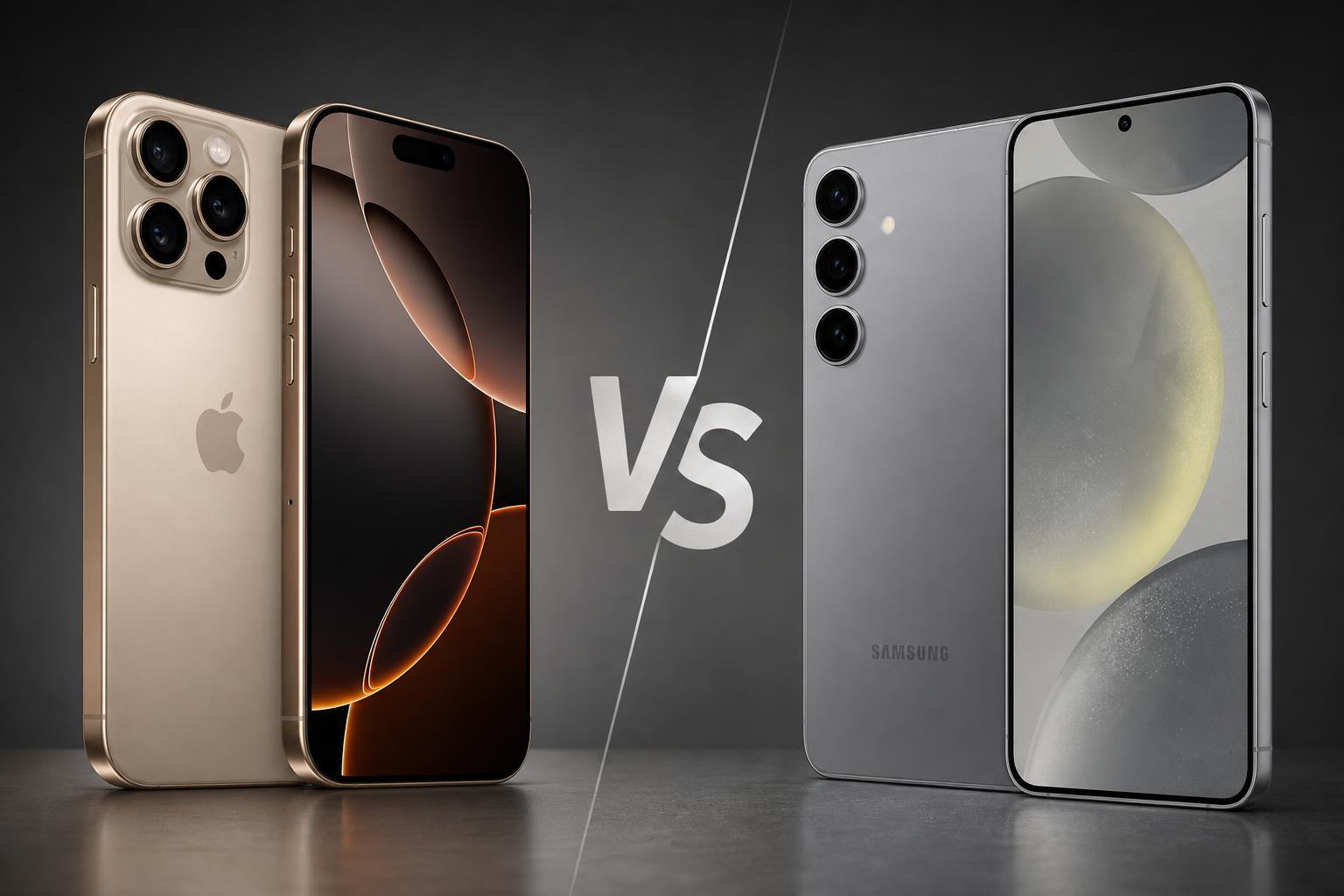
The Apple iPhone 18 Pro Max and Samsung Galaxy S26+ are high-end smartphones aimed at buyers who want a large display, flagship performance and extensive camera features. They take different approaches, however. Apple’s model is the larger and heavier phone, with more storage choices, a more advanced listed camera and video specification, and a higher U.S. starting price. Samsung’s Galaxy S26+ is lighter and thinner, costs less to start, and combines a QHD+ display with long-term Android software support.
This comparison uses the manufacturers’ published specifications and pricing. It does not treat either phone as tested hardware, and there are no directly comparable benchmark results in the supplied research.
Quick verdict
The iPhone 18 Pro Max is the stronger choice for creators, camera-focused buyers, people who need up to 2TB of storage, and users already invested in Apple’s ecosystem. Its three 48MP rear cameras, variable aperture, ProRes RAW, Dolby Vision recording and longer rated video playback give it the broader feature set on paper.
The Samsung Galaxy S26+ is the better value pick for most buyers comparing prices directly. It starts $200 below the iPhone in the U.S., weighs 39g less, is 1.45mm thinner, and includes a QHD+ display, wireless charging and a published seven-year software-security commitment. The choice is therefore less about a universal winner and more about whether you prioritise Apple’s camera and storage advantages or Samsung’s price, portability and Android features.
Key specifications comparison
| Specification | Apple iPhone 18 Pro Max | Samsung Galaxy S26+ |
|---|---|---|
| Release date | September 18, 2026 | March 11, 2026 |
| U.S. starting price | $1,299 for 256GB | $1,099.99 for 256GB |
| Display | 6.9-inch Super Retina XDR OLED, 2868×1320, up to 120Hz | 6.7-inch Dynamic AMOLED 2X QHD+, 3120×1440, up to 120Hz |
| Processor | Apple A20 Pro | Qualcomm Snapdragon 8 Elite Gen 5 for Galaxy in the U.S. |
| Memory and storage | Official RAM not specified; 256GB, 512GB, 1TB or 2TB | 12GB memory; 256GB or 512GB |
| Rear cameras | 48MP variable-aperture main, 48MP ultra-wide, 48MP telephoto | 50MP wide, 12MP ultra-wide, 10MP telephoto |
| Zoom | Up to 8x optical-quality zoom | 3x optical zoom; up to 30x digital zoom |
| Video | ProRes and ProRes RAW; Dolby Vision up to 4K at 120fps | Up to 8K at 30fps |
| Battery rating | Up to 30 hours typical use; 45 hours video playback | 4,900mAh typical capacity; up to 31 hours video playback |
| Charging | Up to 50% in around 15 minutes with compatible 60W-capable adapter | Up to 69% in around 30 minutes with compatible equipment; wireless charging |
| Weight and thickness | 249g; 8.75mm | 190g; 7.3mm |
| Water resistance | IP68 | IP68 |
| Software | iOS 27, Apple Intelligence and Siri AI | Android 16, One UI 8.5 and Galaxy AI |
Design and build
The two phones are premium large-screen devices, but their physical priorities are notably different. The iPhone 18 Pro Max measures 163.4 × 78.0 × 8.75mm and weighs 249g. Samsung’s Galaxy S26+ measures 158.4 × 75.8 × 7.3mm and weighs 190g. That makes the Galaxy 39g lighter and 1.45mm thinner than the iPhone.
That difference should matter to anyone who carries a phone all day or prefers a less substantial handset. The iPhone’s larger screen and bigger overall body may appeal to people who want a spacious viewing area, but the Galaxy’s lower weight gives it the clear specification advantage for portability. Neither product is a small phone, though; both are designed around large displays.
Apple uses an aluminum unibody with Ceramic Shield 2 on the front and a Ceramic Shield back. Samsung lists an Armor Aluminum frame for the Galaxy S26+. Both phones have IP68 water and dust resistance, USB-C connectivity and no charger plug included in the box. The iPhone also includes Face ID, satellite emergency and messaging features, while the Galaxy supports wireless charging.
Samsung lists six colour options, including Samsung.com-exclusive colours. The supplied research does not specify the iPhone’s available colours, so colour choice should not be treated as a deciding factor from this comparison alone.
Display
Both phones use OLED-based displays with adaptive refresh rates up to 120Hz. That means both specifications support smooth scrolling and responsive motion, although the supplied information does not include independent measurements of real-world brightness, colour accuracy or viewing performance.
The iPhone 18 Pro Max has the larger panel at 6.9 inches. Its Super Retina XDR OLED display offers a 2868×1320 resolution at 460ppi, an Always-On display and up to 3,000 nits of outdoor peak brightness. The high listed brightness is particularly relevant for people who regularly use their phone outdoors.
The Galaxy S26+ has a 6.7-inch Dynamic AMOLED 2X display with a 3120×1440 QHD+ resolution. Although it is smaller, its listed resolution is higher than the iPhone’s, making Samsung the more specification-focused choice for display sharpness. Both screens support adaptive refresh rates up to 120Hz, so neither is missing the flagship essentials for fluid everyday use.
Choose the iPhone if you want the largest screen and higher listed outdoor peak brightness. Choose the Galaxy if a QHD+ panel and lighter body are more important than maximum screen size.
Performance
The iPhone 18 Pro Max uses Apple’s A20 Pro processor. Apple lists a six-core CPU, seven-core GPU with Neural Accelerators, a dual 16-core Neural Engine and hardware-accelerated ray tracing.
In the U.S., the Galaxy S26+ uses Qualcomm’s Snapdragon 8 Elite Gen 5 for Galaxy. Processor availability may vary by market, so buyers outside the U.S. should confirm the configuration for their region before purchasing.
Both are current flagship-class platforms. However, the supplied research does not include directly comparable benchmark results, and manufacturer or publication testing conditions can differ. It would therefore be misleading to declare one an outright performance winner based only on the processor names.
The Galaxy does have a clearly published memory figure: 12GB. Apple does not specify the iPhone’s official RAM capacity in the supplied technical information. That does not establish a real-world performance advantage for Samsung, but it does make the Galaxy’s memory specification easier to compare on paper. Both devices should be considered suitable for demanding apps, high-resolution video work and graphics-heavy mobile games based on their flagship positioning and listed hardware features, but this article makes no hands-on performance claim.
Camera and graphics features
The iPhone 18 Pro Max has the more extensive listed camera system. It combines a 48MP variable-aperture main camera, a 48MP ultra-wide camera and a 48MP telephoto camera. Apple lists up to 8x optical-quality zoom, while the front camera is an 18MP Center Stage camera.
For video creators, the iPhone supports ProRes and ProRes RAW, as well as Dolby Vision video up to 4K at 120fps. It also offers Pro controls. These features make the iPhone the more compelling option for buyers who want advanced capture formats and a broader specification for professional or enthusiast video workflows.
The Galaxy S26+ uses a 50MP wide camera, a 12MP ultra-wide camera and a 10MP telephoto camera. Its telephoto lens provides 3x optical zoom, with up to 30x digital zoom. The front camera is 12MP, and video recording goes up to 8K at 30fps. Samsung also lists its ProVisual Engine and Galaxy AI features as part of the camera experience.
The numbers do not tell the whole story of image quality, and no controlled camera test is included here. Still, the published hardware and video features give Apple the advantage for creators and buyers specifically comparing camera versatility, optical-quality zoom and advanced recording formats. Samsung remains attractive for people who want a strong multi-camera setup, 8K capture and AI-assisted tools within a less expensive and lighter phone.
Battery and charging
Apple rates the iPhone 18 Pro Max for up to 30 hours of typical use, up to 45 hours of video playback and up to 40 hours of streamed video playback. With a compatible 60W-capable adapter, Apple says it can reach up to 50% charge in around 15 minutes.
Samsung lists a 4,900mAh typical-capacity battery for the Galaxy S26+. Its published rating is up to 31 hours of video playback, and compatible charging equipment can provide up to 69% charge in around 30 minutes. The Galaxy also supports wireless charging.
On the manufacturers’ stated video-playback figures, the iPhone has the advantage: 45 hours compared with 31 hours for the Galaxy. These ratings should not be treated as a guarantee of identical everyday battery life, because usage, settings and testing methods affect results. Apple publishes usage and playback figures rather than a battery-capacity figure on the supplied specifications page, so the battery capacities are not directly comparable.
The Galaxy has the more useful charging specification for buyers who value wireless charging and a published battery capacity. The iPhone has the stronger manufacturer-rated playback figure and a faster stated route to 50%, but requires compatible charging equipment.
Software and features
The iPhone 18 Pro Max runs iOS 27 with Apple Intelligence and Siri AI. It also includes Face ID, satellite emergency and messaging features, and the wider Apple ecosystem can be an important reason to choose it. Buyers already using Apple devices and services may find the iPhone the more natural fit, although the supplied research does not list every ecosystem integration.
The Galaxy S26+ runs Android 16 with Samsung’s One UI 8.5 interface. Its Galaxy AI feature set includes Photo Assist, Now Nudge, Now Brief and Transcript Assist. Samsung also publishes a commitment to seven generations of OS upgrades and seven years of security updates from global launch.
That published update commitment is one of Samsung’s strongest long-term value points. The supplied research does not state an equivalent number of iOS upgrades for the iPhone, so no direct support-duration comparison should be made. The Galaxy also offers wireless charging, while the iPhone provides satellite features that are not listed for Samsung in the supplied information.
One limitation worth noting is that the Galaxy S26+ does not support S Pen functionality. Buyers wanting a Samsung phone with that feature should not select the S26+ on the assumption that it includes stylus support.
Price and value
The iPhone 18 Pro Max starts at $1,299 in the U.S. with 256GB of storage. Apple also offers 512GB, 1TB and 2TB versions. The Galaxy S26+ starts at $1,099.99 for 256GB, while the 512GB model is listed at $1,299.99.
At entry level, the Galaxy is $200 cheaper. That is a significant difference when comparing two phones with flagship-class processors, adaptive 120Hz displays, IP68 protection and USB-C. It makes Samsung the straightforward value choice for shoppers who want premium hardware without reaching the iPhone’s starting price.
Apple’s price is easier to justify if you will use its extra capacity or camera features. The iPhone is the only model here available with 1TB and 2TB options, and its camera system offers three 48MP rear sensors, a variable aperture, ProRes RAW and Dolby Vision up to 4K at 120fps. Buyers who would otherwise need separate storage or prioritise advanced video features may value those additions.
The Galaxy offers a more balanced specification for the money: 12GB memory, 256GB or 512GB storage, a QHD+ panel, wireless charging and a seven-year security-update commitment. The iPhone offers the higher ceiling for storage and camera capability, but the Galaxy gives more cost-conscious buyers a compelling flagship package.
Pros and cons
Apple iPhone 18 Pro Max
- Pros: Larger 6.9-inch display with up to 3,000 nits outdoor peak brightness.
- Pros: Three 48MP rear cameras, variable aperture and up to 8x optical-quality zoom.
- Pros: ProRes RAW and Dolby Vision video up to 4K at 120fps.
- Pros: Storage options extend to 2TB.
- Pros: Longer manufacturer-rated video playback than the Galaxy S26+.
- Pros: iOS 27, Apple Intelligence, Siri AI and satellite features.
- Cons: Starts $200 higher than the Galaxy S26+ in the U.S.
- Cons: Heavier and thicker than Samsung’s phone.
- Cons: Apple does not specify official RAM capacity in the supplied information.
- Cons: No charger is included in the box.
Samsung Galaxy S26+
- Pros: Lower U.S. starting price of $1,099.99.
- Pros: 190g weight and 7.3mm thickness make it lighter and thinner.
- Pros: QHD+ 6.7-inch display with adaptive refresh up to 120Hz.
- Pros: 12GB memory and 256GB or 512GB storage choices.
- Pros: Fast wired charging, wireless charging and Galaxy AI tools.
- Pros: Seven generations of OS upgrades and seven years of security updates.
- Cons: Maximum storage is lower than the iPhone’s 2TB option.
- Cons: Listed camera hardware and optical zoom range are less extensive than the iPhone’s.
- Cons: Lower manufacturer-rated video playback than the iPhone.
- Cons: Does not support S Pen functionality.
- Cons: No charger plug is included in the box.
Which phone is better for different buyers?
Best for camera and video creators: iPhone 18 Pro Max
The iPhone is the clearer choice based on the published feature set. Its three 48MP rear cameras, variable aperture, Pro controls, ProRes RAW, Dolby Vision at up to 4K and 120fps, and 18MP Center Stage front camera give creators more advanced tools to work with.
Best for value: Samsung Galaxy S26+
Samsung wins on direct price comparison. Its starting price is $200 lower, while it still offers a QHD+ 120Hz display, 12GB memory, a flagship processor and long-term software support. It is the better fit for buyers who want premium features without paying the iPhone premium.
Best for battery playback: iPhone 18 Pro Max
Apple rates the iPhone for up to 45 hours of video playback, compared with up to 31 hours for the Galaxy S26+. This is a manufacturer-published comparison rather than an independent battery test, but it gives Apple the advantage on the available figures.
Best for portability: Samsung Galaxy S26+
The Galaxy is 39g lighter and 1.45mm thinner. Its 6.7-inch display is still large, but the lower weight and slimmer body make it the better specification-led choice for people who dislike heavy phones.
Best for storage: iPhone 18 Pro Max
Apple offers 256GB, 512GB, 1TB and 2TB capacities. Samsung’s Galaxy S26+ tops out at 512GB, so the iPhone is better for people storing large video libraries, photos or applications locally.
Best for long-term Android support: Samsung Galaxy S26+
Samsung’s published commitment to seven generations of OS upgrades and seven years of security updates from global launch gives the Galaxy a clear advantage for buyers who want a stated long-term Android support policy.
Final verdict
The iPhone 18 Pro Max is the more capable option for camera and video enthusiasts, heavy storage users and Apple ecosystem customers. It has the larger, brighter-listed display, more extensive camera hardware, advanced recording formats, higher storage ceiling and longer manufacturer-rated video playback. Those strengths come with a higher price, more weight and a thicker body.
The Samsung Galaxy S26+ is the better all-round value choice. It costs less to start, is much lighter and thinner, offers a sharper QHD+ display, supports wireless charging, includes 12GB memory and has a clearly published long-term software-support policy. Its camera and video specification is not as ambitious as Apple’s, and it does not offer the same storage range.
Choose the iPhone 18 Pro Max if the camera system, video formats, storage and Apple features matter most. Choose the Galaxy S26+ if price, portability, display resolution and long-term Android support are the priorities.
FAQs
Is the iPhone 18 Pro Max more expensive than the Galaxy S26+?
Yes. The iPhone 18 Pro Max starts at $1,299 in the U.S. for 256GB, while the Galaxy S26+ starts at $1,099.99 for 256GB. The Galaxy is therefore $200 cheaper at entry level.
Which phone has the better camera specification?
The iPhone 18 Pro Max has the more advanced listed camera specification. It includes three 48MP rear cameras, a variable-aperture main camera, up to 8x optical-quality zoom, ProRes RAW and Dolby Vision video up to 4K at 120fps. The Galaxy S26+ has a 50MP main camera, 12MP ultra-wide, 10MP telephoto with 3x optical zoom and video recording up to 8K at 30fps.
Which phone has the longer battery life?
Apple publishes the longer video-playback rating. The iPhone 18 Pro Max is rated for up to 45 hours of video playback, while Samsung rates the Galaxy S26+ for up to 31 hours. Actual results depend on usage and settings.
Is the Galaxy S26+ lighter than the iPhone 18 Pro Max?
Yes. The Galaxy S26+ weighs 190g, compared with 249g for the iPhone 18 Pro Max. It is also 7.3mm thick versus 8.75mm for the iPhone.
Which phone offers more storage?
The iPhone 18 Pro Max offers more storage capacity. It is available with 256GB, 512GB, 1TB or 2TB, while the Galaxy S26+ is available with 256GB or 512GB.
Does the Galaxy S26+ support the S Pen?
No. The supplied specifications state that the Galaxy S26+ does not support S Pen functionality.
Sources
- iPhone 18 Pro and iPhone 18 Pro Max — Apple
- iPhone 18 Pro and iPhone 18 Pro Max Technical Specifications — Apple
- Apple debuts iPhone 18 Pro and iPhone 18 Pro Max — Apple
- Galaxy S26 and S26+ | Galaxy AI — Samsung
- Buy Unlocked Galaxy S26+ 256GB — Samsung
- Galaxy S26+ Product Environmental Report — Samsung