
Google Pixel 11 Pro XL vs Samsung Galaxy S26 Ultra: Which Flagship Should You Buy?
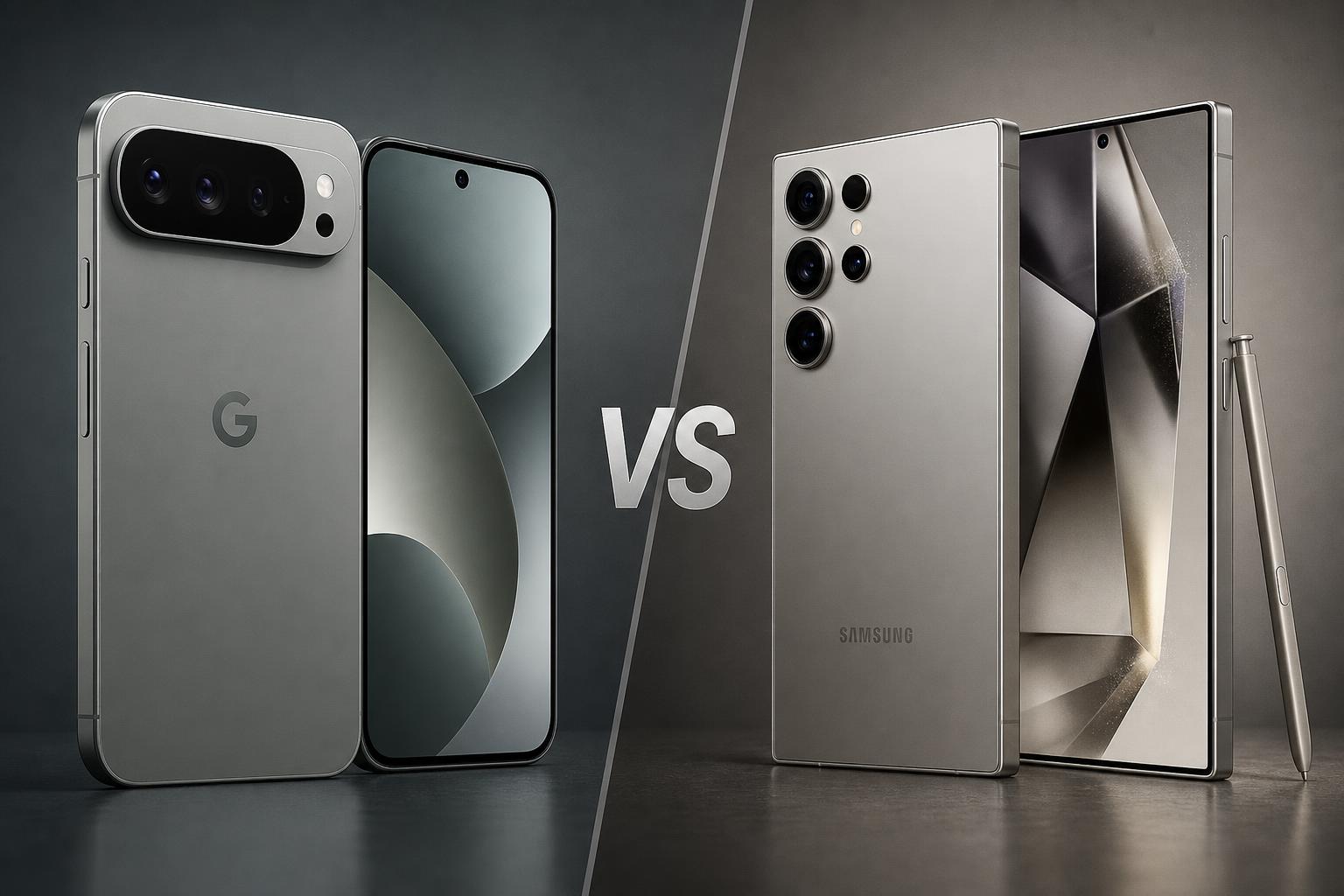
The Google Pixel 11 Pro XL and Samsung Galaxy S26 Ultra are large, premium Android phones aimed at buyers who want high-end displays, advanced cameras and long-term software support. Their starting prices are almost identical in the US: $1,299 for the 256GB Pixel 11 Pro XL and $1,299.99 for the 256GB Galaxy S26 Ultra.
That similar pricing does not mean they are interchangeable. Google puts greater emphasis on computational photography, Gemini features and extended Pixel software support. Samsung takes a broader hardware approach, with a more powerful flagship-oriented processor, two dedicated telephoto cameras, faster wired charging, an integrated S Pen and a built-in Privacy Display.
Quick verdict
The Samsung Galaxy S26 Ultra is the better all-round choice for demanding users, mobile gamers, content creators and anyone who will use its S Pen, flexible zoom cameras or faster charging. It offers the more extensive hardware package at almost the same starting price.
The Google Pixel 11 Pro XL is the better fit for buyers who prioritise Google’s Android experience, Gemini integration, computational photography, a larger rated battery and seven years of OS, security and Pixel Drop updates. It also has the brighter quoted display and supports Qi2.2 wireless charging.
Key specifications comparison
| Specification | Google Pixel 11 Pro XL | Samsung Galaxy S26 Ultra |
|---|---|---|
| Release date | August 20, 2026 | March 11, 2026 |
| Starting price | $1,299 for 256GB | $1,299.99 for 256GB |
| Display | 6.8-inch Super Actua, 1,344 x 2,992, up to 120Hz, up to 3,600 nits | 6.9-inch QHD+ Dynamic AMOLED 2X, 3,120 x 1,440, adaptive 1-120Hz, up to 2,600 nits |
| Processor | Google Tensor G6 | Snapdragon 8 Elite Gen 5 for Galaxy |
| Memory and storage | 12GB/256GB; 16GB/512GB or 1TB | 12GB/256GB or 512GB; 16GB/1TB |
| Rear cameras | 50MP main, 48MP ultrawide, 48MP telephoto with 5x optical zoom and up to 120x Pro Zoom | 200MP wide, 50MP ultrawide, 10MP 3x telephoto and 50MP 5x telephoto, up to 100x digital zoom |
| Front camera | 42MP | 12MP |
| Battery and charging | 5,115mAh; up to 45W wired and 25W Qi2.2 wireless | 5,000mAh; up to 60W wired, up to 75% in around 30 minutes, and up to 25W wireless |
| Software | Android 17 with Gemini features and seven years of OS, security and Pixel Drop updates | Android 16 with Samsung Galaxy AI and One UI |
| Weight | 226g | 214g |
| Additional features | IP68 rating and built-in Pixelsnap | IP68 rating, integrated S Pen and built-in Privacy Display |
Design and build
The Pixel 11 Pro XL and Galaxy S26 Ultra are both large phones with IP68-rated designs, but they have noticeably different physical priorities. The Pixel measures 162.6 x 76.2 x 7.6mm and weighs 226g. Samsung’s phone measures 163.6 x 78.1 x 7.9mm and weighs 214g.
That makes the Pixel slimmer, while the Galaxy is lighter despite being slightly wider and thicker. Buyers who prefer a narrower phone may find the Pixel’s dimensions more appealing on paper, but its 226g weight is higher than Samsung’s 214g figure. Both are substantial devices rather than compact flagship options.
Google uses its familiar horizontal camera bar design and offers the Pixel 11 Pro XL in Canyon, Fog, Olive and Obsidian. The research also identifies a matte finish option as part of the Pixel’s design approach. Samsung uses a more conventional camera-island layout and offers Cobalt Violet, Sky Blue, Black, White, Silver Shadow and Pink Gold.
The largest functional design difference is Samsung’s integrated S Pen. It gives the Galaxy S26 Ultra a built-in stylus experience that the Pixel does not match. The S Pen is relevant for handwritten notes, compatible productivity features and precise interaction, although the available research does not specify every supported software function.
Samsung also includes a built-in Privacy Display. This is a distinct hardware feature that can help restrict side viewing when activated, although the research notes that it may reduce viewing angles in that mode. The Pixel instead includes Pixelsnap, alongside its support for Qi2.2 wireless charging.
Display
Both phones offer large, high-refresh-rate displays, but their strengths differ. The Pixel 11 Pro XL has a 6.8-inch Super Actua display with a 1,344 x 2,992 resolution, a refresh rate of up to 120Hz and quoted peak brightness of up to 3,600 nits.
The Galaxy S26 Ultra has a slightly larger 6.9-inch QHD+ Dynamic AMOLED 2X display. Its 3,120 x 1,440 resolution is higher than the Pixel’s documented resolution, and it supports an adaptive 1-120Hz refresh rate. Samsung quotes peak brightness of up to 2,600 nits.
On brightness, the Pixel has the higher quoted peak figure. That may appeal to people who often use their phone outdoors or want strong HDR highlights, although peak brightness figures do not by themselves determine the complete viewing experience.
Samsung’s display has two important advantages of its own. The QHD+ resolution provides a more detailed specification than the Pixel’s listed resolution, and the adaptive 1-120Hz range allows the refresh rate to adjust across a broader range. The built-in Privacy Display is also useful for people who regularly view sensitive information in public. When activated, however, it may reduce viewing angles.
The display decision therefore depends on priorities. Choose the Pixel for the higher quoted peak brightness. Choose the Galaxy for QHD+ resolution, adaptive refresh behaviour and the option of an integrated Privacy Display.
Performance
The Pixel 11 Pro XL uses Google’s Tensor G6 processor, while the Galaxy S26 Ultra uses the Snapdragon 8 Elite Gen 5 for Galaxy. These chips reflect the different identities of the two phones.
The documented comparison positions the Galaxy as the stronger choice for demanding gaming and sustained high-performance workloads. Samsung’s processor is described as having upgraded CPU, GPU and NPU components, supported by thermal-management hardware aimed at high-performance use.
The Pixel’s Tensor G6 is more closely associated with Google’s on-device AI and Gemini features. That makes the Pixel’s performance proposition less about competing directly on flagship-oriented processing and more about enabling Google’s software and AI capabilities on the device.
Memory configurations are also important. The Pixel provides 12GB of RAM with 256GB storage, while the 512GB and 1TB versions have 16GB of RAM. Samsung offers 12GB with 256GB or 512GB storage and 16GB with 1TB storage.
For demanding games, sustained workloads and buyers who want the clearest documented performance advantage, the Galaxy S26 Ultra is the safer choice. For users who place greater value on Gemini integration and Google’s AI-focused features, the Pixel’s Tensor platform remains relevant.
Camera and video features
The Galaxy S26 Ultra has the more versatile rear-camera hardware. Its system includes a 200MP wide camera, a 50MP ultrawide camera, a 10MP 3x telephoto camera and a 50MP 5x telephoto camera. It supports up to 100x digital zoom.
The Pixel 11 Pro XL has a 50MP main camera, a 48MP ultrawide camera and a 48MP telephoto camera with 5x optical zoom. Google also lists up to 120x Pro Zoom and a 42MP selfie camera.
Samsung’s separate 3x and 5x telephoto cameras give it a broader dedicated zoom system. This should make the Galaxy the more flexible option for subjects at different distances, based on the documented hardware. Its 200MP main camera also gives Samsung a higher-resolution primary sensor specification.
Google’s approach is more computational. The Pixel emphasises computational photography, faster Night Sight and AI-assisted Pro Zoom. The 120x Pro Zoom headline is higher than Samsung’s 100x digital zoom figure, but the research specifically notes that AI-generated 120x Pro Zoom results can be inconsistent. The highest zoom number should therefore not be treated as a guarantee of better image quality.
For video creators, Samsung has the clearer specification advantage. The Galaxy S26 Ultra supports 8K video at 30fps and 4K video at 120fps in Pro Video. Those modes give it a stronger documented set of high-resolution and high-frame-rate recording options.
The Pixel remains attractive to people who prefer Google’s image processing and AI-assisted camera tools. Its 42MP front camera also has a higher quoted resolution than Samsung’s 12MP selfie camera. However, buyers who want the widest range of rear-camera focal lengths and creator-focused video modes should choose the Galaxy.
Battery and charging
The Pixel 11 Pro XL has the larger rated battery at 5,115mAh, compared with 5,000mAh in the Galaxy S26 Ultra. Battery capacity alone does not establish real-world endurance, but the Pixel has the specification advantage in this category.
Google supports up to 45W wired charging and 25W Qi2.2 wireless charging. Samsung supports faster wired charging of up to 60W and states that the Galaxy S26 Ultra can reach up to 75% in around 30 minutes. It also supports up to 25W wireless charging.
This creates a straightforward split. The Pixel is the better choice if battery capacity and Qi2.2 wireless charging matter most. The Galaxy is the better choice for users who value faster wired top-ups, particularly those who regularly need to recharge quickly.
Neither phone should be selected solely on its battery capacity or charging wattage. The available research does not provide a directly comparable battery-life figure for both devices, so endurance claims should remain cautious. The most defensible comparison is that Google offers the larger battery, while Samsung offers the faster documented wired charging.
Software and special features
The Pixel 11 Pro XL ships with Android 17 and includes Gemini features and HiLight. Google also promises seven years of OS, security and Pixel Drop updates. That is a major part of the Pixel’s long-term appeal, especially for buyers who keep phones for many years.
The Galaxy S26 Ultra runs Android 16 with Samsung Galaxy AI and One UI. Its software experience is complemented by the integrated S Pen and built-in Privacy Display. These features make the Galaxy more distinctive as a productivity and privacy-focused device.
Google’s software advantage is the stated support period and the close integration between Android, Gemini and Pixel-exclusive features. Samsung’s advantage is the combination of One UI, Galaxy AI, S Pen functionality and hardware features that are not available on the Pixel.
The best software choice will depend on which ecosystem feels more useful. Pixel buyers are choosing Google’s direct Android approach and longer documented update commitment. Galaxy buyers are choosing Samsung’s interface, AI tools, stylus and broader device feature set.
Price and value
The Google Pixel 11 Pro XL costs $1,299 for 256GB, while the Samsung Galaxy S26 Ultra costs $1,299.99 for 256GB. The difference is only 99 cents, so price alone does not separate these phones.
At this entry point, Samsung offers a more expansive hardware package: a Snapdragon 8 Elite Gen 5 for Galaxy processor, two telephoto cameras, faster wired charging, an integrated S Pen and a Privacy Display. That makes the Galaxy particularly compelling if you will use those features.
The Pixel’s value comes from different areas. It includes a larger rated battery, a brighter quoted display, Google’s Gemini and computational-photography features, and seven years of OS, security and Pixel Drop updates. The base Pixel model does have 12GB of RAM, while its 16GB configuration starts at 512GB storage or above.
In practical terms, the Galaxy offers better value for buyers who want the broadest flagship feature set at the starting price. The Pixel can offer better value for people who specifically want Google’s software, long-term support and AI camera tools.
Google Pixel 11 Pro XL: pros and cons
Pros
- Very bright 120Hz Super Actua display with up to 3,600 nits peak brightness.
- Larger 5,115mAh rated battery than the Galaxy S26 Ultra.
- Qi2.2 wireless charging at up to 25W.
- Google Tensor G6 and Pixel-exclusive Gemini features.
- Seven years of OS, security and Pixel Drop updates.
- Strong computational-photography features and up to 120x Pro Zoom.
- Higher quoted 42MP selfie-camera resolution.
Cons
- Documented benchmark performance is lower than current flagship-oriented competitors.
- The 256GB model has 12GB of RAM rather than the 16GB included with higher-storage versions.
- AI-generated 120x Pro Zoom results can be inconsistent.
- Its maximum wired charging speed is lower than Samsung’s.
- At 226g, it is heavier than the Galaxy S26 Ultra.
Samsung Galaxy S26 Ultra: pros and cons
Pros
- Powerful Snapdragon 8 Elite Gen 5 for Galaxy processor.
- More versatile camera system with separate 3x and 5x telephoto cameras.
- Faster wired charging of up to 60W, with up to 75% in around 30 minutes.
- Integrated S Pen.
- Built-in Privacy Display.
- Creator-focused video features including 8K at 30fps and 4K at 120fps in Pro Video.
- QHD+ display with adaptive 1-120Hz refresh.
Cons
- It is wider and thicker than the Pixel 11 Pro XL, although lighter.
- The starting price is effectively the same as the Pixel, with no lower-cost entry point documented.
- The Privacy Display may reduce viewing angles when activated.
- Its 5,000mAh battery is smaller than the Pixel’s rated capacity.
- Samsung’s software support duration is not specified in the supplied research.
Which phone is better for different buyers?
For demanding gamers and power users
Choose the Samsung Galaxy S26 Ultra. Its Snapdragon 8 Elite Gen 5 for Galaxy processor, upgraded graphics hardware and thermal-management features make it the stronger documented choice for demanding gaming and sustained workloads.
For Google fans and AI-focused users
Choose the Google Pixel 11 Pro XL. Android 17, Gemini features, HiLight and Google’s Pixel-specific software approach make it the more natural fit for people who prefer Google’s ecosystem.
For photography enthusiasts
The answer depends on the type of photography you value. The Galaxy S26 Ultra is better for camera flexibility because it has a 200MP main camera and separate 3x and 5x telephoto cameras. The Pixel 11 Pro XL is better suited to buyers who prioritise computational photography, Night Sight and AI-assisted Pro Zoom.
For video creators
Choose the Samsung Galaxy S26 Ultra. Its documented support for 8K video at 30fps and 4K video at 120fps in Pro Video gives it the stronger creator-focused specification.
For stylus users and mobile productivity
Choose the Samsung Galaxy S26 Ultra because it includes an integrated S Pen. The Pixel 11 Pro XL does not offer an equivalent built-in stylus feature.
For long-term ownership
Choose the Google Pixel 11 Pro XL if the stated seven years of OS, security and Pixel Drop updates are a priority. That is the clearest documented software-support advantage in this comparison.
For fast charging
Choose the Samsung Galaxy S26 Ultra. It supports up to 60W wired charging and is specified to reach up to 75% in around 30 minutes, compared with up to 45W wired charging for the Pixel.
Final verdict
The Samsung Galaxy S26 Ultra wins this comparison for the broadest flagship feature set. It combines a powerful Snapdragon processor with a flexible four-camera rear system, faster wired charging, an integrated S Pen, a Privacy Display and advanced video modes. At almost exactly the same starting price as the Pixel, it offers more hardware capabilities for demanding users and creators.
The Google Pixel 11 Pro XL is not simply a weaker alternative. It is the more focused choice for people who want Google’s Android experience, Gemini features, computational photography and a longer stated software-support commitment. Its 3,600-nit display and 5,115mAh battery are also strong specification points.
Choose the Galaxy S26 Ultra if you want maximum versatility and performance. Choose the Pixel 11 Pro XL if Google’s software, AI features and seven years of updates matter more than absolute hardware breadth.
FAQs
Which is faster, the Pixel 11 Pro XL or Galaxy S26 Ultra?
The Samsung Galaxy S26 Ultra is the stronger documented choice for demanding gaming and sustained high-performance workloads. It uses the Snapdragon 8 Elite Gen 5 for Galaxy with upgraded CPU, GPU, NPU and thermal-management hardware. The Pixel 11 Pro XL uses Google Tensor G6, which is more focused on on-device AI and Gemini features.
Does the Pixel 11 Pro XL have a better camera than the Galaxy S26 Ultra?
They prioritise different camera strengths. The Galaxy S26 Ultra has more versatile hardware, including 200MP, 3x telephoto and 5x telephoto cameras, as well as advanced video modes. The Pixel 11 Pro XL focuses on computational photography, faster Night Sight and AI-assisted Pro Zoom.
Which phone has the better battery?
The Pixel 11 Pro XL has the larger rated battery at 5,115mAh, compared with 5,000mAh for the Galaxy S26 Ultra. Samsung has the charging advantage, supporting up to 60W wired charging and up to 75% in around 30 minutes. Google supports up to 45W wired charging and 25W Qi2.2 wireless charging.
Does the Galaxy S26 Ultra come with an S Pen?
Yes. The Galaxy S26 Ultra has an integrated S Pen. The Pixel 11 Pro XL does not list an integrated stylus among its documented features.
Which phone has the brighter display?
The Pixel 11 Pro XL has the higher quoted peak brightness, at up to 3,600 nits. The Galaxy S26 Ultra is specified at up to 2,600 nits, but it offers QHD+ resolution, adaptive 1-120Hz refresh and a built-in Privacy Display.
Sources
- Google introduces Pixel 11, Pixel 11 Pro and Pixel 11 Pro XL — Google
- Google Pixel 11 Pro XL review — TechRadar
- Samsung Unveils Galaxy S26 Series: The Most Intuitive Galaxy AI Phone Yet — Samsung Newsroom
- Samsung Galaxy S26 Ultra review — TechRadar
- Samsung Galaxy S26 Ultra — Samsung