
Google Pixel 11 Pro XL vs OnePlus 15: Which flagship phone is better?
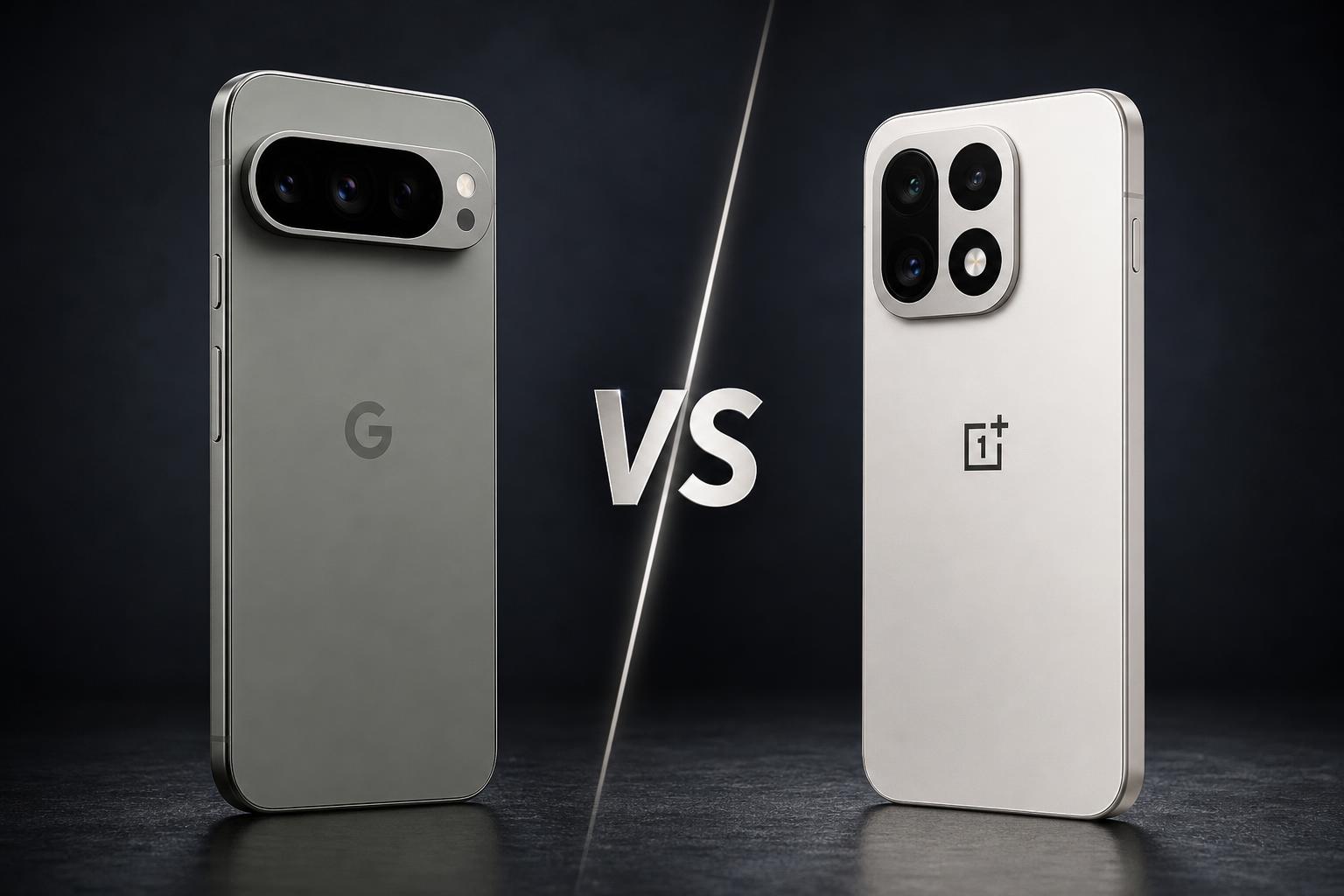
The Google Pixel 11 Pro XL and OnePlus 15 take noticeably different approaches to the flagship smartphone. Google’s phone is built around a high-resolution display, long-term software support, computational photography and Pixel-exclusive AI features. OnePlus puts more emphasis on raw hardware performance, high-refresh-rate gaming, battery capacity and fast charging.
Both phones offer premium specifications, triple rear cameras and high-end processors, but they are aimed at different priorities. The Pixel 11 Pro XL starts at $1,299, while the OnePlus 15 starts at $899.99 in the United States. That price gap is significant, although the OnePlus also offers a particularly large battery and more performance-focused hardware.
This comparison uses the verified specifications and pricing available from Google and OnePlus. It does not include independent benchmark, camera or battery testing.
Quick verdict
The OnePlus 15 is the better choice for most buyers focused on value, gaming, battery life and charging. It costs less, has a 7300mAh battery, supports 80W wired charging in the U.S. and Canada, and uses the Snapdragon 8 Elite Gen 5 platform with dedicated gaming-related hardware.
The Google Pixel 11 Pro XL is the better option for long-term ownership, Google services, AI tools and computational photography. It has a sharper and brighter display, a documented seven-year update commitment, a 5x optical telephoto camera and a deeper list of Pixel camera and editing features.
There is no universal winner. Choose the Pixel if software longevity and Google’s camera processing matter most. Choose the OnePlus if you want the strongest hardware value, faster charging and a larger battery.
Key specifications comparison
| Specification | Google Pixel 11 Pro XL | OnePlus 15 |
|---|---|---|
| Release | August 20, 2026 | November 13, 2025 globally; U.S. availability followed later |
| Starting price | $1,299 | $899.99 for 12GB/256GB |
| Display | 6.8-inch Super Actua LTPO OLED, 1344 x 2992, 1-120Hz | 6.78-inch LTPO 1.5K, up to 165Hz |
| Brightness | Up to 2400 nits HDR and 3600 nits peak | Up to 1800 nits high-brightness mode |
| Processor | Google Tensor G6 with Titan M3 security coprocessor | Qualcomm Snapdragon 8 Elite Gen 5 |
| Memory and storage | 12GB/256GB; 16GB/512GB or 1TB | 12GB/256GB; 16GB/512GB |
| Rear cameras | 50MP wide, 48MP ultrawide with Macro Focus, 48MP 5x telephoto | 50MP wide with OIS, 50MP ultrawide with autofocus, 50MP 3.5x periscope telephoto with OIS |
| Front camera | 42MP autofocus | 32MP autofocus RGBW |
| Video | 8K at 24/30fps; 4K up to 60fps | 4K at 120fps Dolby Vision; O-Log support |
| Battery | Typical 5115mAh; advertised 30+ hours | 7300mAh; up to 31 hours of video playback |
| Charging | Up to 75% in about 30 minutes with a 45W USB-C PPS charger; Qi2.2 wireless up to 25W | 80W wired in the U.S. and Canada; 50W wireless |
| Software | Android 17; seven years of OS, security and Pixel Drop updates | OxygenOS 16; update duration not verified in the cited sources |
| Durability information | Gorilla Glass Victus 2; IP rating not included in the verified specifications | IP66, IP68, IP69 and IP69K certifications |
Design and build
The Pixel 11 Pro XL has a relatively understated Google design. It measures 162.7 x 76.5 x 8.5mm and weighs 226g. Google lists Canyon, Olive, Fog and Obsidian matte colour options. Gorilla Glass Victus 2 is included in the verified specifications.
The Pixel’s dimensions and weight make it a substantial phone, but it is lighter than the verified OnePlus battery specification might suggest would be possible. The available research does not provide dimensions or weight for the OnePlus 15, so a direct physical comparison would be speculative.
OnePlus takes a more performance-oriented approach. The OnePlus 15 is described as using flat-frame construction, 1.15mm bezels and gaming-oriented ergonomics. Its listed colours are Infinite Black, Sand Storm and Ultra Violet. The phone also has IP66, IP68, IP69 and IP69K certifications, giving it a much broader documented range of water- and dust-resistance ratings than the Pixel information supplied here.
That does not mean the Pixel is unsuitable for everyday use; it means an IP rating was not included in the cited official Pixel specifications used for this comparison. Buyers who place a high value on documented protection against water and dust have a clearer specification to rely on with the OnePlus 15.
Display
The Pixel 11 Pro XL has the sharper display on paper. Its 6.8-inch Super Actua LTPO OLED panel has a 1344 x 2992 resolution and 486 pixels per inch. It supports a variable 1-120Hz refresh rate, which allows the display to adjust its refresh rate rather than remaining fixed at its maximum.
Brightness is another major Pixel advantage in the specification list. Google quotes up to 2400 nits for HDR content and up to 3600 nits peak brightness. The panel is protected by Gorilla Glass Victus 2.
The OnePlus 15 has a 6.78-inch LTPO 1.5K display with a dynamic refresh rate of up to 165Hz. Its maximum refresh rate is higher than the Pixel’s 120Hz, making it the more gaming-focused option for titles that can take advantage of high frame rates. OnePlus also lists 1.15mm bezels and up to 1800 nits in high-brightness mode.
In practical terms, the Pixel should appeal more to buyers who value resolution, HDR brightness and outdoor visibility on the basis of its specifications. The OnePlus is more compelling for high-frame-rate gaming and very smooth scrolling. Neither specification alone proves that one screen will look better in every situation, but the priorities are clear: Pixel for sharpness and brightness, OnePlus for refresh rate.
Performance
The OnePlus 15 has the more explicitly performance-focused hardware specification. It uses Qualcomm’s Snapdragon 8 Elite Gen 5 platform and includes a dedicated touch-response chip, an independent Wi-Fi chip, UFS 4.1 storage and LPDDR5X Ultra/Ultra+ memory. OnePlus also lists dedicated gaming and cooling features, along with a 3200Hz instant touch sampling claim.
These components make the OnePlus 15 the stronger specification for buyers who play demanding games, want fast touch response or expect to use the phone heavily for multitasking. The 165Hz display also complements that gaming emphasis.
The Pixel 11 Pro XL uses Google’s Tensor G6 processor and includes a Titan M3 security coprocessor. Google positions this hardware more strongly around on-device AI, security and Pixel software features than maximum gaming-oriented specifications. The phone is available with 12GB of RAM and 256GB of storage, or 16GB of RAM with either 512GB or 1TB of storage.
The OnePlus 15 offers 12GB of RAM with 256GB of storage or 16GB with 512GB. It therefore does not match the Pixel’s listed 1TB configuration, but its 16GB/512GB version is priced at $999.99, still below the Pixel’s $1,299 starting price.
No independent benchmark comparison is included in the verified research, so it would be inappropriate to state how much faster either phone is in real-world tests. On documented hardware, however, the OnePlus is the clearer choice for performance-focused buyers, while the Pixel’s strengths lie in AI processing, security and software integration.
Camera and video features
The Pixel 11 Pro XL has a 50MP wide camera, a 48MP ultrawide camera with Macro Focus and a 48MP 5x telephoto camera. It supports up to 120x Pro Zoom and has a 42MP autofocus front camera. Rear video recording reaches 8K at 24 or 30 frames per second, with 4K recording at up to 60fps.
Google’s phone also has a broad documented focus on computational photography, editing and AI. The verified strengths include Google’s computational photography and Pixel-exclusive camera and editing features. That makes the Pixel particularly interesting for people who want advanced assistance when capturing or editing photos, although the research does not include independent image samples or comparative camera testing.
The OnePlus 15 uses three 50MP cameras: a wide camera with optical image stabilisation, an ultrawide camera with autofocus and a 112-degree field of view, and a 3.5x optical periscope telephoto camera with optical image stabilisation. Its front camera is a 32MP autofocus RGBW unit.
OnePlus has the stronger documented video specification for creators who need high frame rates. The OnePlus 15 supports 4K video at 120fps, Dolby Vision and O-Log. These features give it a more explicitly creator-oriented video profile than the Pixel’s listed 8K and 4K/60fps capabilities.
The choice depends on what type of camera user you are. The Pixel has the longer list of computational photography, zoom and editing features, plus a longer 5x telephoto reach. The OnePlus has three 50MP cameras, optical stabilisation on its main and telephoto cameras, and more advanced documented high-frame-rate video options. The available research does not establish that either phone consistently takes better still photographs.
Battery and charging
Battery life and charging are among the clearest OnePlus advantages. The OnePlus 15 has a 7300mAh Silicon NanoStack battery, supports up to 31 hours of video playback and offers 80W wired charging in the U.S. and Canada. It also supports 50W wireless charging.
The Pixel 11 Pro XL has a typical 5115mAh battery and an advertised battery life of more than 30 hours. It can reach up to 75% charge in about 30 minutes when used with a 45W USB-C PPS charger. Its Qi2.2 wireless charging support reaches up to 25W.
Battery-capacity comparisons do not automatically predict real-world endurance, since screen brightness, software, network conditions and processor behaviour all matter. Even so, the OnePlus has a substantially larger stated capacity and faster wired and wireless charging. It is the stronger choice for people who frequently use their phone throughout the day, play games or want to spend less time connected to a charger.
The Pixel’s charging system remains useful, particularly for buyers who value Qi2.2 support, but its wired charging specification is substantially behind the OnePlus 15.
Software and features
The Pixel 11 Pro XL launches with Android 17 and has a clearly stated commitment to seven years of OS, security and Pixel Drop updates. That is one of the phone’s most important advantages for long-term ownership. Google also includes Gemini, Pixel-exclusive AI features and software for camera, editing and security.
A seven-year commitment does not guarantee that every future feature will be available on every model, but it does give buyers a clear documented support horizon. This is especially valuable for people who keep their phones for several years or want stronger reassurance about security updates.
The OnePlus 15 runs OxygenOS 16 and includes Plus Mind and Mind Space. It also integrates Google Gemini and offers OnePlus AI tools such as AI Scan, AI Writer, AI Recorder, AI Portrait Glow and AI Perfect Shot. Parallel Processing and the phone’s dedicated performance features add to its multitasking and gaming focus.
The cited OnePlus sources do not verify a software-support duration, so the Pixel has the clearer advantage on long-term update information. OnePlus may still be a good fit for buyers who prefer OxygenOS and its AI tools, but this comparison cannot make a factual claim about a longer or shorter support period beyond what the supplied research establishes.
Price and value
The Google Pixel 11 Pro XL starts at $1,299. Its base configuration includes 12GB of RAM and 256GB of storage. Moving to 16GB of RAM provides either 512GB or 1TB of storage.
The OnePlus 15 starts at $899.99 for 12GB of RAM and 256GB of storage. Its 16GB/512GB model costs $999.99. That means the OnePlus undercuts the Pixel by $399.01 at entry level, while its higher configuration remains $299.01 below the Pixel’s starting price.
On hardware value alone, the OnePlus is difficult to overlook. It offers a Snapdragon 8 Elite Gen 5 platform, a larger battery, faster charging, a 165Hz display and broad water- and dust-resistance certifications for less money.
The Pixel’s higher price is easier to justify for buyers who place a high value on its seven-year update commitment, brighter higher-resolution screen, 5x telephoto camera, Pixel AI tools and Google’s computational photography approach. The best value therefore depends on whether long-term software and camera processing are more important than physical hardware and charging speed.
Google Pixel 11 Pro XL: pros and cons
Pros
- High-resolution 6.8-inch LTPO OLED display with up to 3600 nits peak brightness.
- Seven years of OS, security and Pixel Drop updates.
- Versatile triple-camera system with a 5x optical telephoto camera.
- Up to 120x Pro Zoom and a strong list of computational photography and editing features.
- Qi2.2 wireless charging up to 25W.
- Up to 1TB of storage is available.
Cons
- Higher starting price than the OnePlus 15.
- Maximum 120Hz refresh rate is lower than the OnePlus 15’s 165Hz.
- Wired charging is substantially slower than the OnePlus 15.
- Tensor G6 is positioned around AI and Pixel software rather than maximum gaming-oriented hardware specifications.
- An IP rating was not included in the verified specifications provided for this comparison.
OnePlus 15: pros and cons
Pros
- Much lower starting price.
- Large 7300mAh battery with up to 31 hours of video playback.
- 80W wired charging in the U.S. and Canada, plus 50W wireless charging.
- 165Hz display refresh rate for high-frame-rate gaming.
- Snapdragon 8 Elite Gen 5, UFS 4.1 storage and dedicated gaming-related hardware.
- Triple 50MP camera system with 4K 120fps Dolby Vision and O-Log video.
- IP66, IP68, IP69 and IP69K certifications.
Cons
- Lower display resolution than the Pixel 11 Pro XL.
- Its camera and computational photography advantages over the Pixel are not established by the cited specifications alone.
- The documented telephoto optical reach is 3.5x, compared with 5x on the Pixel.
- The cited sources do not verify the length of its software-support commitment.
- U.S. availability followed later than the global launch because of certification and availability delays.
Which phone is better for different buyers?
Choose the Pixel 11 Pro XL if you want long-term support
The Pixel is the safer choice for buyers planning to keep a phone for many years. Its seven-year commitment covers OS, security and Pixel Drop updates, giving it the clearest long-term support policy in this comparison.
Choose the OnePlus 15 for gaming and performance
The OnePlus 15 has the stronger performance-oriented specification, with Snapdragon 8 Elite Gen 5, dedicated gaming features, a touch-response chip, an independent Wi-Fi chip and a 165Hz display. It is the better fit for demanding mobile gaming and buyers who prioritise hardware speed.
Choose the OnePlus 15 for battery and charging
The 7300mAh battery, 80W wired charging in North America and 50W wireless charging make the OnePlus the obvious choice for buyers who want maximum battery capacity and faster recharging.
Choose the Pixel for computational photography
The Pixel 11 Pro XL is the stronger choice for people who value Google’s computational photography, editing tools, Pixel-exclusive AI features and 5x telephoto camera. This recommendation is based on the documented feature set, not independent camera testing.
Choose the OnePlus for video creation
The OnePlus 15 is more compelling for users who specifically need 4K 120fps video, Dolby Vision and O-Log. The Pixel offers 8K recording and a strong photography feature set, but its listed video specification does not include 4K at 120fps.
Choose the OnePlus for value
With a starting price of $899.99, the OnePlus 15 offers a lower-cost route to flagship hardware. Its $999.99 16GB/512GB configuration is also below the Pixel’s $1,299 starting price. The Pixel’s premium is most defensible for buyers who will use its long update policy and Google camera and AI features.
Final verdict
The Google Pixel 11 Pro XL and OnePlus 15 are flagship phones with different definitions of what matters most. The Pixel prioritises software longevity, display brightness and resolution, Google AI and computational photography. The OnePlus prioritises performance hardware, gaming, charging and battery capacity.
For the broadest hardware value, the OnePlus 15 is the winner. Its lower price, 7300mAh battery, faster charging, 165Hz display and Snapdragon platform give it a compelling specification advantage.
For long-term ownership and Google’s software ecosystem, the Google Pixel 11 Pro XL is the better choice. Its seven-year update commitment, brighter display, 5x telephoto camera and Pixel-exclusive AI and editing features make it the more distinctive option.
In short, buy the OnePlus 15 for performance, battery and value. Buy the Pixel 11 Pro XL for support, Google software and computational photography.
FAQs
Is the Google Pixel 11 Pro XL cheaper than the OnePlus 15?
No. The Pixel 11 Pro XL starts at $1,299, while the OnePlus 15 starts at $899.99 for 12GB of RAM and 256GB of storage. The OnePlus 15’s 16GB/512GB version costs $999.99.
Which phone has the better battery?
The OnePlus 15 has the larger stated battery at 7300mAh, compared with the Pixel 11 Pro XL’s typical 5115mAh capacity. OnePlus also offers faster 80W wired charging in the U.S. and Canada and 50W wireless charging. The Pixel supports up to 75% charge in about 30 minutes with a 45W USB-C PPS charger and up to 25W Qi2.2 wireless charging.
Which has the better display?
It depends on your priority. The Pixel has the sharper 1344 x 2992 panel and higher quoted brightness of up to 3600 nits peak. The OnePlus has the higher maximum refresh rate at 165Hz, which is better suited to high-frame-rate gaming.
Which phone is better for photography?
The Pixel 11 Pro XL has the stronger documented computational photography, editing and AI feature set, along with a 5x telephoto camera. The OnePlus 15 has three 50MP cameras and stronger documented video features, including 4K 120fps Dolby Vision and O-Log. The supplied research does not include independent camera testing to declare an overall image-quality winner.
Which phone will receive updates for longer?
Google explicitly commits to seven years of OS, security and Pixel Drop updates for the Pixel 11 Pro XL. The cited OnePlus sources do not verify the OnePlus 15’s support duration, so the Pixel has the clearer documented long-term update advantage.
Is the OnePlus 15 better for gaming?
Its specifications make it the stronger gaming-oriented choice. It includes the Snapdragon 8 Elite Gen 5, a dedicated touch-response chip, an independent Wi-Fi chip, dedicated gaming and cooling features, and a display supporting up to 165Hz. No independent gaming benchmark comparison was provided.
Sources
- Google Pixel 11 Pro & 11 Pro XL Technical Specs & Features — Google Store
- Pixel phone hardware tech specs — Google Support
- Google introduces Pixel 11, Pixel 11 Pro and Pixel 11 Pro XL — Google
- OnePlus 15 — OnePlus
- OnePlus Launches the OnePlus 15 — The Ultimate Performance Flagship Smartphone for North America — OnePlus
- OnePlus 15 product page and pricing — OnePlus