
Google Pixel 11 Pro Fold vs Samsung Galaxy Z Fold8 Ultra: Which Foldable Should You Buy?
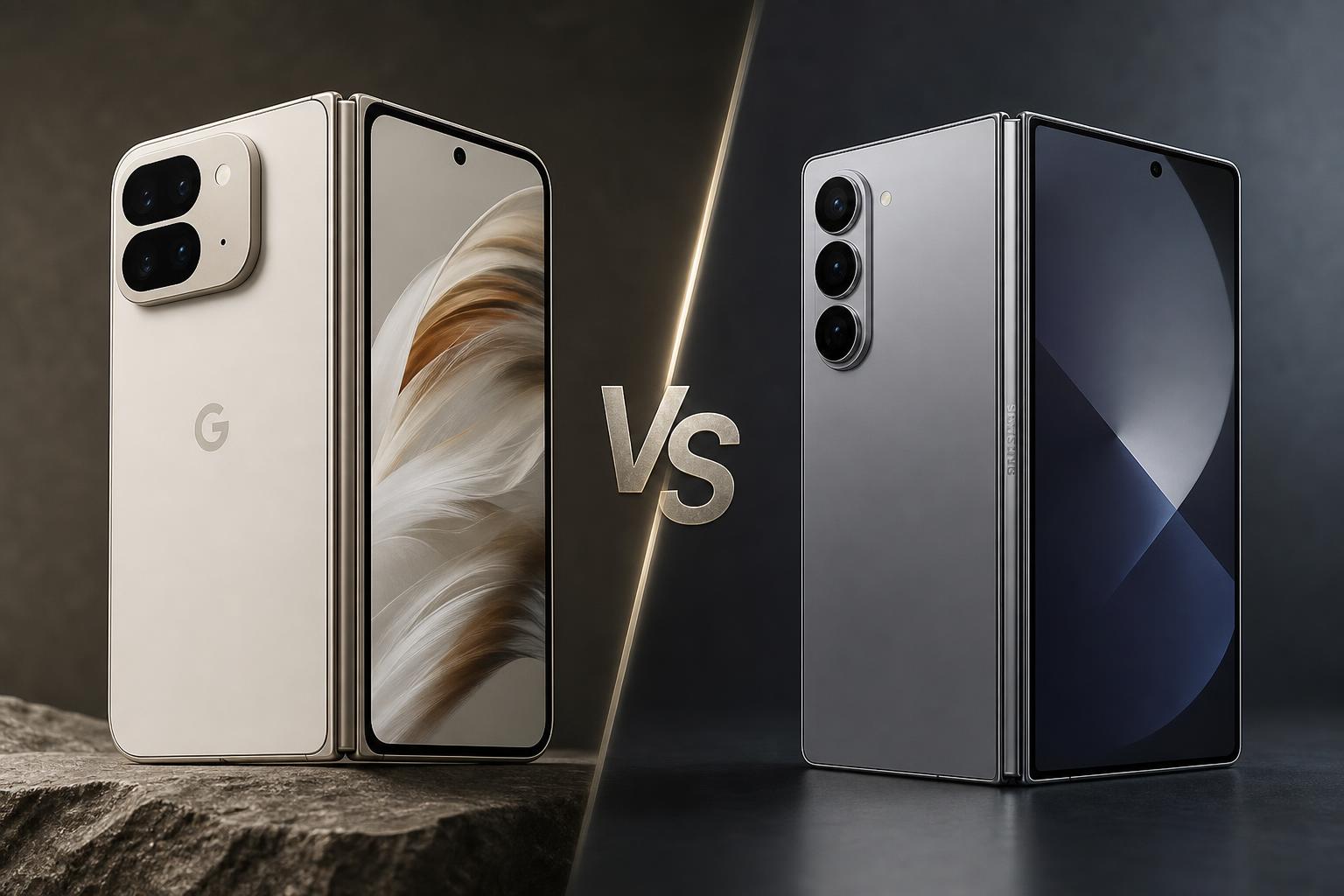
The Google Pixel 11 Pro Fold and Samsung Galaxy Z Fold8 Ultra are premium foldable phones with broadly similar screen sizes, but they take different approaches to the category. Google puts emphasis on a lighter design, Pixel software, long-term updates and a 5x optical telephoto camera. Samsung counters with a larger battery, higher-resolution main and ultrawide cameras, a Snapdragon flagship platform and productivity features such as Samsung DeX.
Price is also an important dividing line. The Pixel 11 Pro Fold starts at $1,899 in the United States, while the Galaxy Z Fold8 Ultra starts at $2,099.99. That makes Samsung’s model $200.99 more expensive at entry level, although its hardware adds several features aimed at demanding users.
Quick verdict
The Google Pixel 11 Pro Fold is the better choice for buyers who want a lower starting price, lighter weight, IP68 protection, 16GB of RAM across all listed storage tiers and Google’s seven-year software update commitment. Its 5x optical telephoto also offers more optical reach than Samsung’s 3x telephoto.
The Samsung Galaxy Z Fold8 Ultra is the stronger option for buyers focused on performance, battery capacity, high-resolution camera hardware and multitasking. Its Snapdragon 8 Elite Gen 5 for Galaxy platform has specified CPU, GPU, NPU and ray-tracing capabilities, while Samsung DeX and One UI productivity tools give it a more explicitly workstation-like feature set.
There is no independent benchmark comparison in the supplied research, so the performance verdict is based on the specified platforms and features rather than test results. For most value-conscious foldable shoppers, the Pixel is the easier recommendation. For users prepared to pay more for Samsung’s hardware and productivity features, the Galaxy has a clear case.
Key specifications comparison
| Specification | Google Pixel 11 Pro Fold | Samsung Galaxy Z Fold8 Ultra |
|---|---|---|
| Starting price | $1,899 | $2,099.99 |
| Release date | August 20, 2026 | August 7, 2026 |
| Outer display | 6.5-inch Super Actua OLED, 1080 x 2342, 1–120Hz | 6.5-inch Dynamic AMOLED 2X, 2520 x 1080, 1–120Hz |
| Inner display | 8-inch Super Actua Flex OLED, 2076 x 2152, 1–120Hz | 8-inch Dynamic AMOLED 2X, 2504 x 2256, 1–120Hz |
| Peak brightness | Up to 3600 nits | Up to 3000 nits |
| Processor | Google Tensor G6 with Titan M3 | Snapdragon 8 Elite Gen 5 for Galaxy |
| Memory and storage | 16GB RAM; 256GB, 512GB or 1TB | 12GB RAM with 256GB or 512GB; 16GB RAM with 1TB |
| Rear cameras | 48MP wide, 10.5MP ultrawide with Macro Focus, 10.8MP 5x optical telephoto | 200MP wide with OIS, 50MP ultrawide, 10MP 3x optical telephoto |
| Battery | Typical 4,806mAh; rated for 24+ hours | 5,000mAh; up to 27 hours of video playback |
| Wired charging | Up to 50% in about 30 minutes with a 30W USB-C PPS charger or higher | Super Fast Charging 2.0 |
| Wireless charging | Qi2.2-certified Pixelsnap wireless charging up to 25W | Super Fast Wireless Charging and Wireless PowerShare |
| Water and dust resistance | IP68 | IP48 |
| Weight | 8.4 ounces | 215g |
| Software | Android 17; seven years of OS, security and Pixel Drop updates | Android 17 with One UI 9 |
Design and build
The Pixel 11 Pro Fold is the lighter of the two phones. Google lists it at 8.4 ounces, while Samsung lists the Galaxy Z Fold8 Ultra at 215g. Those measurements are not presented in the same unit, but the listed figures establish that the Pixel is designed as the lighter device. Google also gives the Pixel a narrower folded body, measuring 6.1 x 3.0 x 0.4 inches when folded.
When open, the Pixel measures 6.1 x 5.9 x 0.2 inches. It is available in Olive and Obsidian, and other listed hardware includes stereo speakers, USB-C 3.2, Wi-Fi 7, Bluetooth 6 and dual-SIM support through a nano-SIM and eSIM.
Samsung’s Galaxy Z Fold8 Ultra measures 72.8 x 158.4 x 8.9mm when folded and 143.2 x 158.4 x 4.1mm unfolded. Its construction includes an Armor Aluminum frame, Corning Gorilla Glass Ceramic 3 cover glass and Gorilla Glass Victus 2 rear glass. It also supports Wi-Fi 7, although its listed Bluetooth version is Bluetooth 5.4. Samsung does not support the S Pen on this model, which may matter to buyers considering a foldable for handwriting or stylus-based work.
Protection is one of the clearest differences. The Pixel has an IP68 dust and water resistance rating. Samsung lists IP48 protection. On the supplied specifications, the Pixel therefore has the more extensive protection rating, while Samsung’s design information highlights its frame and glass materials instead.
Display
Both phones use a 6.5-inch outer display and an 8-inch inner folding display, with adaptive refresh rates from 1Hz to 120Hz. That gives the two devices a similar basic screen layout: a conventional-looking cover display for quick tasks and a larger square-ish canvas for apps, media and multitasking when unfolded.
The Pixel’s outer screen is a 6.5-inch Super Actua OLED with a 1080 x 2342 resolution. Its inner Super Actua Flex OLED measures 8 inches and has a 2076 x 2152 resolution. Google specifies peak brightness of up to 3600 nits.
Samsung uses 6.5-inch and 8-inch Dynamic AMOLED 2X panels. The outer screen has a 2520 x 1080 resolution, while the inner display is 2504 x 2256. Samsung specifies peak brightness of up to 3000 nits.
On the published brightness figures, the Pixel has the higher stated peak brightness. Samsung’s outer display has the higher listed pixel resolution, while the inner display also has a higher listed resolution than the Pixel’s inner panel. However, resolution alone does not establish overall display quality, and the research does not include independent measurements of colour, contrast or outdoor readability.
Performance
The Pixel 11 Pro Fold uses Google’s Tensor G6 processor with a Titan M3 security coprocessor. Google’s hardware platform is paired with features such as Gemini integration and other Pixel software tools. The supplied comparison describes the Tensor G6 as placing emphasis on on-device AI and Pixel software integration.
The Galaxy Z Fold8 Ultra uses the Snapdragon 8 Elite Gen 5 for Galaxy. Samsung’s listed platform is specified for CPU, GPU, NPU and ray-tracing performance improvements. That makes it the more performance-oriented choice on paper, particularly for buyers who prioritise demanding processing, graphics features or high-end mobile gaming.
It is important not to overstate that difference. The supplied research does not contain independent benchmark results, sustained performance testing or a direct gaming comparison. The Snapdragon platform has more explicitly stated CPU, GPU, NPU and ray-tracing capabilities, but that is not the same as a measured real-world performance advantage in every app.
Memory configurations also differ. Every listed Pixel storage tier includes 16GB of RAM: buyers can choose 256GB, 512GB or 1TB, with the 512GB and 1TB models using Zoned UFS. Samsung offers 12GB of RAM with 256GB or 512GB storage, while its 1TB model has 16GB of RAM. Buyers who want 16GB without moving to the top Samsung storage tier therefore have a simpler choice with the Pixel.
Camera and graphics
Camera hardware
The Pixel 11 Pro Fold has a triple rear-camera system comprising a 48MP wide camera, a 10.5MP ultrawide with Macro Focus and a 10.8MP 5x optical telephoto. It supports up to 30x Super Zoom, along with 4K video and Video Boost. There are also 10MP front and inner cameras.
The Galaxy Z Fold8 Ultra has a 200MP wide camera with optical image stabilisation, a 50MP ultrawide and a 10MP 3x optical telephoto. It supports up to 30x digital zoom and has 10MP cover and inner selfie cameras.
Samsung has a substantial resolution advantage on the main and ultrawide cameras. That gives it the stronger specification for buyers who prioritise sensor resolution or want a higher-resolution camera system. The Pixel’s advantage is optical reach: its 5x telephoto goes further than Samsung’s 3x optical telephoto without relying on digital zoom for that stated magnification.
Google also lists computational photography features through the Pixel software experience, while Samsung’s camera hardware includes optical image stabilisation on the 200MP wide camera. The available research does not provide side-by-side image samples or controlled camera testing, so the best choice depends on whether higher-resolution main and ultrawide hardware or longer optical telephoto reach is more important.
Graphics
Samsung’s Snapdragon 8 Elite Gen 5 for Galaxy specification explicitly includes GPU and ray-tracing capabilities. That is a useful distinction for buyers interested in graphics-heavy apps and games. The Pixel’s supplied specifications do not provide a directly comparable graphics benchmark or equivalent ray-tracing claim, so no measured graphics winner can be declared from the available evidence.
Battery and charging
Samsung has the larger listed battery. The Galaxy Z Fold8 Ultra provides a typical 5,000mAh capacity and Samsung claims up to 27 hours of video playback. It supports Super Fast Charging 2.0, Super Fast Wireless Charging and Wireless PowerShare.
The Pixel 11 Pro Fold lists a typical 4,806mAh capacity, with a minimum capacity of 4,658mAh. Google rates it for 24 or more hours of use. Wired charging can reach 50% in about 30 minutes when using a 30W USB-C PPS charger or higher. The Pixel also supports Qi2.2-certified Pixelsnap wireless charging at up to 25W.
Based on capacity and the stated video-playback claim, Samsung is the better choice for buyers who place battery endurance first. The Pixel’s advantage is clearer wireless-charging specification: its Qi2.2-certified system is listed at up to 25W. Wired charging on the Pixel is specified at 30W, which is slower than Samsung’s Super Fast Charging 2.0 system, although the supplied research does not state a charging wattage for Samsung or provide a direct charging-time comparison.
Software and features
Both foldables launch with Android 17. The Pixel 11 Pro Fold adds Google’s Pixel software experience, including Gemini features, HiLight, floating app bubbles, Call Screen, Scam Detection and Pixel safety features. Google promises seven years of OS, security and Pixel Drop updates.
That update commitment is one of the Pixel’s strongest long-term advantages. It gives buyers a clearly stated support period covering operating system updates, security updates and Pixel Drop updates. For people who keep phones for many years, that commitment can carry meaningful value beyond the initial hardware specifications.
The Galaxy Z Fold8 Ultra runs Android 17 with One UI 9. Samsung includes Galaxy AI, Samsung DeX, Flex mode, Multi Window, App Continuity and Taskbar features. These tools make the Galaxy particularly relevant to buyers who want to use the large inner display for structured multitasking or connect the phone to a more desktop-like workflow through DeX. Buyers in the United States also receive a six-month Google AI Pro trial.
The two software approaches are therefore distinct. Pixel is the more direct choice for Google services, Pixel safety tools and the stated seven-year update policy. Samsung is the more feature-rich option for users who want DeX and a broad selection of foldable multitasking tools.
Price and value
The Google Pixel 11 Pro Fold starts at $1,899 in the United States. The Samsung Galaxy Z Fold8 Ultra starts at $2,099.99. The difference is $200.99, with the Pixel offering the lower entry price.
Google’s value case is strengthened by 16GB of RAM at every listed storage tier, a 5x optical telephoto camera, IP68 protection and seven years of stated updates. It also offers 256GB, 512GB and 1TB storage choices.
Samsung’s higher price is supported by its 5,000mAh battery, stated up-to-27-hour video playback claim, Snapdragon 8 Elite Gen 5 for Galaxy platform, 200MP main camera, 50MP ultrawide and DeX productivity features. The 1TB version adds 16GB of RAM, while the 256GB and 512GB models have 12GB.
Neither phone can be judged on price alone. The Pixel is the stronger value for buyers who want a premium foldable without moving beyond the $2,000 mark. Samsung’s premium is easier to justify for users who will actively use its higher-resolution camera hardware, larger battery, Snapdragon platform or DeX features.
Google Pixel 11 Pro Fold: pros and cons
Pros
- Lower starting price of $1,899.
- Lighter listed weight at 8.4 ounces.
- IP68 dust and water resistance.
- 5x optical telephoto camera with up to 30x Super Zoom.
- 16GB of RAM across all listed storage tiers.
- Seven years of OS, security and Pixel Drop updates.
- Qi2.2-certified wireless charging up to 25W.
- Higher stated peak brightness of up to 3600 nits.
Cons
- Lower rear-camera sensor resolutions than Samsung’s 200MP main and 50MP ultrawide cameras.
- Lower rated battery capacity than Samsung’s 5,000mAh battery.
- 30W wired charging is specified, while Samsung uses Super Fast Charging 2.0.
- There is no directly comparable independent benchmark result for Tensor G6 in the supplied research.
Samsung Galaxy Z Fold8 Ultra: pros and cons
Pros
- 200MP main camera with OIS and 50MP ultrawide camera.
- Larger 5,000mAh battery and a stated up-to-27-hour video-playback claim.
- Snapdragon 8 Elite Gen 5 for Galaxy platform with specified CPU, GPU, NPU and ray-tracing capabilities.
- Samsung DeX, Multi Window, Flex mode, App Continuity and Taskbar features.
- 1TB storage option with 16GB of RAM.
- 8-inch inner display with a higher listed resolution than the Pixel’s inner panel.
Cons
- Higher starting price of $2,099.99.
- Heavier listed body at 215g.
- 3x optical telephoto reach is shorter than the Pixel’s 5x telephoto.
- IP48 protection is less extensive than the Pixel’s IP68 rating.
- Does not support the S Pen.
Which phone is better for different buyers?
Best for value: Google Pixel 11 Pro Fold
The Pixel is the more sensible choice for buyers focused on upfront cost. It starts $200.99 below the Galaxy Z Fold8 Ultra, includes 16GB of RAM at every storage tier and still provides an 8-inch inner display, a triple-camera system and wireless charging.
Best for performance-focused users: Samsung Galaxy Z Fold8 Ultra
Samsung is the better fit for buyers who want the more performance-oriented platform on paper. Its Snapdragon 8 Elite Gen 5 for Galaxy specification includes CPU, GPU, NPU and ray-tracing capabilities. This recommendation is based on the stated platform features, not independent benchmark testing.
Best for battery-focused buyers: Samsung Galaxy Z Fold8 Ultra
The Galaxy has a 5,000mAh typical battery and a stated up-to-27-hour video-playback claim. That gives it the stronger published battery case compared with the Pixel’s 4,806mAh typical capacity and 24-plus-hour rating.
Best for cameras and creators: It depends on the camera priority
Choose Samsung for higher-resolution main and ultrawide camera hardware, including its 200MP wide camera with OIS. Choose the Pixel if a 5x optical telephoto is more useful than Samsung’s 3x option, or if Google’s computational photography features and Video Boost are more appealing.
Best for long-term software support: Google Pixel 11 Pro Fold
Google makes the clearer long-term support promise, with seven years of OS, security and Pixel Drop updates. Samsung offers Android 17 with One UI 9 and a substantial set of AI and multitasking features, but the supplied research does not state an equivalent update period.
Best for productivity and multitasking: Samsung Galaxy Z Fold8 Ultra
Samsung has the stronger productivity feature list, with DeX, Multi Window, Flex mode, App Continuity and Taskbar tools. It is the better match for buyers who plan to use their foldable as a compact work device.
Final verdict
The Google Pixel 11 Pro Fold is the better all-round value. It costs less, weighs less, has IP68 protection, includes 16GB of RAM across its storage range and offers a longer stated software support commitment. Its 5x optical telephoto is also more versatile for buyers who value reach.
The Samsung Galaxy Z Fold8 Ultra is the more ambitious hardware package. Its larger battery, high-resolution camera sensors, Snapdragon platform and DeX features make it a compelling upgrade for demanding users who are comfortable paying more. It is also the stronger choice for published battery capacity, graphics-oriented platform features and productivity tools.
In short, choose the Pixel 11 Pro Fold for value, portability, protection and long-term Google software support. Choose the Galaxy Z Fold8 Ultra for performance-focused hardware, battery capacity, high-resolution cameras and Samsung’s multitasking ecosystem.
Frequently asked questions
Is the Pixel 11 Pro Fold cheaper than the Galaxy Z Fold8 Ultra?
Yes. The Pixel 11 Pro Fold starts at $1,899 in the United States, while the Galaxy Z Fold8 Ultra starts at $2,099.99. The Pixel is $200.99 cheaper at the starting price.
Which phone has the better telephoto camera?
The Pixel 11 Pro Fold has the longer optical reach, with a 10.8MP 5x optical telephoto. The Galaxy Z Fold8 Ultra has a 10MP 3x optical telephoto. Samsung has higher-resolution main and ultrawide cameras, however, with a 200MP wide and 50MP ultrawide.
Which foldable has the longer battery life?
Samsung has the stronger published battery specifications: a typical 5,000mAh battery and up to 27 hours of video playback. The Pixel lists a typical 4,806mAh battery and a rating of 24 or more hours.
Do both phones support a stylus?
The Galaxy Z Fold8 Ultra does not support the S Pen. The supplied Pixel research does not list stylus support for the Pixel 11 Pro Fold, so no stylus capability should be assumed for it from these specifications.
Which phone has better water and dust resistance?
The Pixel 11 Pro Fold has an IP68 rating, while the Galaxy Z Fold8 Ultra has an IP48 rating. On the published ratings, the Pixel offers the more extensive protection.
Which phone has the better software support policy?
Google promises seven years of OS, security and Pixel Drop updates for the Pixel 11 Pro Fold. Samsung’s model launches with Android 17 and One UI 9, with Galaxy AI and several multitasking tools, but the supplied research does not provide a comparable update-duration promise.
Sources
- Pixel 11 Pro Fold Full Technical Specs & Dimensions — Google Store
- Google's most sophisticated foldable: Pixel 11 Pro Fold — Google
- You can officially buy the Pixel 11 phones and Pixel Watch 5 — Google
- Explore Galaxy Z Fold8 Ultra — Samsung
- Buy the Unlocked Galaxy Z Fold8 Ultra — Samsung
- Samsung Galaxy Z Fold8 Ultra, Fold8 and Flip8: Foldables, Perfected for Every Way of Living — Samsung Newsroom