
Apple iPhone Duo vs Samsung Galaxy Z Fold8 Ultra: Which Foldable Is Better?
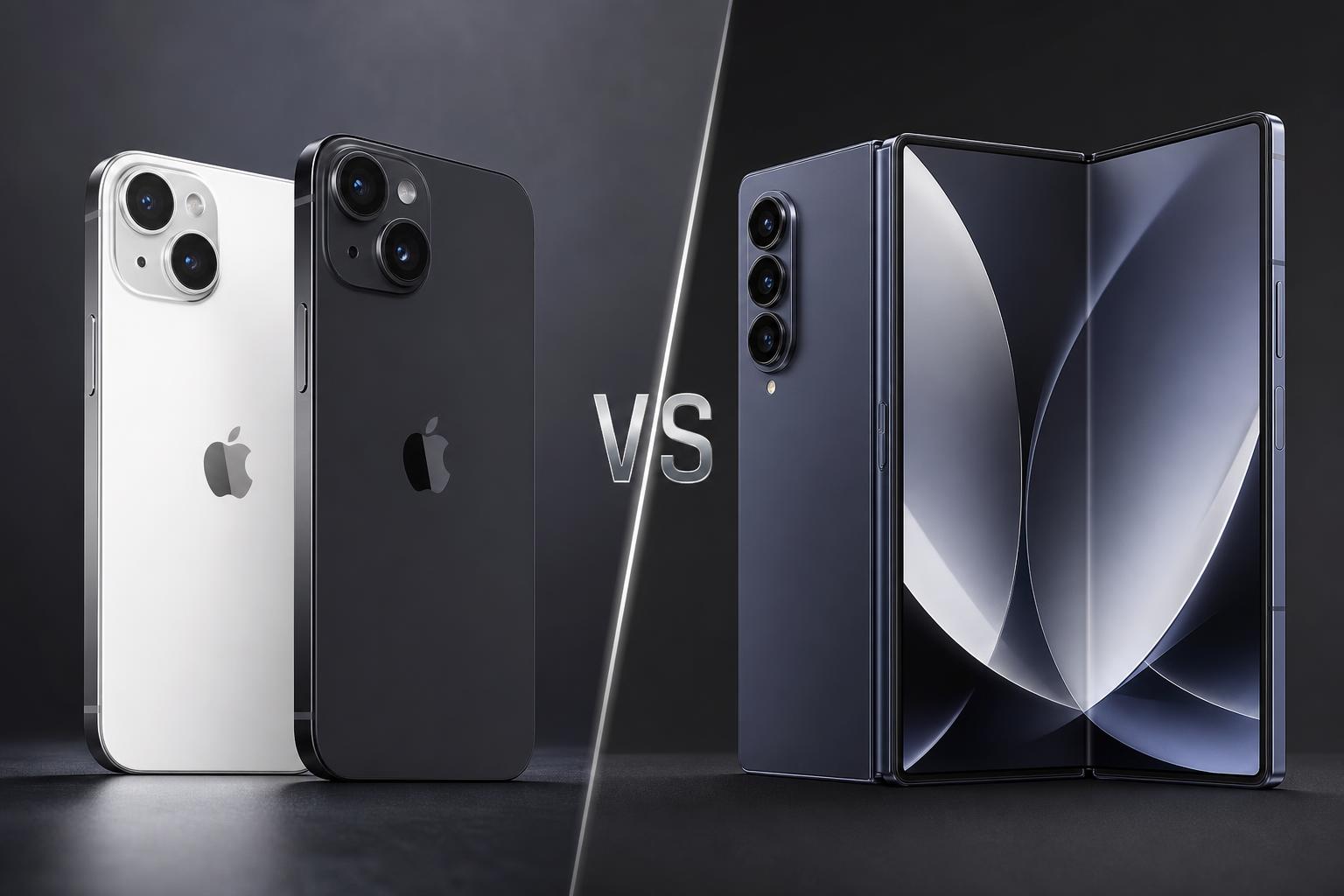
The Apple iPhone Duo and Samsung Galaxy Z Fold8 Ultra are premium book-style foldables designed to combine a conventional smartphone with a larger tablet-like inner screen. They also represent two notably different buying propositions. Apple’s iPhone Duo starts at a lower official price and adds iOS 27 features designed for folding displays, but it is not scheduled for general availability until October 23, 2026. Samsung’s Galaxy Z Fold8 Ultra costs more at launch, but it is already released and offers a larger inner display, a dedicated telephoto camera, a specified 5,000mAh battery and up to 1TB of storage.
This comparison uses the verified specifications and pricing available for both phones. It does not treat either handset as independently benchmarked or hands-on tested, and there is no directly comparable performance benchmark in the available research.
Quick verdict
The Samsung Galaxy Z Fold8 Ultra is the stronger all-round choice for buyers who want a foldable they can purchase before the iPhone Duo becomes generally available. It has the larger 8.0-inch inner display, a more versatile listed camera system with a dedicated 10MP telephoto lens, 3x optical zoom, 8K video recording, a 5,000mAh battery and 45W wired charging.
The Apple iPhone Duo is the more affordable option at the official starting price, undercutting Samsung by $100 for 256GB. It may be the better fit for buyers already invested in Apple’s ecosystem, users who prefer iOS 27, or anyone who values the iPhone Duo’s stated video-playback figures and 4K 120fps recording. However, availability is an important consideration: Apple lists the phone as announced, with general availability scheduled for October 23, 2026.
Key specifications comparison
| Specification | Apple iPhone Duo | Samsung Galaxy Z Fold8 Ultra |
|---|---|---|
| Release status | Announced; general availability scheduled for October 23, 2026 | Released August 7, 2026 |
| Starting price | $1,999 for 256GB in the US | $2,099.99 for 256GB in the US |
| Inner display | 7.6-inch Super Retina XDR folding display; nano-texture finish; ProMotion; Always-On | 8.0-inch QXGA+ Dynamic AMOLED 2X; 2504 x 2256; 422ppi; adaptive 1-120Hz |
| Outer display | 5.4-inch Super Retina XDR display | 6.5-inch FHD+ Dynamic AMOLED 2X; 1080 x 2520; 422ppi; adaptive 1-120Hz |
| Peak brightness | Up to 3,000 nits outdoors | Up to 3,000 nits |
| Processor | Apple A20 Pro; Dual 16-core Neural Engine; 7-core GPU with Neural Accelerators | Snapdragon 8 Elite Gen 5 for Galaxy |
| Storage and memory | 256GB, 512GB, 1TB or 2TB; official RAM capacity not specified | 256GB or 512GB with 12GB memory; 1TB with 16GB memory |
| Rear cameras | 48MP Fusion Main and 48MP Fusion Ultra Wide | 200MP wide, 50MP ultra-wide and 10MP telephoto |
| Zoom and video | Up to 2x optical-quality zoom; 4K video at 120fps | 3x optical zoom; up to 30x Space Zoom; 8K video at 30fps |
| Battery and charging | Dual-battery architecture; up to 31 hours inner-display video playback or 44 hours outer-display playback; approximately 50% in 20 minutes with fast wired charging | 5,000mAh typical capacity; up to 27 hours of video playback; 45W wired charging |
| Software | iOS 27, Apple Intelligence, Siri AI and foldable-specific features | One UI 9, Galaxy AI, multitasking and cross-device features |
| Durability and connectivity | Grade 5 titanium frame and hinge cover; IP68; Wi-Fi 7; Bluetooth 6; 5G; eSIM-only; MagSafe | Dual-SIM support with nanoSIM and eSIM; charger not included |
| Dimensions and weight | Official dimensions and weight not specified in the referenced materials | 158.4 x 143.2 x 4.1mm unfolded; 158.4 x 72.8 x 8.9mm folded; 215g |
Design and build
Both phones use the familiar book-style foldable design: a conventional outer display for closed-phone use and a larger inner display for expanded tasks. The Galaxy Z Fold8 Ultra provides the more fully documented physical package. It measures 158.4 x 143.2 x 4.1mm unfolded and 158.4 x 72.8 x 8.9mm folded, with a listed weight of 215g. Samsung also offers Graphite and Cream finishes, plus Violet Shadow and Green Shadow options sold online.
The iPhone Duo’s official materials do not specify its dimensions or weight, so it is not possible to make a fair size or weight verdict against Samsung. What is confirmed is that Apple uses a Grade 5 titanium frame and hinge cover. The phone also has an IP68 rating for water and dust resistance. Those details give the iPhone Duo a clear build and durability focus, although the available research does not establish which handset has the slimmer or lighter everyday design.
Samsung’s 4.1mm unfolded profile is one of the clearest physical specifications in this comparison. It supports the Galaxy’s productivity-oriented identity, while the 215g weight confirms that it remains a substantial device. The iPhone Duo’s build materials and IP68 rating will appeal to buyers who want a premium, resistant foldable, but its missing official measurements mean shoppers should avoid assumptions about portability.
There are also practical connectivity differences. The iPhone Duo is eSIM-only, while the Galaxy Z Fold8 Ultra supports a nanoSIM and eSIM dual-SIM arrangement. Apple lists Wi-Fi 7, Bluetooth 6, 5G and MagSafe wireless charging among the iPhone Duo’s features. Samsung’s supplied specification confirms dual-SIM support, while the research states that a charger is not included.
Display
Samsung wins on screen size. The Galaxy Z Fold8 Ultra has an 8.0-inch QXGA+ Dynamic AMOLED 2X inner display with a 2504 x 2256 resolution, 422ppi density and adaptive 1-120Hz refresh rate. Its 6.5-inch cover display is also a Dynamic AMOLED 2X panel, with a 1080 x 2520 resolution, 422ppi and adaptive 1-120Hz refresh rate.
The iPhone Duo uses a 7.6-inch inner Super Retina XDR folding display and a 5.4-inch outer Super Retina XDR display. Apple specifies ProMotion and Always-On functionality for the inner screen, as well as peak outdoor brightness of up to 3,000 nits. Samsung also lists peak brightness of up to 3,000 nits, so the two phones are closely matched on the headline brightness figure.
Apple’s differentiating display detail is the nano-texture finish on the inner panel. Based on the stated design, this is intended to reduce glare and make the folding screen more comfortable in challenging lighting, while also addressing crease visibility. The available research does not provide a direct measured comparison between the two screens, so it would be premature to call one panel objectively better for colour, contrast or outdoor readability.
The choice is therefore straightforward on size but less clear on screen character. Choose the Galaxy if the largest possible workspace matters most. Choose the iPhone Duo if the nano-texture inner finish, Always-On display and Apple’s ProMotion experience are more important than having the biggest foldable panel.
Performance
The iPhone Duo is powered by Apple’s A20 Pro, paired with a Dual 16-core Neural Engine and a 7-core GPU with Neural Accelerators. The Galaxy Z Fold8 Ultra uses Qualcomm’s Snapdragon 8 Elite Gen 5 for Galaxy. Both are positioned as current flagship processors for demanding smartphone and foldable workloads.
However, the available research does not include directly comparable independent benchmark results. That means there is no verified basis for declaring either phone the faster performer in CPU, graphics or artificial-intelligence workloads. The processor names indicate a high-end positioning, but real-world conclusions about app loading, sustained gaming performance or multitasking should not be presented as established facts here.
Samsung provides more detail about memory: the 256GB and 512GB versions have 12GB, while the 1TB model has 16GB. Apple lists storage choices of 256GB, 512GB, 1TB and 2TB, but its official RAM capacity is not specified in the referenced materials. For buyers who keep large files locally or want the biggest available capacity, Apple has the higher storage ceiling. Samsung, meanwhile, gives buyers a clearly specified memory advantage on its 1TB configuration.
Camera and graphics
The Galaxy Z Fold8 Ultra has the more versatile listed camera hardware. Its rear setup includes a 200MP wide camera, a 50MP ultra-wide camera and a dedicated 10MP telephoto camera. The telephoto lens provides 3x optical zoom, while Samsung lists up to 30x Space Zoom. The phone also records 8K video at 30fps and supports real-time ray tracing.
The iPhone Duo takes a different approach with a 48MP Dual Fusion system comprising a 48MP Fusion Main camera and a 48MP Fusion Ultra Wide camera. It adds a 12MP Center Stage front camera and an under-display FaceTime camera. Apple lists up to 2x optical-quality zoom and 4K video recording at 120fps.
On the specifications alone, Samsung is the stronger choice for buyers who want reach and camera flexibility. A dedicated telephoto camera is useful for subjects that are farther away, while 3x optical zoom gives the Galaxy a hardware advantage over the iPhone Duo’s maximum 2x optical-quality zoom. The 200MP main sensor, 8K video and creator-oriented tools also give Samsung the broader feature set on paper.
Apple’s strengths are different. The iPhone Duo’s 4K 120fps recording may appeal to video-focused users who want high-frame-rate capture, while the Center Stage front camera and foldable-specific shooting features support Apple’s emphasis on calls and flexible shooting. The research does not provide image-quality samples or independent camera testing, so this is a comparison of listed hardware and recording capabilities rather than a definitive verdict on image quality.
Battery and charging
Samsung is more transparent about capacity, listing a 5,000mAh typical battery for the Galaxy Z Fold8 Ultra. It supports 45W fast wired charging and is rated for up to 27 hours of video playback.
Apple does not publish a battery capacity for the iPhone Duo in the verified material. Instead, it gives playback figures for its dual-battery architecture: up to 31 hours of video playback when using the inner display and up to 44 hours when using the outer display. Apple also states that fast wired charging can reach approximately 50% in 20 minutes.
This section depends heavily on what matters to the buyer. Samsung has the clearer hardware specification and the higher listed wired charging rate, making the Galaxy the easier recommendation for users who prioritise battery capacity and charging information. Apple has the longer stated video-playback figures, but the manufacturers’ test conditions are not directly matched in the available research. Those numbers should therefore not be treated as a controlled head-to-head battery test.
Software and features
The iPhone Duo runs iOS 27 and includes software designed specifically for the foldable form factor. The verified features include foldable-specific multitasking and orientation features, Split View, hands-free FaceTime, Apple Intelligence and Siri AI. Buyers already using Apple products may also value the wider Apple ecosystem, although the available specifications do not quantify any ecosystem performance difference.
The Galaxy Z Fold8 Ultra runs One UI 9 and includes Galaxy AI features such as Now Nudge, an AI Assistant Activity dashboard, Privacy Alerts, Smart Switch and Quick Share compatibility with Apple devices. Its software is centred on the larger inner display and multitasking approach associated with Samsung’s foldable range.
Neither platform can be declared universally better from the verified information. The iPhone Duo is the more natural choice for people who want iOS, Apple Intelligence, Siri AI and Apple’s foldable-specific interface features. The Galaxy suits buyers who prefer One UI 9, Galaxy AI and Samsung’s multitasking tools. Quick Share compatibility with Apple devices may also make the Galaxy more convenient for households or workgroups that use a mixture of phones.
Price and value
Apple lists the iPhone Duo at $1,999 in the United States for 256GB. Storage options extend to 512GB, 1TB and 2TB, although prices for those higher capacities are not specified in the verified research. The important qualification is that the iPhone Duo is announced rather than generally available, with October 23, 2026 listed as its release date.
Samsung’s Galaxy Z Fold8 Ultra starts at $2,099.99 for 256GB. The 512GB version costs $2,299.99, while the 1TB version costs $2,699.99 in the United States. This makes Samsung $100 more expensive at the entry level, with a larger price increase for the higher-capacity configurations. The charger is not included.
On launch price alone, the iPhone Duo is the better value. It offers a lower entry price, up to 2TB of storage and strong stated video-playback figures. That value advantage only applies to buyers who can wait for general availability. Samsung costs more, but its additional hardware includes the larger inner display, telephoto camera, 5,000mAh battery, 45W charging and a 1TB option with 16GB memory. For users who would otherwise need those features, the Galaxy’s higher price may be easier to justify.
Apple iPhone Duo: pros and cons
Pros
- Lower official starting price of $1,999 for 256GB.
- Largest display ever offered on an iPhone, with a 7.6-inch inner panel.
- Up to 2TB of storage.
- Stated video playback of up to 31 hours on the inner display or 44 hours on the outer display.
- iOS 27 features designed for the foldable format.
- Grade 5 titanium frame and hinge cover with IP68 water and dust resistance.
- 4K video recording at 120fps, MagSafe charging, Wi-Fi 7 and Bluetooth 6.
Cons
- Not scheduled for general availability until October 23, 2026.
- Starts at $1,999 before higher-storage pricing.
- No dedicated telephoto camera.
- Maximum optical-quality zoom is 2x.
- Official RAM capacity, dimensions and weight are not specified in the referenced materials.
- eSIM-only design may not suit buyers who require a physical SIM.
Samsung Galaxy Z Fold8 Ultra: pros and cons
Pros
- Released before the iPhone Duo and available from August 7, 2026.
- Larger 8.0-inch inner display and 6.5-inch cover display.
- More versatile camera system with wide, ultra-wide and dedicated telephoto cameras.
- 3x optical zoom, up to 30x Space Zoom and 8K video recording.
- 5,000mAh typical battery and 45W wired charging.
- Up to 1TB storage with 16GB memory on that configuration.
- Real-time ray tracing and creator-oriented camera features.
Cons
- Higher starting price of $2,099.99.
- Listed weight of 215g makes it a substantial device.
- No microSD support.
- Charger is not included.
- No directly comparable benchmark against the Apple A20 Pro is verified.
Which phone is better for different buyers?
Best for buyers who need a foldable now
The Galaxy Z Fold8 Ultra is the clear choice because it is released, while the iPhone Duo is scheduled for general availability later. If purchase timing matters, Samsung removes the uncertainty associated with waiting.
Best for Apple ecosystem users
The iPhone Duo is the more logical option for buyers already committed to iOS and Apple services. Its iOS 27 foldable features, Apple Intelligence, Siri AI, Center Stage camera and MagSafe support reinforce that ecosystem-led appeal.
Best for camera and video versatility
The Galaxy Z Fold8 Ultra is the better fit for most camera-focused buyers based on its listed hardware. It offers a 200MP wide camera, 50MP ultra-wide, 10MP telephoto, 3x optical zoom, up to 30x Space Zoom and 8K recording. The iPhone Duo remains interesting for buyers who specifically prioritise 4K 120fps video and Apple’s video workflow.
Best for battery specifications and charging
Choose the Galaxy if you want a clearly stated 5,000mAh battery and 45W wired charging. Choose the iPhone Duo if the manufacturer’s longer stated video-playback figures are more important, while remembering that Apple and Samsung use different test conditions.
Best value
The iPhone Duo has the lower official starting price, so it is the value pick if you can wait for its October 23, 2026 availability date. Samsung may provide better hardware value for buyers who prioritise camera versatility, the larger display, memory, charging and immediate purchase.
Final verdict
The Samsung Galaxy Z Fold8 Ultra is the better overall foldable for buyers who want the broadest hardware package and do not want to wait. Its 8.0-inch display, dedicated telephoto camera, 5,000mAh battery, 45W charging, 8K video and released status give it a strong practical advantage.
The Apple iPhone Duo is not simply a smaller alternative. It undercuts Samsung by $100 at 256GB, offers up to 2TB of storage, includes a titanium and IP68 build, and brings iOS 27 features created around the foldable design. Its stated video-playback endurance is also higher, although those figures cannot be directly compared with Samsung’s rating.
In short, buy the Galaxy Z Fold8 Ultra for availability, camera flexibility, display size and clearly specified hardware. Choose the iPhone Duo for the lower starting price, Apple ecosystem, iOS 27 features and high-frame-rate video, provided you are prepared to wait until October 23, 2026.
FAQs
Is the Apple iPhone Duo cheaper than the Samsung Galaxy Z Fold8 Ultra?
Yes. The iPhone Duo starts at $1,999 for 256GB in the United States, while the Galaxy Z Fold8 Ultra starts at $2,099.99 for 256GB. The iPhone Duo is therefore $100 cheaper at the entry level, although it is not scheduled for general availability until October 23, 2026.
Which phone has the larger display?
The Samsung Galaxy Z Fold8 Ultra has the larger inner display at 8.0 inches, compared with 7.6 inches for the iPhone Duo. Samsung also has the larger outer display, at 6.5 inches versus 5.4 inches on the iPhone Duo.
Which foldable has the better camera system?
The Galaxy Z Fold8 Ultra has the more versatile listed camera system because it includes a dedicated 10MP telephoto camera, 3x optical zoom, up to 30x Space Zoom and 8K video recording. The iPhone Duo has two 48MP rear cameras and supports 4K video at 120fps, but its maximum optical-quality zoom is 2x.
Which has the longer battery life?
Apple states up to 31 hours of video playback using the iPhone Duo’s inner display and up to 44 hours using its outer display. Samsung lists up to 27 hours of video playback for the Galaxy Z Fold8 Ultra. These figures use different manufacturer test conditions, so they should not be treated as a controlled battery comparison.
Is the Galaxy Z Fold8 Ultra faster than the iPhone Duo?
There is no verified direct benchmark comparison in the available research. The iPhone Duo uses Apple’s A20 Pro, while the Galaxy Z Fold8 Ultra uses Snapdragon 8 Elite Gen 5 for Galaxy. Both are positioned as flagship processors, but a definitive performance winner cannot be established from the available sources.
Sources
- Apple unveils iPhone Duo — Apple
- iPhone Duo — Apple
- Samsung Galaxy Z Fold8 Ultra, Fold8, and Flip8: Foldables, Perfected for Every Way of Living — Samsung Newsroom
- Officially Launches Galaxy Z Fold8 Ultra, Fold8, Flip8, Watch Ultra2, and Watch9 — Samsung Newsroom
- Buy the Unlocked Galaxy Z Fold8 Ultra 256GB — Samsung