
Apple iPhone 18 Pro vs Google Pixel 11 Pro XL: Which Flagship Should You Buy?
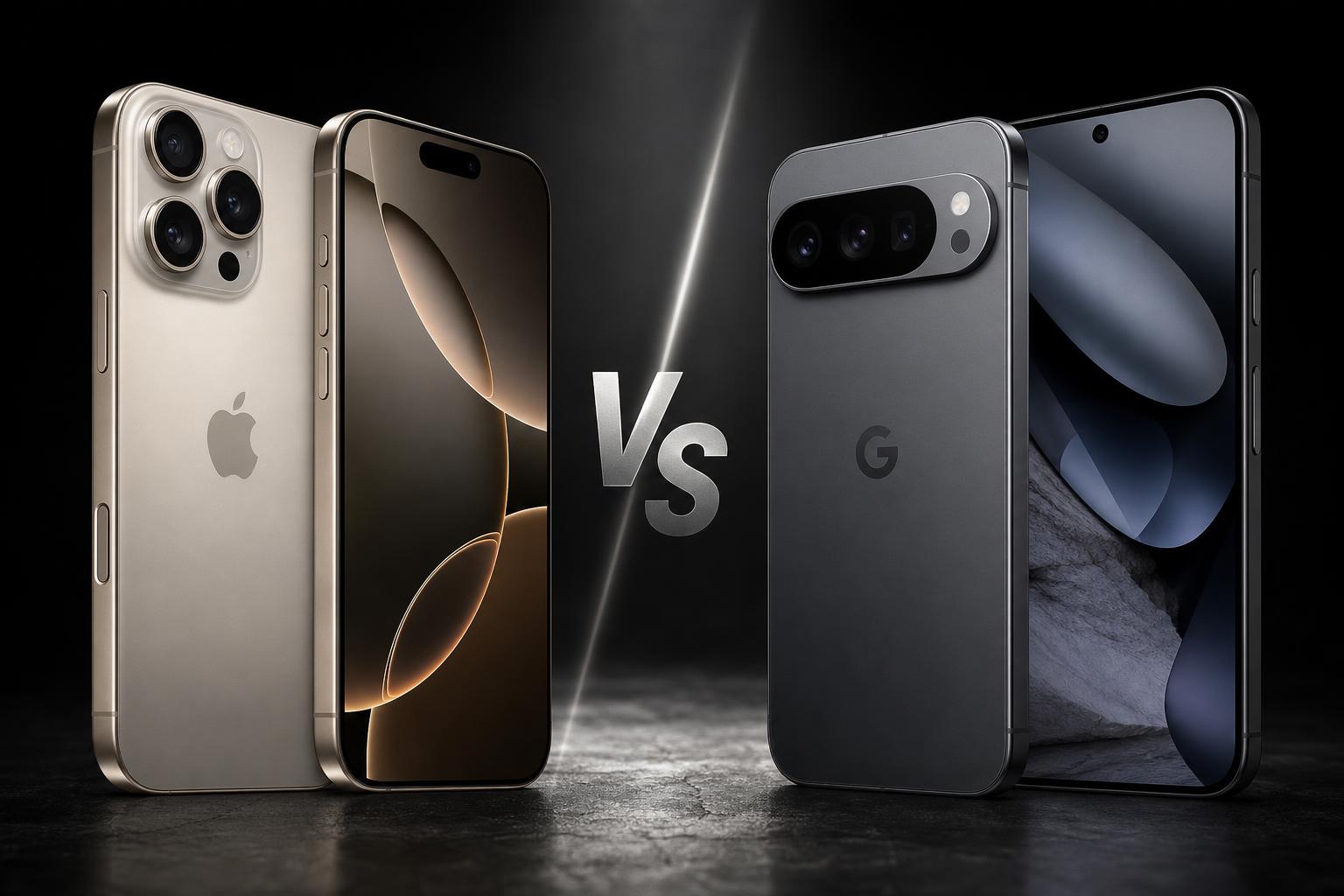
The Apple iPhone 18 Pro and Google Pixel 11 Pro XL are high-end smartphones with very different priorities. Apple’s phone focuses on compact design, peak processing performance and professional video capture, while Google’s larger model puts more emphasis on screen size, battery capacity, computational photography and built-in AI tools.
The price difference is relatively straightforward: the iPhone 18 Pro starts at $1,199 in the United States for 256GB, while the Pixel 11 Pro XL starts at $1,299 for the same storage capacity. The more important question is what you value beyond the headline price. The iPhone has more advanced documented graphics hardware and up to 2TB of storage, whereas the Pixel offers a 6.8-inch 120Hz display, a 30-plus-hour battery rating and seven years of software, security and Pixel Drop updates.
Here is how the two phones compare across the features most likely to influence a buying decision.
Quick verdict
The iPhone 18 Pro is the better choice for performance-focused buyers, professional video creators, Apple ecosystem users and anyone who wants a smaller flagship at the lower starting price. Its A20 Pro chip includes a seven-core GPU, Neural Accelerators and hardware-accelerated ray tracing, while its camera system supports variable aperture, ProRes, ProRes RAW and 4K Dolby Vision video at up to 120 frames per second on the Fusion Main camera.
The Google Pixel 11 Pro XL is the better choice for buyers who want a bigger display, a higher published battery-life rating and extensive Google AI features. Its 6.8-inch panel reaches a published peak brightness of 3,600 nits, its battery is rated for more than 30 hours, and its software includes Gemini Live, Magic Capture, HiLight, Circle to Search, Live Translate and Call Assist.
For most buyers, the iPhone offers the stronger all-round hardware package at the lower entry price. The Pixel can justify its premium for users who will make full use of its larger screen, telephoto camera, AI tools and long update commitment.
Key specifications comparison
| Feature | Apple iPhone 18 Pro | Google Pixel 11 Pro XL |
|---|---|---|
| Starting price | From $1,199 for 256GB | From $1,299 for 256GB |
| Release date | September 18, 2026 | August 20, 2026 |
| Display | 6.3-inch Super Retina XDR all-screen OLED, 2,622 x 1,206, 460ppi, ProMotion, Always-On | 6.8-inch Super Actua LTPO OLED, 1,344 x 2,992, 486ppi, 1-120Hz Smooth Display |
| Processor | Apple A20 Pro; six-core CPU; seven-core GPU; dual 16-core Neural Engine | Google Tensor G6 with Titan M3 security coprocessor |
| RAM and storage | 256GB, 512GB, 1TB or 2TB; Apple does not publish RAM | 256GB with 12GB RAM; 512GB or 1TB with 16GB RAM |
| Rear cameras | 48MP Fusion Main with variable aperture, 48MP Fusion Ultra Wide, 48MP Fusion Telephoto | 50MP wide, 48MP ultrawide with Macro Focus, 48MP 5x telephoto |
| Front camera | 18MP Center Stage | 42MP autofocus |
| Video | ProRes, ProRes RAW and up to 4K Dolby Vision at 120fps on the Fusion Main | 8K at 24/30fps with Video Boost and 4K at up to 60fps |
| Battery rating | Up to 24 hours typical use; up to 36 hours video playback | 30+ hours |
| Fast charging | Up to 50% in around 15 minutes with a 60W-capable adapter or higher | Up to 75% in about 30 minutes with a 45W USB-C PPS charger or higher |
| Wireless charging | MagSafe and Qi2 up to 25W | Pixelsnap Qi2.2 up to 25W |
| Software | iOS 27, Apple Intelligence and Siri AI | Android 17, Gemini Intelligence and seven years of updates |
| Dimensions and weight | 150.0 x 71.9 x 8.75mm; 211g | 162.7 x 76.5 x 8.5mm; 226g |
| Durability and ports | Aluminum unibody, Ceramic Shield 2, IP68, USB-C | Spacecraft-grade aluminum frame, Gorilla Glass Victus 2, IP68, USB-C 3.2 |
Design and build
These phones are both premium aluminum-built devices with IP68 water and dust resistance, but their physical proportions are noticeably different. The iPhone 18 Pro measures 150.0 x 71.9 x 8.75mm and weighs 211g. The Pixel 11 Pro XL is taller and wider at 162.7 x 76.5 x 8.5mm, and weighs 226g.
That makes the iPhone the more compact and lighter option. It should appeal to buyers who prefer a flagship that is easier to carry and handle without moving to a smaller screen category. The Pixel’s larger body accommodates its 6.8-inch display and typical 5,115mAh battery, but its 226g weight may be more noticeable for people who prefer lighter phones.
Apple uses an aluminum unibody with Ceramic Shield 2 on the front and back. Google uses a spacecraft-grade aluminum frame with Gorilla Glass Victus 2 cover and back glass. Both phones use USB-C and carry an IP68 rating, so neither has an advantage in the supplied water- and dust-resistance specification.
SIM support is worth checking before purchase. U.S. versions of both phones use dual eSIM, but the iPhone 18 Pro has no physical SIM-card support in the United States. Buyers moving from a phone with a physical SIM should confirm that their carrier and existing plan support eSIM activation.
Display
The Pixel 11 Pro XL wins on size and published brightness. Its 6.8-inch Super Actua LTPO OLED display has a 1,344 x 2,992 resolution, 486 pixels per inch and a variable 1-120Hz refresh rate. Google lists up to 2,400 nits for HDR brightness and up to 3,600 nits peak brightness.
This is the more suitable screen for buyers who want a large viewing area for video, photos, games and multitasking. The adaptive refresh rate can also reduce the refresh rate to 1Hz when appropriate, according to the specification, while supporting up to 120Hz for smoother motion.
The iPhone 18 Pro has a smaller 6.3-inch Super Retina XDR all-screen OLED display with a 2,622 x 1,206 resolution and 460ppi. It includes ProMotion, Always-On display functionality and Dynamic Island. Although its screen is smaller, ProMotion still gives it a high-refresh-rate experience, and the Always-On feature can keep selected information visible without fully waking the display.
The choice here is less about basic quality and more about size and form factor. Pick the Pixel if a large, bright panel is a priority. Pick the iPhone if you want OLED contrast and smooth ProMotion display behaviour in a smaller, lighter handset.
Performance
On documented hardware, the iPhone 18 Pro has the more ambitious performance design. Its A20 Pro chip combines a six-core CPU with a seven-core GPU, Neural Accelerators, a dual 16-core Neural Engine and hardware-accelerated ray tracing. Those features give Apple’s phone a particularly strong specification for demanding graphics work, advanced image processing and compatible games.
Apple does not publish a RAM specification for the iPhone 18 Pro, so a direct memory comparison with the Pixel should not be based on an assumed figure. Storage options are clear, however: the iPhone is available with 256GB, 512GB, 1TB or 2TB. The 2TB option gives it an advantage for people recording large amounts of high-resolution video or keeping extensive offline media libraries.
The Pixel 11 Pro XL uses Google’s Tensor G6 processor with a Titan M3 security coprocessor. It has 12GB of RAM in the 256GB version and 16GB in the 512GB and 1TB versions. Independent review testing found the Pixel fast in daily use, but behind current flagship-class competitors in demanding benchmark performance.
That distinction matters for different users. The Pixel’s hardware is designed around Google’s software and AI features, while the iPhone’s documented GPU and ray-tracing capabilities make it the stronger choice for buyers prioritising peak performance. The Pixel should still be capable for normal apps, communication, photography and media, but the research does not support positioning it as the faster phone for intensive benchmark-style workloads.
Camera and graphics features
iPhone 18 Pro cameras
The iPhone 18 Pro has a 48MP Fusion Main camera with variable aperture, a 48MP Fusion Ultra Wide and a 48MP Fusion Telephoto. The telephoto offers 4x optical and 8x optical-quality telephoto options, with up to 40x digital zoom. The front camera is an 18MP Center Stage camera.
Its biggest advantage is the emphasis on capture control and professional video. The phone supports ProRes and ProRes RAW, as well as up to 4K Dolby Vision at 120fps on the Fusion Main camera. These formats and frame-rate options are especially relevant to creators who plan to edit footage in a professional workflow rather than simply record and share clips.
The variable-aperture main camera is another distinctive feature. The supplied research does not specify the exact aperture range, but it confirms that the aperture can vary. That gives the iPhone a hardware feature not listed for the Pixel’s wide camera.
Pixel 11 Pro XL cameras
The Pixel 11 Pro XL has a 50MP wide camera, a 48MP ultrawide camera with Macro Focus and a 48MP 5x telephoto camera. Its 42MP autofocus front camera has a higher listed resolution than the iPhone’s front camera, although camera performance should not be judged by megapixel count alone.
Google’s phone is built around computational photography and long-range zoom. It supports up to 120x Pro Zoom, Night Sight, Video Boost and a range of AI-assisted editing features. However, reviewer testing found that 120x Pro Zoom can produce noticeable AI-like artefacts. That means the headline zoom range is useful as an extended feature, but buyers should not assume that every 120x image will retain the clarity of a native optical capture.
The Pixel also records 8K video at 24 or 30fps with Video Boost, and 4K video at up to 60fps. It is the more interesting option for buyers who want Google’s computational photography tools, a 5x telephoto and substantial zoom reach. The iPhone remains the safer choice for professional video workflows, manual capture controls and high-end video formats.
Battery and charging
Google publishes the stronger battery figures. The Pixel 11 Pro XL has a typical 5,115mAh capacity and is rated for more than 30 hours of battery life. It supports up to 75% charging in about 30 minutes when used with a 45W USB-C PPS charger or higher.
Apple does not list a battery capacity in the supplied specifications, but rates the iPhone 18 Pro for up to 24 hours of typical use, up to 36 hours of video playback and up to 33 hours of streamed video playback. With a 60W-capable adapter or higher, Apple says it can reach up to 50% charge in around 15 minutes.
The two phones therefore take different approaches to fast charging. The Pixel has the better published battery-life rating and a higher stated percentage after around 30 minutes. The iPhone reaches 50% in a shorter stated time, but its published typical-use figure is lower.
Both support wireless charging up to 25W. The iPhone uses MagSafe and Qi2, while the Pixel supports Pixelsnap Qi2.2. Based on the published figures alone, the Pixel is the better battery choice, while the iPhone may suit users who value a quick short charging session.
Software and features
The iPhone 18 Pro runs iOS 27 and includes Apple Intelligence and Siri AI. However, Siri AI launched as a beta feature, and availability varies by language and region. Buyers should therefore check whether the features they want are supported in their location before treating Apple’s AI capabilities as a deciding factor.
The Pixel 11 Pro XL runs Android 17 and includes a broader named set of Google AI features. These include Gemini Intelligence, Gemini Nano, Gemini Live, Magic Capture, HiLight, Circle to Search, Live Translate and Call Assist. This makes the Pixel the more feature-rich option on the supplied AI specification, particularly for users who want AI integrated into search, communication, translation and photo management.
Google also promises seven years of OS, security and Pixel Drop updates. That is a significant long-term ownership feature. It does not automatically make the Pixel the better phone for every user, but it strengthens its value for buyers intending to keep the device for many years.
The iPhone remains the natural choice for people already invested in Apple’s ecosystem, although the supplied specifications do not define a specific list of ecosystem integrations. Its iOS software, Apple Intelligence and Siri AI are the relevant platform features confirmed for this comparison.
Price and value
The iPhone 18 Pro starts at $1,199 in the United States for 256GB. The Pixel 11 Pro XL starts at $1,299 for 256GB, making the iPhone $100 cheaper at the entry level.
Apple also offers a 2TB configuration, which gives the iPhone a storage advantage for buyers who need maximum local capacity. Google offers 256GB, 512GB and 1TB options. The Pixel’s 512GB and 1TB configurations include 16GB of RAM, compared with 12GB in the base 256GB model.
The best value depends on how the phone will be used. The iPhone offers more documented performance hardware, professional video support, a compact design and the lower starting price. The Pixel costs more, but adds a larger 120Hz screen, a higher published battery capacity, extensive AI features and a seven-year update commitment. Its long software support may improve its value over a longer ownership period, even though its initial price is higher.
Apple iPhone 18 Pro: pros and cons
Pros
- Lower starting price than the Pixel 11 Pro XL.
- Compact, lighter design at 211g.
- A20 Pro chip with a seven-core GPU, Neural Accelerators and hardware-accelerated ray tracing.
- Variable-aperture main camera.
- Strong professional video features, including ProRes, ProRes RAW and 4K Dolby Vision at up to 120fps on the Fusion Main.
- Storage options extend to 2TB.
- MagSafe and Qi2 wireless charging up to 25W.
Cons
- Apple does not publish a RAM specification.
- Published battery-life figures are lower than the Pixel’s typical-use rating.
- Siri AI is initially a beta feature with language and regional limitations.
- U.S. models do not support a physical SIM card.
- The 6.3-inch display is smaller than the Pixel’s 6.8-inch panel.
Google Pixel 11 Pro XL: pros and cons
Pros
- Larger 6.8-inch OLED display with adaptive 1-120Hz refresh rate.
- Higher published peak brightness of up to 3,600 nits.
- 30-plus-hour battery-life rating and a typical 5,115mAh capacity.
- Strong telephoto and computational-photography feature set.
- Up to 16GB RAM in 512GB and 1TB configurations.
- Seven years of OS, security and Pixel Drop updates.
- Broad set of built-in Gemini and Google AI tools.
Cons
- Higher starting price than the iPhone 18 Pro.
- Larger and heavier at 226g.
- Review testing found peak performance behind current flagship-class competitors.
- Reviewer testing found noticeable AI-like artefacts at 120x Pro Zoom.
- The base 256GB version has 12GB RAM rather than 16GB.
Which phone is better for different buyers?
Choose the iPhone 18 Pro for performance
The iPhone 18 Pro is the stronger pick if demanding performance and graphics capabilities are the priority. Its A20 Pro specification includes hardware-accelerated ray tracing and a seven-core GPU, and the starting price is lower than Google’s phone.
Choose the Pixel 11 Pro XL for battery life
The Pixel is the better fit for buyers who want the strongest published battery figures. Its 5,115mAh typical capacity and 30-plus-hour rating exceed the iPhone’s up-to-24-hour typical-use rating on the supplied specifications.
Choose the iPhone 18 Pro for professional video
Creators who need ProRes, ProRes RAW, variable aperture and 4K Dolby Vision at up to 120fps should choose the iPhone 18 Pro. The Pixel offers 8K recording and Video Boost, but the iPhone is the safer choice for professional video workflows.
Choose the Pixel 11 Pro XL for AI features and computational photography
The Pixel is better suited to buyers who want Google’s built-in AI tools, including Gemini Live, Magic Capture, HiLight, Circle to Search, Live Translate and Call Assist. Its 5x telephoto and 120x Pro Zoom also give it a broader computational-zoom feature set, although extreme zoom can show AI-like artefacts.
Choose the iPhone 18 Pro for a compact flagship
At 211g and 150.0mm tall, the iPhone is smaller and lighter than the 226g, 162.7mm-tall Pixel 11 Pro XL. It is the better match for buyers who want premium hardware without a large XL-sized body.
Choose the Pixel 11 Pro XL for long-term software value
Google’s seven-year commitment to OS, security and Pixel Drop updates makes the Pixel particularly compelling for long-term ownership. The iPhone may still be better value at the point of purchase because it starts $100 lower, but Google’s update commitment is a significant advantage over a longer ownership period.
Final verdict
The iPhone 18 Pro and Pixel 11 Pro XL are both capable flagship choices, but they reward different priorities. The iPhone 18 Pro is the more balanced recommendation for buyers who want strong performance, professional video controls, compact dimensions and a lower starting price. Its A20 Pro hardware and up-to-2TB storage option further strengthen its position for demanding users and creators.
The Pixel 11 Pro XL is worth the extra $100 for users who specifically want a large, bright 120Hz display, a higher published battery-life rating, long-range computational zoom and Google’s extensive AI feature set. Its seven years of updates also make it a persuasive long-term purchase.
Overall, the iPhone 18 Pro is the better choice for peak performance, professional video, compact design and upfront value. The Google Pixel 11 Pro XL is the better choice for display size, battery capacity, Google AI features and long-term software support.
Frequently asked questions
Is the iPhone 18 Pro cheaper than the Pixel 11 Pro XL?
Yes. The iPhone 18 Pro starts at $1,199 in the United States for 256GB, while the Pixel 11 Pro XL starts at $1,299 for 256GB. The iPhone is therefore $100 cheaper at the base storage level.
Which has the better display?
The Pixel 11 Pro XL has the larger and brighter display. It measures 6.8 inches, supports a 1-120Hz refresh rate and has a published peak brightness of up to 3,600 nits. The iPhone 18 Pro has a smaller 6.3-inch OLED display with ProMotion and Always-On functionality.
Which phone has better battery life?
Based on the manufacturers’ published figures, the Pixel 11 Pro XL has the advantage. Google rates it for more than 30 hours of battery life and lists a typical 5,115mAh capacity. Apple rates the iPhone 18 Pro for up to 24 hours of typical use.
Which is better for photography and video?
The iPhone 18 Pro is better for professional video thanks to its variable-aperture main camera, ProRes, ProRes RAW and 4K Dolby Vision at up to 120fps. The Pixel 11 Pro XL is better suited to computational photography, long-range zoom and AI-assisted editing, with a 5x telephoto, up to 120x Pro Zoom and features such as Video Boost.
Does the Pixel 11 Pro XL have more RAM than the iPhone 18 Pro?
Google lists 12GB of RAM for the Pixel 11 Pro XL with 256GB storage, and 16GB for the 512GB and 1TB versions. Apple does not publish a RAM specification for the iPhone 18 Pro, so the two phones cannot be compared directly using official RAM figures.
Which phone will receive updates for longer?
Google confirms seven years of OS, security and Pixel Drop updates for the Pixel 11 Pro XL. The supplied iPhone 18 Pro research confirms iOS 27 but does not provide a specific update-duration promise, so the Pixel has the clearer documented long-term support commitment.
Sources
- iPhone 18 Pro and iPhone 18 Pro Max – Technical Specifications — Apple
- Apple debuts iPhone 18 Pro and iPhone 18 Pro Max — Apple
- Pixel phone hardware tech specs — Google
- Google introduces Pixel 11, Pixel 11 Pro and Pixel 11 Pro XL — Google
- Google Pixel 11 Pro XL review — TechRadar
- Apple iPhone 18 Pro and 18 Pro Max review — TechRadar