
Apple iPhone 17 vs Samsung Galaxy S26: Which flagship phone is better?
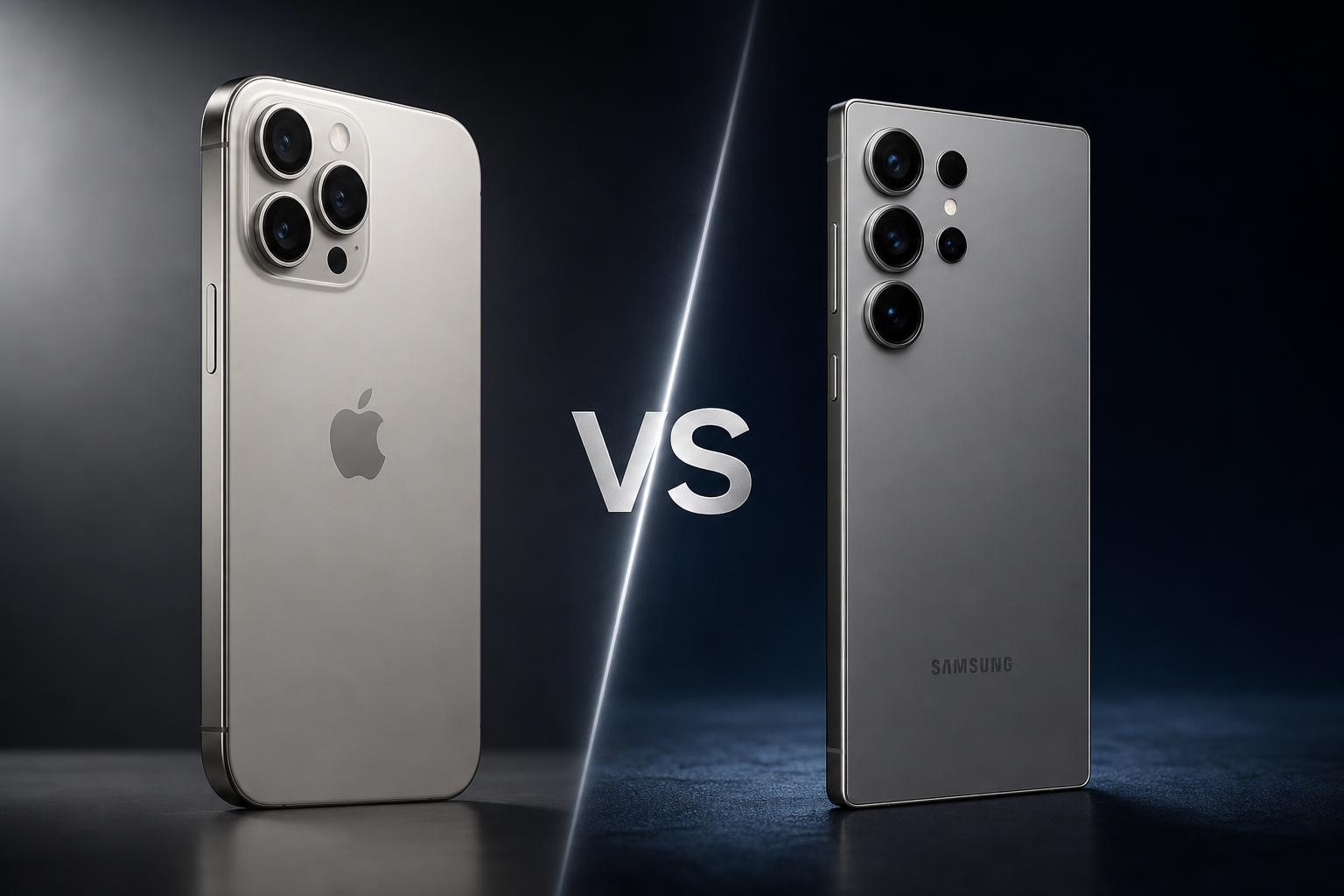
The Apple iPhone 17 and Samsung Galaxy S26 are compact flagship smartphones with similarly sized screens, premium hardware and starting prices around the $899 mark. Both are designed to deliver high-end performance without the larger dimensions of their respective Pro or Ultra alternatives, but they take different approaches to cameras, software, charging and ecosystem features.
The iPhone 17 brings Apple’s A19 chip, a 6.3-inch ProMotion OLED display, a dual 48MP camera system and iOS 27. The Galaxy S26 counters with a lighter and thinner design, a 120Hz Dynamic AMOLED 2X display, 12GB of memory, a dedicated 3x optical telephoto camera and Android 16 with One UI 8.5.
This comparison uses the verified specifications and pricing information available for both phones. It also distinguishes manufacturer claims from the independent battery comparison cited in the research, because real-world results can vary with network conditions, settings, software and usage.
Quick verdict
The Apple iPhone 17 is the better all-round choice for buyers who value video recording, Apple ecosystem integration, consistent processor hardware across markets and battery endurance. Its A19 chip, 4K Dolby Vision video, satellite safety features and slightly stronger result in the cited battery test make it a particularly dependable flagship package.
The Samsung Galaxy S26 is the better fit for Android users who want more interface customisation, a brighter stated display, 12GB of memory and a dedicated 3x optical telephoto camera. It is also thinner and lighter, while Samsung’s Galaxy AI suite offers a broad range of built-in productivity and assistance features.
At the clearly documented 256GB starting capacities, the two phones are essentially price rivals: the iPhone 17 starts at $899, while the Galaxy S26 starts at $899.99 on Samsung’s launch announcement. Samsung also lists a 128GB model at $799.99 in its U.S. MSRP information, although availability of that configuration should be checked before purchase.
Key specifications comparison
| Specification | Apple iPhone 17 | Samsung Galaxy S26 |
|---|---|---|
| Release date | September 19, 2025 | March 11, 2026 |
| Starting price | From $899 | From $899.99 for 256GB; Samsung also lists a 128GB model at $799.99 MSRP |
| Display | 6.3-inch Super Retina XDR OLED, 2622 × 1206, 460 ppi, ProMotion up to 120Hz, Always-On | 6.3-inch Dynamic AMOLED 2X, 2340 × 1080, 120Hz |
| Peak brightness | Up to 3,000 nits outdoor peak | Up to 2,600 nits |
| Processor | Apple A19: 6-core CPU, 5-core GPU, 16-core Neural Engine | Snapdragon 8 Elite Gen 5 or Exynos 2600, depending on market |
| Memory and storage | 256GB or 512GB; official RAM capacity not specified | 12GB memory; 256GB or 512GB storage in current U.S. product information |
| Rear cameras | 48MP Fusion Main with sensor-shift optical image stabilisation and optical-quality 2x telephoto; 48MP Fusion Ultra Wide | 50MP wide with 2x optical-quality zoom; 12MP ultra-wide; 10MP telephoto with 3x optical zoom |
| Front camera | 18MP Center Stage | 12MP selfie camera |
| Video | 4K Dolby Vision up to 60fps | Nightography video and Horizontal Lock stabilisation |
| Battery claims | Up to 30 hours of video playback | 4,300mAh typical capacity; up to 30 hours of video playback |
| Charging | Up to 50% in 20 minutes with a 40W adapter or higher; MagSafe and Qi2 wireless charging up to 25W | Up to 69% in approximately 30 minutes according to Samsung; wired and wireless charging |
| Software | iOS 27, Apple Intelligence and Siri AI | Android 16, One UI 8.5 and Galaxy AI |
| Dimensions and weight | 149.6 × 71.5 × 7.95mm; 177g | 149.6 × 71.7 × 7.2mm; 167g |
| Durability and connectivity | Aluminium design, Ceramic Shield 2 front, colour-infused glass back, IP68, USB-C, Wi-Fi 7, Bluetooth 6, eSIM-only in the listed U.S. specification | IP68 protection, Samsung Knox security, fast wired charging and wireless charging |
Design and build
These are closely matched in overall footprint. Both phones are 149.6mm tall, while the Galaxy S26 is only marginally wider at 71.7mm compared with 71.5mm for the iPhone 17. The more noticeable difference is thickness and weight.
Samsung’s Galaxy S26 measures 7.2mm thick and weighs 167g. The iPhone 17 is 7.95mm thick and weighs 177g. That gives the Galaxy a 10g weight advantage and makes it the slimmer option on paper. For buyers who regularly use a phone one-handed or carry it in a pocket, the S26 has the stronger design specifications.
The iPhone 17 uses an aluminium design with a Ceramic Shield 2 front and colour-infused glass back. It also has IP68 water and dust resistance. Samsung lists IP68 protection for the Galaxy S26 and emphasises its slim Galaxy design, although the provided research does not specify the complete material construction in the same level of detail as Apple’s listing.
Both phones therefore offer the expected protection associated with compact flagships, but their practical ownership details differ. The listed U.S. iPhone 17 specification is eSIM-only and does not support physical SIM cards. That may be convenient for users already comfortable with eSIM, but it is an important consideration for anyone who frequently swaps physical SIMs or travels with a separate SIM card.
Display
Both phones have 6.3-inch OLED-class displays and refresh rates up to 120Hz, so scrolling, animations and compatible games should benefit from a smoother experience than standard 60Hz panels. The iPhone 17 calls its screen Super Retina XDR OLED and includes ProMotion adaptive refresh rate technology, while Samsung uses a Dynamic AMOLED 2X panel with a 120Hz refresh rate.
Apple has the higher stated resolution: 2622 × 1206 pixels at 460 pixels per inch. Samsung’s screen is 2340 × 1080. That gives the iPhone an advantage in pixel density and fine detail on paper, although both displays are specified as sharp, high-end panels for everyday smartphone use.
Brightness is the more straightforward win for Samsung in the supplied specifications. The Galaxy S26 is rated for up to 2,600 nits peak brightness, while the iPhone 17 reaches up to 3,000 nits outdoor peak brightness. Because the manufacturers describe brightness differently, these figures should not be treated as a complete substitute for identical laboratory measurements, but Apple has the higher published outdoor peak figure.
The iPhone 17 also offers an Always-On display. That can make it easier to glance at selected information without fully waking the phone. Samsung’s listed display specifications in the research do not include an Always-On claim, so Apple has the clearer feature advantage here.
Overall, the iPhone 17 offers higher resolution, Always-On functionality and the higher stated outdoor peak brightness. The Galaxy S26 remains a strong display choice, with a 6.3-inch AMOLED panel and 120Hz operation, and its screen is among the reasons to consider Samsung’s phone.
Performance
The iPhone 17 is powered by Apple’s A19 chip, with a 6-core CPU, 5-core GPU and 16-core Neural Engine. Apple also specifies hardware-accelerated ray tracing. The combination is designed to support demanding apps, games, photography processing and Apple Intelligence features, although the research does not provide a single benchmark result that can be used as a definitive cross-platform winner.
The Galaxy S26 uses a customised processor configuration. Samsung lists the Snapdragon 8 Elite Gen 5 or Exynos 2600 depending on the market. This regional variation is important: two Galaxy S26 phones sold in different markets may not use the same processor, which can affect performance characteristics, gaming behaviour and comparisons with the iPhone.
Samsung supplies 12GB of memory with the Galaxy S26 and offers 256GB or 512GB storage in its current U.S. product information. Apple lists 256GB or 512GB storage but does not specify the official RAM capacity. Buyers should therefore avoid treating the memory numbers as a direct measure of overall speed, because Apple and Samsung manage hardware and software differently.
Independent testing cited in the research reported strong results for both devices, but direct benchmark comparisons can vary according to the test used, software version and the Galaxy’s regional processor. The iPhone 17 is the safer choice for buyers who want the same A19 hardware configuration across markets. The Galaxy S26 is particularly appealing to Android gaming buyers in Snapdragon-equipped markets, but the exact processor should be confirmed for the intended region.
Camera and graphics
The camera comparison reveals one of the clearest differences between these phones. The iPhone 17 has a 48MP Fusion Main camera with sensor-shift optical image stabilisation and optical-quality 2x telephoto capability. It is joined by a 48MP Fusion Ultra Wide camera and an 18MP Center Stage front camera.
Apple’s video specification is a major strength. The iPhone 17 can record 4K Dolby Vision video at up to 60 frames per second. For users who regularly create video for social media, family events or an Apple-focused editing workflow, the combination of Dolby Vision and Apple’s established video tools is a significant reason to choose the iPhone.
The Galaxy S26 uses a three-camera rear arrangement: a 50MP wide camera with an f/1.8 aperture and 2x optical-quality zoom, a 12MP ultra-wide camera with an f/2.2 aperture, and a 10MP telephoto camera with an f/2.4 aperture and 3x optical zoom. It also has a 12MP selfie camera.
The dedicated 3x optical telephoto camera gives Samsung the advantage for native zoom photography. It is a more direct hardware solution than the iPhone’s optical-quality 2x capability, particularly for portraits or subjects that are farther away. Samsung also lists Nightography video and Horizontal Lock stabilisation, features aimed at improving low-light video and keeping footage level during movement.
Neither phone should be described as a replacement for the larger Ultra or Pro camera systems based on the supplied information. Samsung’s own base Galaxy S26 camera hardware is less extensive than its Ultra models, while Apple’s iPhone 17 is a dual-camera model rather than a multi-camera Pro phone.
Choose the Galaxy S26 if a dedicated 3x optical telephoto camera is the priority. Choose the iPhone 17 if 4K Dolby Vision, Center Stage framing and a video-focused workflow matter more.
Battery and charging
Apple rates the iPhone 17 for up to 30 hours of video playback. Samsung gives the Galaxy S26 the same maximum video-playback claim and specifies a 4,300mAh typical-capacity battery. These manufacturer figures are useful for comparing the stated headline claims, but they do not predict every owner’s battery life.
In Tom’s Guide’s comparable battery-drain test cited in the research, the iPhone 17 lasted 12 hours and 47 minutes, while the Galaxy S26 lasted 11 hours and 28 minutes. That gives the iPhone an advantage of 1 hour and 19 minutes in that particular test. It is not a guarantee of everyday battery life, but it is the clearest independent comparison supplied for the two phones.
The iPhone 17 supports fast charging up to 50% in 20 minutes when used with a 40W adapter or higher. It also supports MagSafe and Qi2 wireless charging up to 25W. Samsung states that the Galaxy S26 can reach up to 69% charge in approximately 30 minutes. The supplied information confirms fast wired and wireless charging for Samsung, but does not provide a directly comparable wattage figure.
For battery endurance, the iPhone 17 has the stronger result in the cited comparison. For charging, both phones make quick top-ups a central feature, although their published claims use different measurements and time periods.
Software and features
The iPhone 17 runs iOS 27 and includes Apple Intelligence and Siri AI. It also offers Face ID and satellite emergency features. These capabilities are particularly valuable to buyers already using Apple devices, because the iPhone is designed to integrate closely with the wider Apple ecosystem.
The Galaxy S26 runs Android 16 with Samsung’s One UI 8.5 interface. Its Galaxy AI feature set includes Now Nudge, Now Brief, Photo Assist, Gemini Live and enhanced translation and productivity tools. Android and One UI also provide more interface customisation than iOS, making the Samsung the more flexible choice for users who like to adjust layouts, defaults and system behaviour.
There is no universal winner in software. iOS is the better match for someone invested in Apple services, Apple accessories and the company’s established interface. Android 16 and One UI 8.5 are more suitable for buyers who want customisation and Samsung’s AI tools. Samsung also includes Knox security, while the iPhone offers Face ID and satellite safety features.
Price and value
Apple lists the iPhone 17 from $899. That entry-level model includes 256GB of storage. Samsung’s launch announcement lists the Galaxy S26 from $899.99 for 256GB, making the two documented 256GB starting configurations almost identical in price.
Samsung’s U.S. MSRP list also includes a 128GB Galaxy S26 at $799.99. If that version is available from the retailer and market being considered, it provides a lower entry price than the iPhone 17. However, it has half the storage of the iPhone’s advertised base model, so the comparison is not like-for-like.
The Galaxy S26 offers 12GB of listed memory and a dedicated 3x optical telephoto camera at the comparable 256GB level. The iPhone 17 answers with its A19 chip, higher-resolution display, strong video specification, satellite features and slightly better battery result in the cited test. Neither phone is an obvious value winner at 256GB; the better purchase depends on which hardware and software features matter most.
Pros and cons
Apple iPhone 17
- Pros: Bright 6.3-inch OLED display with ProMotion up to 120Hz and Always-On functionality.
- Pros: A19 performance with hardware-accelerated ray tracing.
- Pros: Versatile dual 48MP camera system and 4K Dolby Vision video up to 60fps.
- Pros: Up to 30 hours of official video playback and faster specified wired charging.
- Pros: Compact, relatively light design with satellite emergency features and strong Apple ecosystem integration.
- Cons: No expandable storage.
- Cons: Apple does not specify the official RAM capacity.
- Cons: The listed U.S. model is eSIM-only and does not support physical SIM cards.
- Cons: Starts at $899 while the entry-level storage is 256GB.
Samsung Galaxy S26
- Pros: 6.3-inch 120Hz Dynamic AMOLED 2X display with up to 2,600 nits peak brightness.
- Pros: Thinner and lighter than the iPhone 17.
- Pros: Dedicated 10MP 3x optical telephoto camera.
- Pros: 12GB of memory and 256GB or 512GB storage options in current U.S. product information.
- Pros: Extensive Galaxy AI features and Android customisation.
- Cons: Shorter battery endurance than the iPhone 17 in the cited comparable test.
- Cons: Processor varies by market between Snapdragon 8 Elite Gen 5 and Exynos 2600.
- Cons: The base camera system is less extensive than Samsung’s Ultra models.
- Cons: The comparable 256GB launch price is slightly higher than the iPhone 17’s advertised starting price.
Which phone is better for different buyers?
Choose the iPhone 17 for battery life and video
The iPhone 17 is the stronger option for buyers who prioritise battery endurance and video recording. It lasted longer in the cited comparable battery test and supports 4K Dolby Vision video up to 60fps. Its Center Stage front camera and Apple’s ecosystem features also make it attractive for people who already use other Apple devices.
Choose the Galaxy S26 for zoom photography
The Galaxy S26 is the better choice for buyers who want a dedicated telephoto camera. Its 10MP camera provides 3x optical zoom, giving it a more specialised zoom setup than the iPhone 17. Nightography video and Horizontal Lock stabilisation add further appeal for people who record handheld footage.
Choose the Galaxy S26 for Android flexibility
Android 16, One UI 8.5 and Galaxy AI make Samsung the natural choice for users who prefer Android customisation. Now Nudge, Now Brief, Photo Assist, Gemini Live and translation tools provide a broad set of built-in features, while the phone’s listed 12GB of memory adds to its high-end specification.
Choose the iPhone 17 for consistent performance across markets
The iPhone 17 uses the A19 chip across the listed specification. The Galaxy S26 may use Snapdragon 8 Elite Gen 5 or Exynos 2600 depending on the market. Buyers who want to avoid regional processor differences may therefore prefer Apple, while Snapdragon-equipped Galaxy S26 markets may be especially attractive to Android gaming buyers.
Choose the Galaxy S26 for the lowest potential entry price
If Samsung’s listed 128GB model is available at its $799.99 U.S. MSRP, the Galaxy S26 offers the lower starting price. At the more directly comparable 256GB capacity, however, the phones are almost identically priced, with only a 99-cent difference between the published starting figures.
Final verdict
The Apple iPhone 17 and Samsung Galaxy S26 are closely matched compact flagships, but their strengths are different. The iPhone 17 is the more rounded choice for video, battery endurance, Apple ecosystem integration and consistent hardware across markets. Its higher-resolution display, Always-On feature, A19 chip and 4K Dolby Vision recording give it a strong all-purpose specification.
The Galaxy S26 is the more appealing option for Android users and anyone who values a lighter design, a dedicated 3x optical telephoto camera, 12GB of memory and extensive AI features. Its 120Hz AMOLED display, One UI customisation and market-dependent Snapdragon option also make it a compelling alternative.
At 256GB, neither phone offers a decisive price advantage. Choose the iPhone 17 for the more straightforward flagship experience and stronger cited battery result; choose the Galaxy S26 for telephoto photography, Android flexibility and a thinner, lighter body.
FAQs
Is the iPhone 17 cheaper than the Samsung Galaxy S26?
The iPhone 17 starts at $899. Samsung lists the Galaxy S26 from $899.99 for 256GB in its launch announcement. Samsung also lists a 128GB model at a $799.99 U.S. MSRP, although buyers should confirm whether that configuration is available from their chosen retailer.
Which has the better camera, the iPhone 17 or Galaxy S26?
It depends on the type of photography. The Galaxy S26 has a dedicated 10MP 3x optical telephoto camera, making it the stronger choice for native zoom. The iPhone 17 has two 48MP rear cameras, 4K Dolby Vision video and an 18MP Center Stage front camera, making it particularly attractive for video creators.
Does the iPhone 17 have better battery life?
Both manufacturers claim up to 30 hours of video playback. In the comparable battery-drain test cited in the research, the iPhone 17 lasted 12 hours and 47 minutes, compared with 11 hours and 28 minutes for the Galaxy S26. Actual results vary by usage and settings.
Which phone has the brighter display?
Apple lists up to 3,000 nits outdoor peak brightness for the iPhone 17, while Samsung lists up to 2,600 nits peak brightness for the Galaxy S26. The iPhone also has the higher stated resolution and includes an Always-On display.
Does the Galaxy S26 use the same processor everywhere?
No. Samsung lists the Snapdragon 8 Elite Gen 5 or Exynos 2600 depending on the market. Buyers should check the processor used in their region before comparing performance or purchasing for gaming.
Which phone is lighter and thinner?
The Samsung Galaxy S26 is lighter and thinner. It measures 7.2mm thick and weighs 167g, while the iPhone 17 measures 7.95mm thick and weighs 177g.