Apple iPad Air (M4) vs Samsung Galaxy Tab S12+: Which Tablet Is Better?
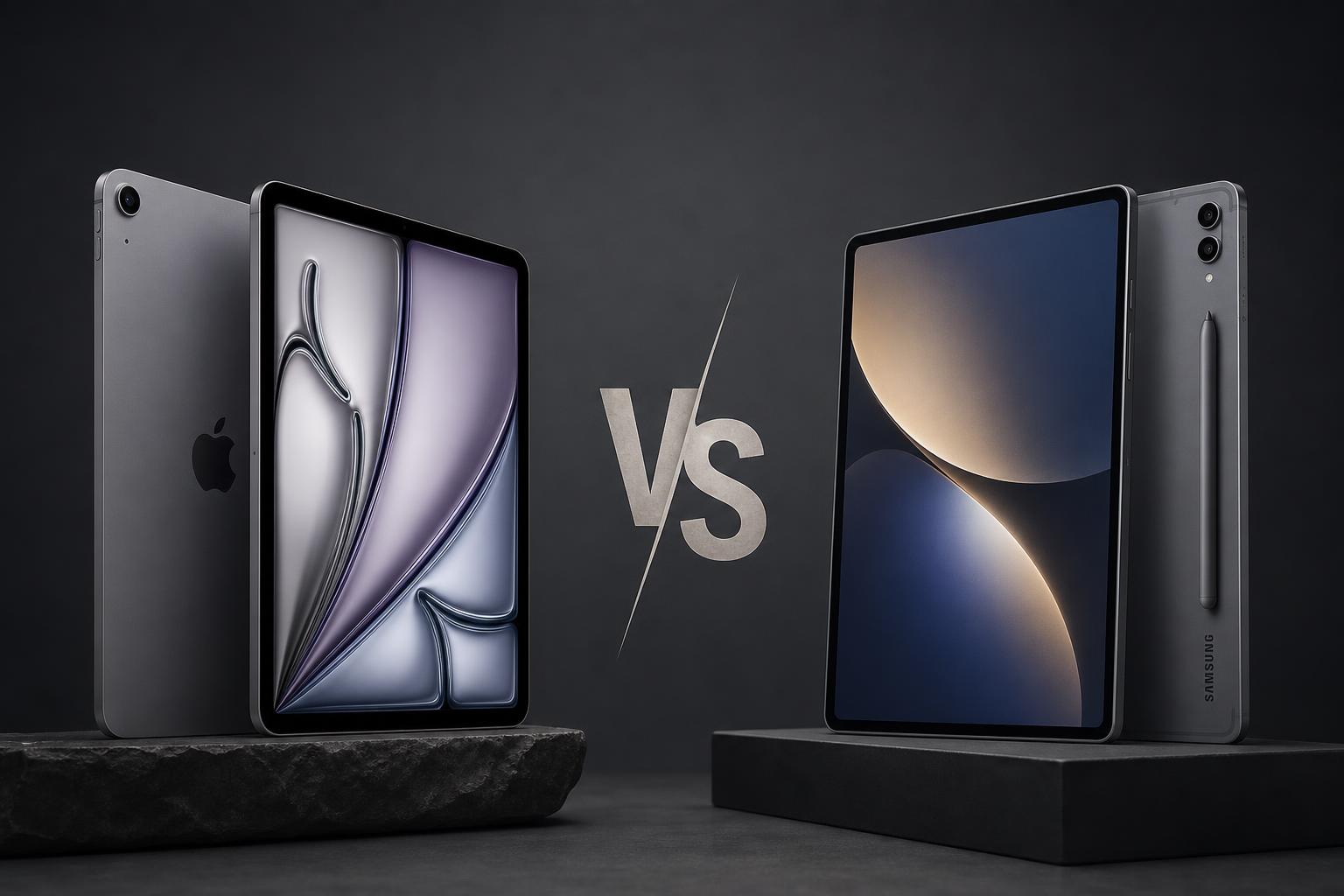
The Apple iPad Air (M4) and Samsung Galaxy Tab S12+ target buyers who want more than a basic tablet. Both offer high-end processors, large displays, stylus support and productivity features, but they take very different approaches. Apple focuses on a lower entry price, iPadOS and the M4 chip, while Samsung puts more emphasis on display quality, bundled accessories, battery capacity, Android productivity tools and durability.
This is also not a comparison between two products available on exactly the same timetable. The iPad Air (M4) was released on March 11, 2026. The Galaxy Tab S12+ has been announced for October 7, 2026 availability in the United States. Prices and specifications below are based on the manufacturers’ published information and should not be treated as the results of a direct benchmark or hands-on test.
Quick verdict
For most buyers, the Apple iPad Air (M4) is the better overall choice. Its starting price is substantially lower at $599 for the 11-inch Wi-Fi model, it offers a choice of 11-inch and 13-inch sizes, and its M4 processor, 12GB unified memory and hardware-accelerated ray tracing give it a particularly strong specification for creative and graphics-focused work. It also benefits from iPadOS and a broad tablet app ecosystem.
The Samsung Galaxy Tab S12+ is the more compelling premium hardware package. Its 12.6-inch Dynamic AMOLED 2X display has a 120Hz refresh rate and up to 1600 nits peak brightness. It includes an S Pen, supports microSD expansion up to 2TB, adds IP68 water and dust resistance, and includes Samsung DeX, multi-window tools and a larger 10,600mAh battery. However, its $1,199.99 starting price is twice that of the entry-level iPad Air, and the keyboard or charger costs are not the only potential extras to consider.
Key specifications comparison
| Feature | Apple iPad Air (M4) | Samsung Galaxy Tab S12+ |
|---|---|---|
| Availability | Released March 11, 2026 | Announced; U.S. availability from October 7, 2026 |
| Starting price | $599 for 11-inch Wi-Fi; $799 for 13-inch Wi-Fi | $1,199.99 for 12GB/256GB |
| Display | 11-inch or 13-inch Liquid Retina LED-backlit IPS; 264 ppi; P3; True Tone; 500 or 600 nits | 12.6-inch Dynamic AMOLED 2X; 2800×1752; 120Hz; up to 1600 nits peak brightness |
| Processor | Apple M4; 8-core CPU; 9-core GPU; 16-core Neural Engine | MediaTek Dimensity 9500 |
| Memory and storage | 12GB unified memory; 128GB, 256GB, 512GB or 1TB | 12GB memory; 256GB or 512GB; microSD up to 2TB |
| Rear camera | 12MP Wide; up to 4K video recording | 13MP |
| Front camera | 12MP landscape Center Stage | 12MP ultra-wide |
| Battery and charging | 28.93Wh or 36.59Wh; Apple rates up to 10 hours of Wi-Fi web surfing or video playback | 10,600mAh; 45W charging; up to 21 hours of video playback |
| Software | iPadOS; Apple Intelligence support | Android 17 with One UI 9; Galaxy AI; Samsung DeX |
| Stylus and keyboard | Supports Apple Pencil Pro, Apple Pencil USB-C and Magic Keyboard; sold separately | S Pen included; keyboard availability is listed separately |
| Durability and expansion | USB-C; no microSD expansion; no IP rating listed in the cited specifications | IP68; microSD expansion up to 2TB |
| Weight | 464g for 11-inch Wi-Fi; 616g for 13-inch Wi-Fi | 553g Wi-Fi; 555g 5G |
Design and build
The iPad Air offers more choice. Buyers can select an 11-inch model for a smaller, lighter tablet or a 13-inch version for a larger working area. The 11-inch Wi-Fi model measures 247.6 × 178.5 × 6.1mm and weighs 464g, while the 13-inch Wi-Fi model measures 280.6 × 214.9 × 6.1mm and weighs 616g. Both models are 6.1mm thick.
Apple offers the iPad Air in blue, purple, starlight and space gray. Touch ID is used for authentication, and the tablet has a USB-C port with USB 3 data speeds of up to 10Gb/s. Apple also lists Wi-Fi 7 and Bluetooth 6 through its N1 wireless chip.
The Galaxy Tab S12+ is thinner at 5.3mm, but its larger 12.6-inch format makes it a less compact proposition than the 11-inch iPad Air. It measures 187.8 × 289.5 × 5.3mm and weighs 553g in Wi-Fi form or 555g with 5G. Samsung lists gray and silver finishes.
Samsung has the clearest durability advantage on the published specifications. The Galaxy Tab S12+ has an IP68 water and dust-resistance rating. Apple does not list an IP rating in the cited iPad Air specifications. The Samsung tablet also supports microSD cards up to 2TB, which is useful for buyers who expect to keep large media libraries or creative files on the device. The iPad Air has no microSD storage expansion.
Display
The Galaxy Tab S12+ has the stronger display specification. Its 12.6-inch Dynamic AMOLED 2X panel offers a 2800×1752 resolution, a 120Hz refresh rate and peak brightness of up to 1600 nits. Samsung also lists 1000 nits in High Brightness Mode. On paper, that combination gives the Tab S12+ a clear advantage for smooth scrolling, HDR-style brightness and high-contrast viewing.
The iPad Air uses a Liquid Retina LED-backlit IPS display. It is available in 11-inch and 13-inch sizes, both rated at 264 pixels per inch. The 11-inch screen has a 2360×1640 resolution and 500-nit brightness, while the 13-inch version has a 2732×2048 resolution and 600-nit brightness.
Apple’s panel includes P3 wide color, True Tone, full lamination and an antireflective coating. Those features make the iPad Air’s display specification well suited to color-conscious creative work and general tablet use, but it does not match the Samsung’s stated 120Hz refresh rate, AMOLED technology or brightness figures.
The choice therefore depends on priorities. The Galaxy Tab S12+ is the obvious pick for buyers who rank display technology first. The iPad Air is more flexible for people who want either a compact 11-inch model or a larger 13-inch workspace without moving to Samsung’s much higher starting price.
Performance
The iPad Air is powered by Apple’s M4 chip, with an 8-core CPU, 9-core GPU, 16-core Neural Engine, hardware-accelerated ray tracing and 120GB/s memory bandwidth. Every configuration has 12GB of unified memory, with storage options of 128GB, 256GB, 512GB and 1TB.
That is a high-end specification for a tablet, particularly for demanding creative applications, graphics work and workloads that can use Apple’s unified-memory architecture. The stated hardware ray-tracing support is also relevant to games and 3D graphics applications that take advantage of it.
The Galaxy Tab S12+ uses the MediaTek Dimensity 9500 and comes with 12GB of memory. Storage is available at 256GB or 512GB, with microSD expansion up to 2TB. Samsung’s tablet also supports Samsung DeX, which provides a more desktop-oriented productivity environment, alongside Android 17 and One UI 9.
The published specifications do not establish a direct performance winner. These tablets use different processors, memory architectures and operating systems, and no controlled benchmark comparison is provided in the research. The iPad Air has the clearer specification advantage for graphics and creative workloads because Apple explicitly lists its 9-core GPU, ray tracing and Neural Engine. Samsung’s strengths are its desktop-style DeX environment, expandable storage and broader multi-window productivity features.
Camera and graphics
The iPad Air has a 12MP Wide rear camera capable of recording video at up to 4K. Its front camera is a 12MP landscape Center Stage camera, designed around video calls and keeping the subject in frame. The M4 GPU also supports hardware-accelerated ray tracing.
The Galaxy Tab S12+ has a 13MP rear camera and a 12MP ultra-wide front camera. Samsung’s ultra-wide front-camera specification gives it an expansive field of view for calls and group framing. The tablet also includes a quad-speaker system with four-channel spatial audio.
For documented video and graphics capabilities, the iPad Air has the stronger specification: it lists up to 4K rear-camera recording and hardware ray tracing. Samsung’s camera setup remains useful for video calls, particularly where the ultra-wide front camera is preferred, while its quad-speaker system may appeal to buyers who use a tablet for media consumption.
Battery and charging
Samsung publishes a 10,600mAh battery for the Galaxy Tab S12+, along with 45W charging. Its manufacturer-rated endurance is up to 21 hours of video playback. The charger is sold separately.
Apple lists a 28.93Wh battery for the 11-inch iPad Air and a 36.59Wh battery for the 13-inch model. Apple rates all versions for up to 10 hours of web surfing on Wi-Fi or video playback, or up to nine hours when using cellular data.
Samsung has the higher published endurance figure, so it is the battery-focused choice based on the available manufacturer claims. However, these are not controlled head-to-head results. Samsung publishes a video-playback figure, while Apple combines Wi-Fi web surfing and video playback in its up-to-10-hour rating, and the companies use different battery measurements and test methods.
Software and features
The iPad Air runs iPadOS and supports Apple Intelligence. It also works with Apple Pencil Pro, Apple Pencil USB-C and Magic Keyboard for iPad Air. Apple’s tablet software ecosystem includes applications such as Procreate and Final Cut Pro for iPad, which is a significant consideration for creative users. The Apple Pencil Pro and Magic Keyboard are sold separately.
The Galaxy Tab S12+ runs Android 17 with One UI 9 and includes Galaxy AI features. Samsung DeX provides a desktop-style interface, while multi-window tools support more structured multitasking. Samsung also promises up to seven generations of OS upgrades and seven years of security updates.
The S Pen is included with the Galaxy Tab S12+, giving Samsung an immediate accessory advantage for handwritten notes, sketches and stylus-based work. The combination of a large 120Hz AMOLED display, included pen and DeX makes the Tab S12+ particularly suited to buyers who want a tablet that can function as a note-taking and productivity device without buying a separate stylus.
Price and value
The iPad Air has a major price advantage. The 11-inch Wi-Fi version starts at $599, while the 13-inch Wi-Fi version starts at $799. Wi-Fi + Cellular models start at $749 for the 11-inch version and $949 for the 13-inch version. Storage ranges from 128GB to 1TB.
The Galaxy Tab S12+ starts at $1,199.99 in the United States for the 12GB memory and 256GB storage model. That is $600.99 more than the entry-level 11-inch iPad Air and $400.99 more than the 13-inch Wi-Fi iPad Air. Samsung does include the S Pen and adds features such as AMOLED, 120Hz, IP68 protection and microSD expansion, but the charger is sold separately.
Value depends on what the buyer would otherwise need to purchase. The iPad Air is the better value for buyers who want strong performance, iPadOS and a lower initial outlay. Its accessory costs should be included in any productivity setup, because Apple Pencil Pro and Magic Keyboard are separate purchases. The Galaxy Tab S12+ makes more sense for buyers who place a high value on its display, included S Pen, expandable storage, durability rating and DeX features.
Apple iPad Air (M4): pros and cons
Pros
- Substantially lower starting price than the Galaxy Tab S12+.
- M4 chip with 12GB unified memory, a 9-core GPU and hardware-accelerated ray tracing.
- Choice of 11-inch and 13-inch sizes.
- Broad iPadOS app ecosystem, including Procreate and Final Cut Pro for iPad.
- Supports Apple Pencil Pro and Magic Keyboard.
- Rear camera supports up to 4K video recording.
Cons
- Apple Pencil Pro and Magic Keyboard cost extra.
- Liquid Retina IPS display does not match Samsung’s AMOLED, 120Hz or brightness specifications.
- No microSD storage expansion.
- Apple’s published battery rating is lower than Samsung’s published video-playback figure, although the test methods differ.
- No IP rating is listed in the cited specifications.
Samsung Galaxy Tab S12+: pros and cons
Pros
- 12.6-inch Dynamic AMOLED 2X display with 120Hz refresh rate.
- Peak brightness rated at up to 1600 nits.
- S Pen included in the box.
- MicroSD expansion up to 2TB.
- IP68 water and dust resistance.
- Samsung DeX, multi-window productivity and up to seven generations of OS upgrades.
- Larger 10,600mAh battery and published support for 45W charging.
Cons
- Much higher starting price than the iPad Air.
- U.S. availability is scheduled for October 7, 2026.
- Charger is sold separately.
- Larger and heavier than the 11-inch iPad Air.
- Rear-camera specification does not list 4K recording and does not include an ultra-wide rear camera.
Which tablet is better for different buyers?
Best for most buyers: Apple iPad Air (M4)
The iPad Air is the more sensible choice for most people because it delivers a lower starting price, strong M4 hardware, two size options and access to iPadOS. The 11-inch model is especially attractive for buyers who want a relatively compact tablet, while the 13-inch version provides a larger canvas without reaching Samsung’s starting price.
Best for display quality: Samsung Galaxy Tab S12+
The Galaxy Tab S12+ is the clear choice for buyers who prioritize display hardware. Its AMOLED panel, 120Hz refresh rate and significantly higher stated brightness give it the stronger specification for smooth scrolling and vivid, high-contrast content.
Best for performance-focused creative work: Apple iPad Air (M4)
The iPad Air has the clearer specification advantage for demanding graphics and creative workloads. The M4 includes a 9-core GPU, hardware-accelerated ray tracing, a 16-core Neural Engine and 12GB of unified memory. A direct benchmark winner is not established, but Apple’s stated hardware and iPadOS creative ecosystem make the iPad Air the more convincing choice in this category.
Best for handwritten work: Samsung Galaxy Tab S12+
Samsung is the easier recommendation for buyers who intend to write or sketch immediately. The S Pen is included, and the 12.6-inch 120Hz display provides a large working area. With Samsung DeX and multi-window features, it is also well suited to users who want a more desktop-style productivity setup.
Best for battery claims and durability: Samsung Galaxy Tab S12+
Samsung publishes up to 21 hours of video playback, compared with Apple’s up-to-10-hour Wi-Fi web-surfing or video-playback rating. The methods are not directly comparable, but Samsung has the stronger stated figure. Its IP68 rating is another advantage for buyers who value water and dust resistance.
Best for value: Apple iPad Air (M4)
The 11-inch Wi-Fi iPad Air at $599 is the stronger value starting point. Samsung’s included S Pen, microSD support, AMOLED display and IP68 protection add meaningful benefits, but they do not erase the $600.99 difference between the two entry prices.
Final verdict
The iPad Air (M4) wins this comparison for overall value and broad buyer appeal. It costs substantially less, offers two sizes, includes a high-end M4 processor and connects to a mature iPadOS app ecosystem. It is the better fit for buyers who want creative applications, strong graphics hardware or a premium tablet without paying more than $1,000 before accessories.
The Galaxy Tab S12+ is the better premium hardware choice. Its 12.6-inch AMOLED display, 120Hz refresh rate, included S Pen, microSD support, IP68 rating, DeX software and larger battery give it a distinctive set of advantages. It is the tablet to choose if those features matter more than the initial price.
In short, choose the iPad Air (M4) for price, iPadOS, app support and creative performance specifications. Choose the Galaxy Tab S12+ for the display, stylus value, expandable storage, durability and Samsung’s productivity-focused software.
FAQs
Is the iPad Air (M4) cheaper than the Galaxy Tab S12+?
Yes. The iPad Air starts at $599 for the 11-inch Wi-Fi model and $799 for the 13-inch Wi-Fi model. The Galaxy Tab S12+ starts at $1,199.99 in the United States for the 12GB/256GB configuration.
Which has the better display?
The Samsung Galaxy Tab S12+ has the stronger display specification. It uses a 12.6-inch Dynamic AMOLED 2X panel with a 120Hz refresh rate and up to 1600 nits peak brightness. The iPad Air uses a Liquid Retina IPS display with P3 color, True Tone and antireflective coating, but Apple lists 500 nits for the 11-inch model and 600 nits for the 13-inch model.
Does the Galaxy Tab S12+ include an S Pen?
Yes. The S Pen is included with the Galaxy Tab S12+. Apple’s iPad Air supports Apple Pencil Pro and Apple Pencil USB-C, but those accessories are sold separately.
Which tablet has the better battery life?
Samsung publishes the higher figure, rating the Galaxy Tab S12+ for up to 21 hours of video playback. Apple rates the iPad Air for up to 10 hours of Wi-Fi web surfing or video playback. These claims use different test conditions, so they are not a controlled head-to-head comparison.
Does either tablet support expandable storage?
Only the Galaxy Tab S12+ supports expandable storage. It accepts microSD cards up to 2TB. The iPad Air offers fixed storage capacities of 128GB, 256GB, 512GB or 1TB and does not have microSD expansion.
Which is better for creative apps?
The iPad Air is the stronger choice for creative software based on the cited specifications and ecosystem. It has the M4 chip, hardware-accelerated ray tracing and access to iPad apps including Procreate and Final Cut Pro for iPad. The Galaxy Tab S12+ may appeal more to handwritten-work users because its S Pen is included and its display is larger and faster.
Sources
- Apple introduces the new iPad Air, powered by M4 — Apple
- iPad Air Technical Specifications — Apple
- Samsung Introduces Galaxy Tab S12 Series — Samsung Newsroom
- Explore Galaxy Tab S12 Series AI Tablets — Samsung
- Apple iPad Air (M4) Review — WIRED
- Samsung Galaxy Tab S12+ coverage and specifications — TechRadar