
Apple Watch Ultra 4 vs Garmin fēnix 9 Pro: Which Premium Sports Watch Is Better?
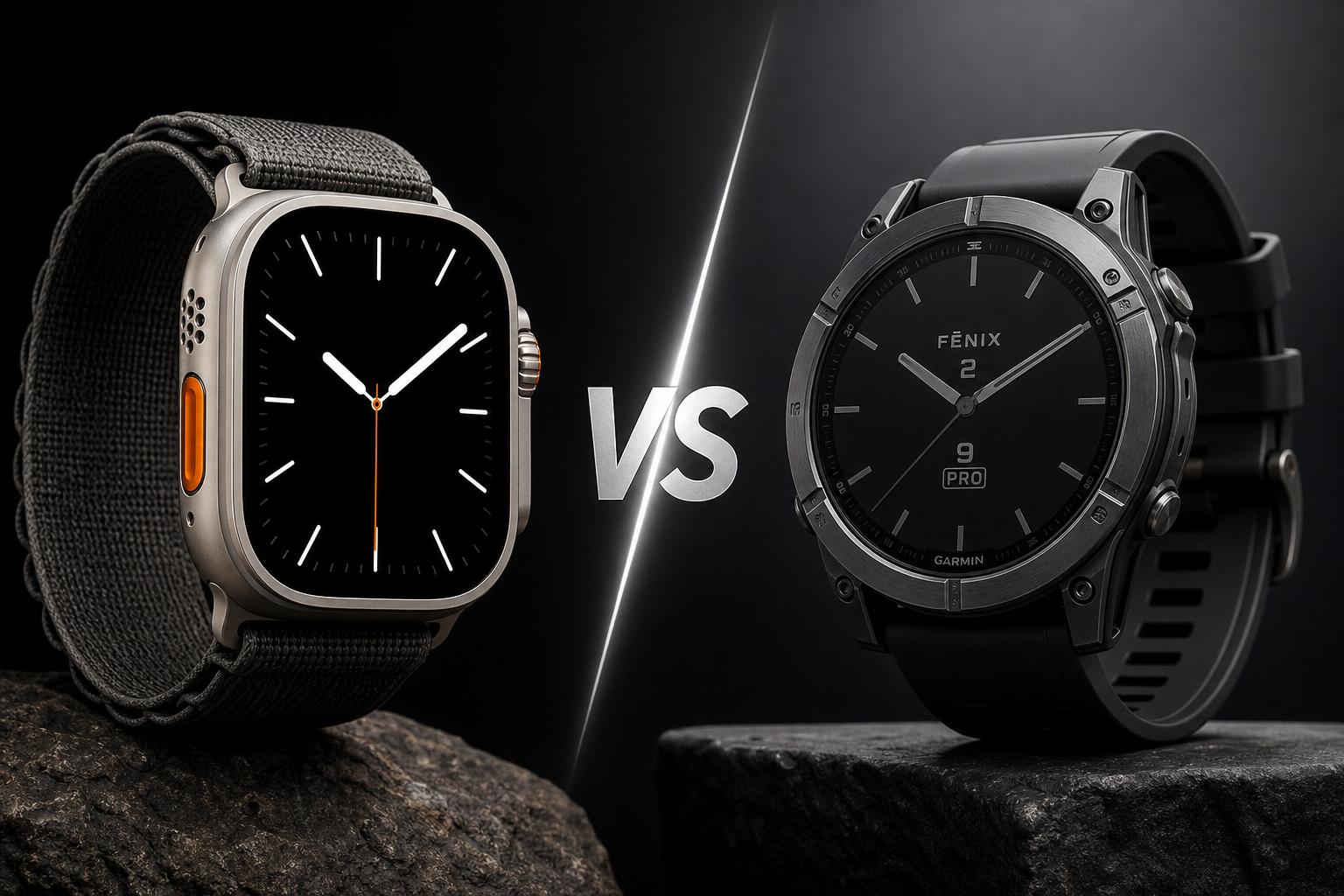
The Apple Watch Ultra 4 and Garmin fēnix 9 Pro are premium smartwatches designed for demanding users, but they take notably different approaches. Apple focuses on the connected smartwatch experience, with iPhone integration, cellular connectivity, health tools, apps, satellite communications and a bright 49mm display. Garmin puts more emphasis on endurance training, navigation, battery life, multisport activity and outdoor use.
The price difference is also significant. The Apple Watch Ultra 4 starts at $799 in the U.S., while the Garmin fēnix 9 Pro starts at $1,099.99. That makes the Apple the more accessible option, but the Garmin offers a much longer battery runtime and features aimed at users who spend extended periods training or away from a charger.
Quick verdict
The Apple Watch Ultra 4 is the better choice for most iPhone owners who want a capable everyday smartwatch with strong health, safety, cellular and app features at the lower starting price. Its 3000-nit always-on display, ECG, health notifications, satellite communications and Apple Intelligence and Siri AI support make it a broad all-purpose option.
The Garmin fēnix 9 Pro is the better choice for serious endurance athletes, hikers and outdoor users who prioritise battery life, training metrics, routable maps and size choice. Its AMOLED models can last up to 31 days in smartwatch mode, while select solar models can reach up to 57 days under Garmin’s stated solar-use conditions. That is a substantial advantage over the Apple’s maximum of 50 hours in normal use.
In short, choose Apple for the connected smartwatch ecosystem and lower entry price. Choose Garmin for multiweek endurance, navigation and training depth.
Key specifications comparison
| Feature | Apple Watch Ultra 4 | Garmin fēnix 9 Pro |
|---|---|---|
| Starting price | From $799 in the U.S. | From $1,099.99 in the U.S. |
| Release date | September 18, 2026 | August 25, 2026 |
| Case options | 49mm only | 43mm, 47mm and 51mm |
| Case material | Titanium | Titanium case and bezel |
| Display | 49mm always-on Retina wide-angle OLED LTPO3; 422 × 514 pixels; 326 ppi; sapphire crystal; up to 3000 nits | AMOLED, up to 3000 nits; 1.3-inch, 1.4-inch or 1.5-inch round displays depending on size; select solar options |
| Processor | Apple S11, 64-bit dual-core processor and 4-core Neural Engine | Not specified in the cited official product materials |
| Storage | 64GB | 64GB; supports map downloads and up to 7,000 songs |
| Battery | Up to 50 hours normal use; up to 84 hours Low Power Mode | Up to 10, 18 or 31 days in smartwatch mode depending on size; select solar models up to 57 days |
| Water and durability | 100m water resistance; recreational scuba diving to 40m; IP6X dust resistance; sapphire crystal | 10 ATM water rating; sapphire crystal; titanium construction |
| Navigation and communication | Dual-frequency GPS, 5G and cellular connectivity, satellite communications | Multi-band GPS; built-in routable maps; select inReach satellite and LTE connectivity |
| Phone compatibility | Requires iPhone 11 or later with iOS 27 or later | Garmin operating software; selected communication features require an active inReach plan |
Design and build
The Apple Watch Ultra 4 uses a single 49mm titanium case. It weighs 63.0g in natural titanium or 63.1g in black titanium, and measures 49 × 44 × 12mm. This gives buyers a substantial watch, but there is no smaller Apple Watch Ultra 4 case option in the supplied specifications.
Apple’s design is rectangular, with a wide-angle display and a dedicated Action button. The case also includes a built-in speaker, microphones and siren. For users who want an easily recognisable Apple Watch shape and a large screen for notifications, applications and workout information, this design has a clear practical focus.
The Garmin fēnix 9 Pro offers more choice. It is available in 43mm, 47mm and 51mm versions, weighing 62g, 78g and 99g respectively. The stated dimensions are 43 × 43 × 13.3mm, 47 × 47 × 13.8mm and 51 × 51 × 15.8mm. Garmin’s listed weights include the case and standard strap where specified by its comparison pages.
The smaller 43mm Garmin may suit users who find larger sports watches uncomfortable, while the 51mm model is designed for those who want the biggest case and longest quoted battery life. However, the largest version is substantially heavier and thicker than the Apple Watch Ultra 4. That trade-off matters if the watch will be worn overnight, during long runs or throughout everyday activities.
Both watches use titanium and sapphire crystal, giving them premium materials for users who want a more durable outdoor-oriented device. The Apple is rated for 100m water resistance, recreational scuba diving to 40m and IP6X dust resistance. The Garmin has a 10 ATM water rating, along with leakproof inductive buttons, a built-in speaker, microphone and LED flashlight.
The physical controls also differ. Apple includes its Action button, while Garmin’s design is a more traditional round watch format with physical buttons. The better layout depends on preference: Apple is closely tied to its touch-led smartwatch interface, whereas Garmin’s button-led approach is relevant when operating a watch during training or in conditions where touch controls may be less convenient.
Display
Both watches offer bright AMOLED-based displays reaching up to 3000 nits, so visibility is a major feature for outdoor use. Their screen shapes and resolutions are different.
The Apple Watch Ultra 4 has a 49mm always-on Retina wide-angle OLED LTPO3 display with 422 × 514 pixels and a density of 326 pixels per inch. Its sapphire crystal protection and 3000-nit peak brightness give it a strong specification for viewing workout information, notifications and maps in bright surroundings.
The Garmin fēnix 9 Pro uses round AMOLED screens. The 43mm version has a 1.3-inch display with 416 × 416 pixels, the 47mm version has a 1.4-inch display with 454 × 454 pixels, and the 51mm version has a 1.5-inch display with 466 × 466 pixels. Select 51mm and 47mm variants also offer solar charging displays.
Apple’s rectangular layout provides a larger, wider canvas for smartwatch content, while Garmin’s round screen maintains the appearance of a traditional watch. Neither is automatically better. The Apple format may be more useful for app interfaces and wide information panels, while the Garmin format is familiar to users who prefer a conventional watch design.
Garmin’s solar display option is potentially more important than the shape for expedition users. It is linked to the watch’s longer battery strategy, although the quoted solar runtime applies only to select models and Garmin’s stated solar-use conditions. Buyers should therefore distinguish between the standard AMOLED figures and the solar-model maximum.
Performance and everyday use
Apple specifies an S11 chip with a 64-bit dual-core processor and a 4-core Neural Engine for the Apple Watch Ultra 4. The watch has 64GB of capacity, providing space for its software, apps and stored content according to Apple’s specification.
Garmin does not specify the fēnix 9 Pro processor in the cited official product materials. However, Garmin claims 50% more RAM than the fēnix 8 and up to 30% faster map panning. Those claims point to an emphasis on smoother navigation and the handling of training and map data, rather than providing a directly comparable processor specification.
For general smartwatch use, Apple has the broader connected proposition. It supports watchOS, Apple Intelligence and Siri AI, cellular connectivity and a wide range of smartwatch, communication and health features. It also requires an iPhone 11 or later running iOS 27 or later. Android users therefore cannot treat it as a platform-neutral choice: the Apple Watch Ultra 4 requires a compatible iPhone.
Garmin’s software is built around Garmin Connect, Garmin Epic, training readiness, training status, enhanced stamina metrics and outdoor navigation. The fēnix 9 Pro also supports Garmin Pay and provides storage for map downloads and up to 7,000 songs. It is a more specialised platform for people who want their watch to support structured training and long activities.
The distinction is useful when choosing between them. Apple is stronger as an extension of a phone, with health alerts, apps, cellular service and everyday notifications. Garmin is stronger when the watch itself is the centre of a training plan, route or expedition.
Fitness, navigation and outdoor features
The Apple Watch Ultra 4 includes dual-frequency GPS, readiness and Vitals apps, ECG, sleep tracking, cycle tracking, hypertension notifications and sleep-apnea notifications. It also includes offline maps and satellite communications. These features give it a broad health and safety package, particularly for iPhone users who want one watch for daily life, workouts and emergencies.
The Garmin fēnix 9 Pro is more focused on endurance and navigation. It includes multi-band GPS, built-in routable maps, training readiness, training status and enhanced stamina metrics. This combination is relevant to runners, cyclists, hikers and multisport users who need information about routes and training load rather than only basic activity tracking.
Garmin also offers inReach satellite and LTE connectivity on select models. Phone-free voice, text and SOS features are available on inReach models, but an active inReach plan is required. Coverage and plan requirements therefore form part of the ownership decision. Apple’s satellite communications and cellular connectivity are part of its own feature set, while Garmin’s more advanced inReach functionality is model- and plan-dependent.
For outdoor navigation, Garmin has the clearer specification advantage because routable maps are built into the platform and the watch has 64GB of memory for map downloads. Apple does offer offline maps, so it is not limited to phone-dependent navigation, but the Garmin’s overall package is more directly aimed at long-distance routes and endurance activities.
Camera and graphics
Neither product has a specified camera in the verified research. That means neither should be selected as a camera-focused device or as a way to capture photos and video independently.
The relevant difference is graphics and visual information rather than photography. Apple specifies a 4-core Neural Engine as part of its S11 chip, while Garmin highlights faster map panning and additional RAM compared with the fēnix 8. These details point to different priorities: Apple supports a broad smartwatch and AI-oriented experience, while Garmin concentrates on map use and training data.
Battery and charging
Battery life is the most decisive difference in this comparison. The Apple Watch Ultra 4 provides up to 50 hours of normal use, up to 84 hours in Low Power Mode and up to 45 hours of Max Extended Workout tracking. It can charge to 80% in about 45 minutes.
Those figures make the Apple more capable than a conventional short-runtime smartwatch, but it still needs charging much more often than the Garmin. Users planning long weekends, multi-day races or extended trips should consider how frequently they want to remove the watch or carry a charger.
The Garmin fēnix 9 Pro ranges from up to 10 days in smartwatch mode for the 43mm AMOLED model, to up to 18 days for the 47mm AMOLED model and up to 31 days for the 51mm AMOLED model. Select solar models can reach up to 57 days under Garmin’s stated solar-use conditions. The 51mm AMOLED model is also rated for up to 56 hours in activity mode.
Garmin is the clear winner for battery life. The main qualification is size: the longest runtimes are associated with the larger 51mm model and select solar variants. A buyer who wants the smallest watch should expect the 43mm model’s lower quoted runtime rather than the headline 57-day figure.
Price and value
The Apple Watch Ultra 4 starts at $799 in the U.S., making it $300.99 less expensive at its respective starting prices than the Garmin fēnix 9 Pro, which starts at $1,099.99. Prices can vary by configuration, but those are the official starting prices supplied for this comparison.
Apple offers stronger value for an iPhone owner who wants a premium smartwatch without paying for specialist endurance features they may not use. The lower price includes a titanium case, sapphire crystal, a bright always-on display, cellular connectivity, health features, satellite communications and broad Apple integration.
Garmin costs more, but its value proposition is different. The additional spend buys access to a platform centred on multiweek battery life, routable maps, endurance metrics, multiple case sizes, Garmin Connect and optional inReach satellite and LTE features on select models. For a user who regularly trains for long events or spends time away from power, those features may justify the premium.
Value therefore depends on the buyer’s priorities. Apple is the stronger value choice based on starting price and general smartwatch breadth. Garmin may be the better long-term value for someone who would otherwise need to compromise on battery life, navigation or advanced outdoor training tools.
Apple Watch Ultra 4: pros and cons
Pros
- Lower starting price than the Garmin fēnix 9 Pro.
- Bright 3000-nit always-on OLED display with sapphire crystal.
- Strong integration with iPhone, watchOS apps, Apple Intelligence and Siri AI.
- Broad health and safety feature set, including ECG, readiness, Vitals and specified health notifications.
- Built-in satellite communications and cellular connectivity.
- Dual-frequency GPS, offline maps and 100m water resistance.
Cons
- Requires an iPhone 11 or later running iOS 27 or later.
- Not compatible with Android phones.
- Battery life is substantially shorter than the Garmin fēnix 9 Pro.
- Only one 49mm case size is offered.
- No camera is specified.
Garmin fēnix 9 Pro: pros and cons
Pros
- Much longer battery life, with up to 31 days for the 51mm AMOLED model and up to 57 days for select solar models under stated conditions.
- Available in 43mm, 47mm and 51mm sizes.
- Built-in routable maps and 64GB memory for map downloads and up to 7,000 songs.
- Strong endurance-training, multisport and navigation features.
- Titanium construction, sapphire crystal and 10 ATM water rating.
- Optional inReach satellite and LTE communication on select models, subject to an active plan.
Cons
- Higher starting price than the Apple Watch Ultra 4.
- Some communication features require an active inReach plan.
- The 51mm model is substantially heavier and thicker than the Apple Watch Ultra 4.
- Garmin does not specify the processor in the cited official product materials.
- No camera is specified.
Which watch is better for different buyers?
Best for iPhone owners
The Apple Watch Ultra 4 is the more natural choice for iPhone users. It requires a compatible iPhone, but that requirement also reflects its close integration with Apple’s software, Siri AI, watchOS apps, cellular features and health tools.
Best for Android users
The Apple Watch Ultra 4 is not compatible with Android phones. Buyers who do not use an iPhone should therefore look beyond Apple’s model. The Garmin’s cited materials do not state a comparable iPhone-only requirement, making it the more appropriate product to investigate for users outside Apple’s phone ecosystem.
Best for endurance athletes
The Garmin fēnix 9 Pro is the stronger choice for endurance training. Its enhanced stamina metrics, training readiness, training status, multi-band GPS, routable maps and much longer battery life are all aligned with extended activity and structured training.
Best for everyday smartwatch features
The Apple Watch Ultra 4 is the better fit for users who want the broadest combination of notifications, apps, health features, cellular connectivity and safety functions. It also starts at a lower price than the Garmin.
Best for hikers and navigators
The Garmin fēnix 9 Pro has the stronger navigation proposition because it includes built-in routable maps, map downloads and 64GB of memory. Apple still offers offline maps and dual-frequency GPS, so the Ultra 4 remains relevant for outdoor users who also prioritise iPhone integration.
Best for battery life
The Garmin fēnix 9 Pro wins clearly. Even the quoted 43mm AMOLED figure of up to 10 days is substantially longer than the Apple Watch Ultra 4’s up to 50 hours in normal use, while larger and solar Garmin models extend the gap significantly.
Best for value
The Apple Watch Ultra 4 offers better value for most buyers because of its lower starting price and broad feature set. Garmin can offer better value for a specialist user who will actively use its multiweek battery, advanced navigation and endurance-training functions.
Best for creators and camera users
Neither watch has a specified camera, so neither is a camera-focused choice. Their strengths lie in smartwatch, health, training, navigation and safety features.
Final verdict
The Apple Watch Ultra 4 and Garmin fēnix 9 Pro are both high-end sports watches, but they are designed around different definitions of versatility. Apple is the more complete connected smartwatch: it costs less, works closely with the iPhone, offers a broad health and safety package, includes cellular connectivity and satellite communications, and has a very bright always-on display.
Garmin is the more focused endurance and outdoor tool. It costs more, but offers three case sizes, much longer battery life, built-in routable maps, substantial storage, multi-band GPS and a deeper emphasis on training and expedition use. Its optional inReach and LTE features add further communication capability on supported models, although a plan is required.
For an iPhone owner looking for one premium watch for everyday life, health tracking, communication and occasional outdoor activity, the Apple Watch Ultra 4 is the better overall choice. For a runner, hiker, multisport athlete or expedition user who values battery life and navigation above app breadth, the Garmin fēnix 9 Pro is the better specialist choice.
FAQs
Is the Apple Watch Ultra 4 cheaper than the Garmin fēnix 9 Pro?
Yes. The Apple Watch Ultra 4 starts at $799 in the U.S., while the Garmin fēnix 9 Pro starts at $1,099.99. The Apple therefore has the lower starting price by $300.99.
Which has better battery life, the Apple Watch Ultra 4 or Garmin fēnix 9 Pro?
The Garmin fēnix 9 Pro has better battery life. Depending on the model, it offers up to 10, 18 or 31 days in smartwatch mode, while select solar models can reach up to 57 days under Garmin’s stated conditions. The Apple Watch Ultra 4 is rated for up to 50 hours of normal use.
Does the Apple Watch Ultra 4 work with Android phones?
No. The verified specifications state that the Apple Watch Ultra 4 requires an iPhone 11 or later with iOS 27 or later, and the research identifies it as incompatible with Android phones.
Which watch is better for maps and outdoor navigation?
The Garmin fēnix 9 Pro has the stronger navigation feature set, with built-in routable maps, map downloads, 64GB of memory and multi-band GPS. The Apple Watch Ultra 4 also supports offline maps and dual-frequency GPS, so it remains a capable option for iPhone users who want outdoor features alongside everyday smartwatch functions.
Do either watch have a camera?
No camera is specified for either the Apple Watch Ultra 4 or Garmin fēnix 9 Pro in the verified research. Neither should be chosen as a camera-focused device.
Which watch is better for swimming and diving?
The Apple Watch Ultra 4 has 100m water resistance and supports recreational scuba diving to 40m. The Garmin fēnix 9 Pro has a 10 ATM water rating. Buyers should compare these stated ratings with their intended activities before choosing a model.