
Apple Watch Series 12 vs Samsung Galaxy Watch9: Which Smartwatch Is Better?
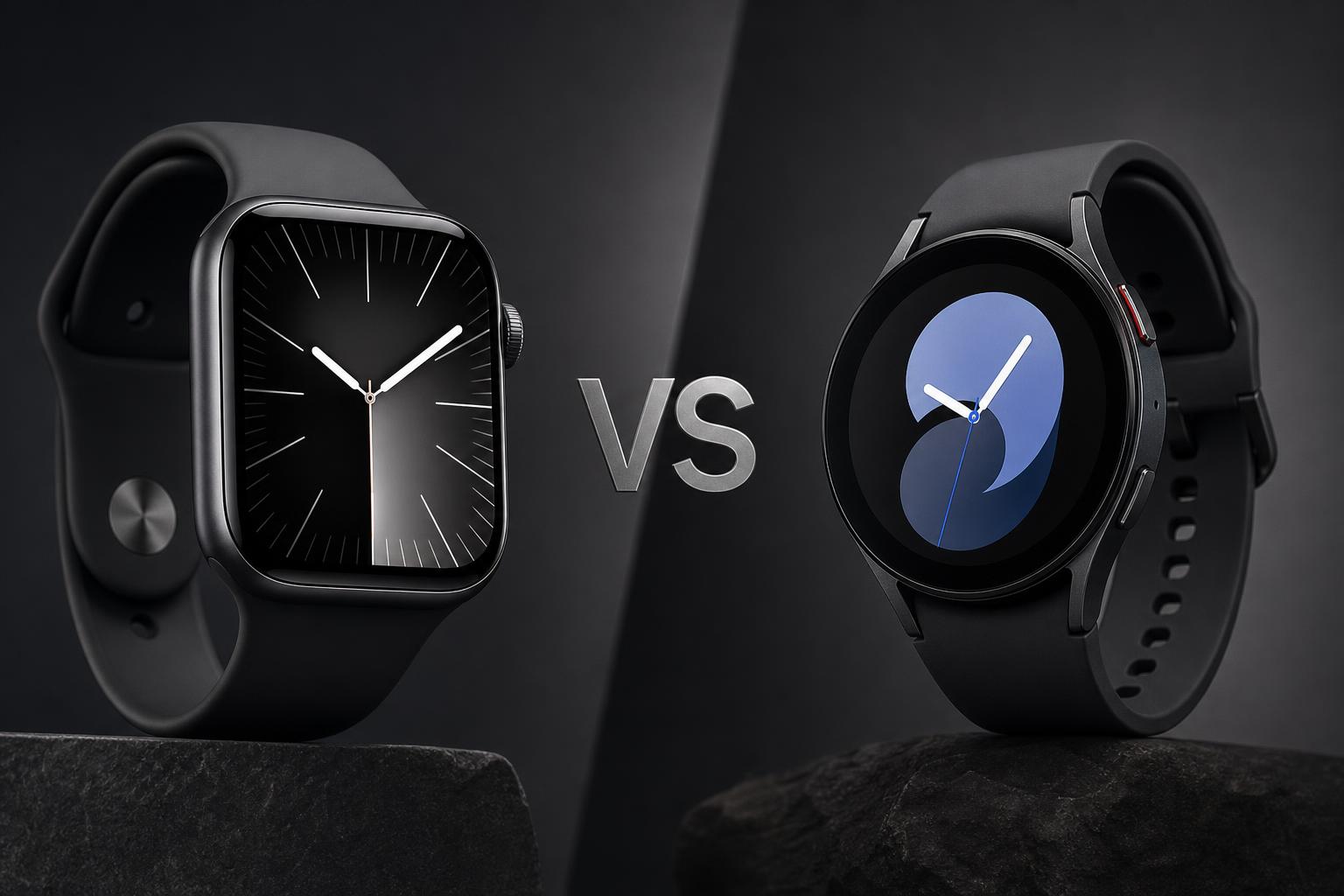
The Apple Watch Series 12 and Samsung Galaxy Watch9 are premium smartwatches aimed at different phone ecosystems. Apple’s model focuses on close iPhone integration, a broad collection of health and safety tools, fast charging and up to 64GB of capacity. Samsung’s watch offers a circular design, a brighter rated display, Wear OS with Google Play support and a lower starting price.
The choice is therefore less about picking a universal winner and more about matching the watch to your phone, preferred design and most important features. This comparison covers the verified specifications and official claims for both models, including what can and cannot be concluded about battery life and performance.
Quick verdict
Apple Watch Series 12 is the better choice for iPhone owners who want the broadest verified health, fitness, safety and workout feature set, alongside Apple services and Apple Intelligence-powered features. It also offers twice the listed storage of the Galaxy Watch9 and provides clearer official figures for endurance and fast charging.
Samsung Galaxy Watch9 is the better choice for Android users, particularly those who prefer a circular watch design, Wear OS apps, Google Gemini and Samsung Health features. It starts at $379.99, undercutting the Apple Watch Series 12’s $399 starting price, and its display reaches a higher stated peak brightness of 3,000 nits.
There is no verified overall performance or battery-life winner. Apple and Samsung use different processor platforms, and the cited research does not include directly comparable benchmark results. Samsung lists larger battery capacities, while Apple gives more specific endurance and charging claims.
Key specifications comparison
| Specification | Apple Watch Series 12 | Samsung Galaxy Watch9 |
|---|---|---|
| Starting price | $399 for 42mm GPS aluminum | $379.99 for 40mm Bluetooth |
| Sizes | 42mm and 46mm | 40mm and 44mm |
| Case materials | Aluminum, titanium and ceramic | Aluminum |
| Display | Always-On Retina wide-angle OLED LTPO3; up to 2,000 nits | Super AMOLED; up to 3,000 nits |
| Display resolution | 374×446 pixels at 42mm; 416×496 pixels at 46mm | 438×438 pixels at 40mm; 480×480 pixels at 44mm |
| Processor | Apple S11, 64-bit dual-core, 4-core Neural Engine | Qualcomm Snapdragon Wear Elite platform |
| Storage and memory | 64GB capacity | 2GB RAM and 32GB storage |
| Battery information | Up to 24 hours normal use; up to 38 hours Low Power Mode | 390mAh for 40mm; 445mAh for 44mm |
| Charging | Up to 80% in about 30 minutes | No comparable charging claim provided in the cited research |
| Water and dust resistance | 50-meter water resistance and IP6X dust resistance | 5ATM, IP68 and MIL-STD-810H compliance |
| Software | watchOS 27 | Google Wear OS with Samsung One UI Watch |
| Phone compatibility | iPhone 11 or later, including iPhone SE 2nd generation or later, with iOS 27 or later | Android and Google Play ecosystem; some health features require a compatible Samsung Galaxy phone |
Design and build
Apple Watch Series 12
Apple Watch Series 12 takes Apple’s familiar rectangular approach and is available in 42mm and 46mm case sizes. Buyers can choose from aluminum, titanium and ceramic case materials. That gives Apple a wider material range than Samsung, especially for shoppers looking beyond a standard aluminum construction.
The 42mm aluminum GPS model measures 42×37×9.7mm and weighs 32.2g. The 46mm aluminum GPS model measures 46×40×9.7mm and weighs 39.5g. Apple states that ceramic cases are slightly thicker and heavier. The watch has 50-meter water resistance and IP6X dust resistance, which suits the usual range of fitness and everyday use scenarios covered by those ratings.
The rectangular shape is important to the user experience. Compared with a circular watch, it provides a different layout for text, lists and app interfaces. The research does not establish that one shape is universally more usable, but buyers who already prefer Apple’s rectangular design will find the Series 12 more familiar.
Samsung Galaxy Watch9
Galaxy Watch9 uses a circular display and comes in 40mm and 44mm versions. It is offered in Bluetooth/Wi-Fi and LTE variants, giving buyers a choice between a connected model and a version with cellular connectivity. The cited specifications identify aluminum as the case material.
The 40mm model measures approximately 42.7×40.4×8.6mm and weighs 32g. The 44mm model measures approximately 46.0×43.7×8.6mm and weighs 34g. At approximately 8.6mm thick, Galaxy Watch9 is slimmer than the 9.7mm aluminum and titanium Apple Watch Series 12 measurements provided in the research.
Samsung lists 5ATM water resistance, IP68 dust and water resistance and MIL-STD-810H compliance. These ratings give the Galaxy Watch9 a strong specification sheet for a watch designed around fitness, health tracking and everyday wear. As with Apple, the ratings are specifications rather than a guarantee that every use condition will be suitable.
Display
Samsung has the brighter display on paper. Galaxy Watch9’s Super AMOLED panel is rated for up to 3,000 nits peak brightness, compared with up to 2,000 nits for Apple Watch Series 12. That could make the Galaxy particularly appealing to people who often check their watch outdoors or in bright conditions, although the cited information does not provide a directly comparable real-world visibility test.
Apple uses an Always-On Retina wide-angle OLED LTPO3 display. The 42mm model has a 374×446-pixel resolution, while the 46mm version has 416×496 pixels. Both are listed at 326 pixels per inch and use Ceramic Shield 2 on aluminum models. Titanium and ceramic versions use sapphire crystal protection.
Samsung’s 40mm watch has a 1.34-inch, 438×438-pixel display, while the 44mm version has a 1.47-inch, 480×480-pixel display and sapphire crystal protection. The circular format gives the watch its traditional watch appearance, while Apple’s rectangular panel presents information in a different shape.
There is no simple resolution comparison that makes one display the automatic winner. Apple publishes rectangular pixel dimensions and pixel density, while Samsung publishes circular panel sizes and square resolutions. The clearest verified difference is brightness: Galaxy Watch9 has the higher rated peak figure, while Apple provides the broader choice of case sizes and materials.
Performance
Apple Watch Series 12 uses the Apple S11 chip, described as a 64-bit dual-core processor with a 4-core Neural Engine. The Neural Engine is relevant to Apple’s stated Apple Intelligence-powered Siri AI and Audio Intelligence features, although the research does not provide independent measurements of how those features perform in everyday use.
Galaxy Watch9 uses Qualcomm’s Snapdragon Wear Elite platform. Samsung pairs that platform with 2GB of RAM and 32GB of storage. Apple lists 64GB of capacity but does not provide a directly comparable RAM figure in the supplied specifications.
Both watches therefore use current-generation platforms, but a definitive speed winner cannot be verified from the available research. The manufacturers use different operating systems and processor platforms, and no directly comparable independent benchmark results are provided. Buyers should be cautious about treating processor names alone as proof that one watch will open apps, handle voice requests or track workouts faster than the other.
In practical buying terms, ecosystem performance may matter more than a theoretical processor ranking. Apple Watch Series 12 is designed around the iPhone and watchOS, while Galaxy Watch9 is built around Android, Wear OS, Samsung One UI Watch and Google services.
Health, fitness and smart features
Apple’s feature set
Apple Watch Series 12 has a broad verified list of health, fitness and safety features. These include ECG, blood oxygen, temperature, sleep-apnea detection, hypertension features, readiness tracking and high-frequency heart-rate features. It also supports workout tracking, adding to the watch’s appeal for people who want one device covering general wellness, exercise and safety functions.
Apple also highlights watchOS 27, Apple Intelligence-powered Siri AI and Audio Intelligence. Compatibility is more restrictive than the operating system name might suggest: Apple states that the watch requires an iPhone 11 or later, including the iPhone SE 2nd generation or later, running iOS 27 or later. It is not designed for Android phones.
Samsung’s feature set
Galaxy Watch9 uses Google Wear OS with Samsung One UI Watch. Its cited software features include Google Gemini voice assistance and a selection of Samsung Health tools: Vitals, Energy Score, Sleep Coaching, Fitness Index, Daily Cardio Load, Heart Health Score, blood-pressure trends and sleep-apnea risk detection.
Samsung’s feature list is especially relevant to buyers already using Galaxy phones and Samsung Health. However, some health and wellness features require a compatible Samsung Galaxy phone, Samsung Health and a Samsung account. Android compatibility therefore does not mean every feature is available on every Android phone.
For health features, the best choice depends on the phone ecosystem and which specific tools matter most. Apple provides the broader list in the supplied research, while Samsung offers a strong combination of health scoring, sleep coaching, fitness metrics and Google-powered assistance.
Camera and graphics
Neither watch is presented as a camera-focused device. The cited specifications for both products do not provide a built-in camera specification, so neither should be selected on the expectation of taking photos or videos from the watch itself.
Apple lists an integrated 4-core Neural Engine as part of the S11 chip. Samsung specifies the Snapdragon Wear Elite platform. The research does not provide comparable graphics-performance figures, so it is not possible to identify a verified graphics winner. For both products, the more meaningful comparison is likely to be app support, interface responsiveness and ecosystem integration rather than camera capability.
Battery and charging
Apple Watch Series 12
Apple gives unusually clear endurance figures in the supplied specifications. Apple Watch Series 12 is rated for up to 24 hours of normal use and up to 38 hours in Low Power Mode. Apple also lists up to 10 hours of workout tracking and says the watch can reach up to 80% charge in about 30 minutes.
Those figures make charging speed a clear strength. The normal-use rating is still shorter than the multi-day runtime claims associated with some smartwatch designs, so buyers should understand that the Series 12 is designed around regular charging rather than indefinite use between charges.
Samsung Galaxy Watch9
Galaxy Watch9 has stated battery capacities of 390mAh for the 40mm version and 445mAh for the 44mm version. Samsung describes the battery as providing all-day health monitoring, but the cited official pages do not state a specific total-use runtime.
The larger listed capacities do not automatically prove longer real-world battery life. Screen brightness, health monitoring, workouts, LTE use, apps and software settings can all affect endurance, and the available research does not provide a controlled comparison. Samsung’s larger battery figures are useful context, but Apple’s more detailed endurance and charging claims make the Series 12 easier to evaluate from official information.
As a result, there is no verified battery winner. Choose Apple if a published fast-charging figure and specific Low Power Mode rating are particularly important. Choose Samsung if the stated battery capacities and Android ecosystem are more relevant to your decision, while recognising that a comparable total-use figure is not provided here.
Price and value
Apple Watch Series 12 starts at $399 in the US for the 42mm GPS aluminum model. The 46mm GPS aluminum version starts at $449. Titanium models start at $699, while ceramic models start at $899.
Samsung Galaxy Watch9 starts at $379.99 for the 40mm Bluetooth model. The 44mm Bluetooth version starts at $409.99. LTE models start at $429.99 for 40mm and $459.99 for 44mm.
On entry-level pricing, Samsung is $19.01 cheaper than the 42mm Apple model. That makes Galaxy Watch9 the more affordable starting point, especially for Android buyers who want Wear OS and a circular design. Apple counters with 64GB of capacity compared with Samsung’s 32GB, a wider selection of case materials and more detailed charging information.
Value depends heavily on compatibility. An iPhone owner cannot treat the cheaper Samsung price as a direct alternative because Apple Watch Series 12 is the model designed for the iPhone ecosystem, while some Samsung health features are tied to compatible Galaxy phones. The most economical purchase is therefore the watch that supports the buyer’s existing phone and desired services without requiring an ecosystem change.
Apple Watch Series 12: pros and cons
Pros
- Broad verified health, fitness, safety and workout-tracking feature set.
- 64GB capacity, twice the listed storage of Galaxy Watch9.
- Fast charging claim of up to 80% in about 30 minutes.
- Clear battery figures, including up to 24 hours of normal use and up to 38 hours in Low Power Mode.
- Choice of aluminum, titanium and ceramic cases.
- Strong integration with iPhone, watchOS, Apple Intelligence and Apple services.
Cons
- Requires a compatible iPhone and is not designed for Android phones.
- Its official normal-use rating is up to 24 hours, shorter than many multi-day smartwatch designs.
- Its 2,000-nit peak brightness rating is lower than Galaxy Watch9’s 3,000-nit figure.
- Its $399 starting price is higher than the Galaxy Watch9’s $379.99 entry price.
Samsung Galaxy Watch9: pros and cons
Pros
- Lower starting price than Apple Watch Series 12.
- Higher rated peak brightness of up to 3,000 nits.
- Stated battery capacities of 390mAh and 445mAh, depending on size.
- Works within the Android and Google Play ecosystem.
- Wear OS app support, Google Gemini and Samsung Health features.
- Available in Bluetooth/Wi-Fi and LTE versions.
Cons
- Some health and wellness features require a compatible Samsung Galaxy phone.
- 32GB storage is half the listed capacity of Apple Watch Series 12.
- Samsung does not provide a specific total-use runtime figure on the cited official product pages.
- The circular design and smaller 40mm display may provide less usable rectangular screen area for some apps.
Which watch is better for different buyers?
Best for iPhone owners
Apple Watch Series 12 is the clear fit for iPhone owners. Its compatibility requirement is restrictive, but its integration with iPhone, watchOS, Apple services and Apple Intelligence features is also its main advantage. The broader listed health and safety feature set further strengthens the case.
Best for Android users
Galaxy Watch9 is the more appropriate choice for Android users. It brings Wear OS, Google Play support and Google Gemini, while Samsung Galaxy owners can access the strongest connection to Samsung Health and its related features. Buyers should check whether their phone supports the health tools they want.
Best for a lower upfront price
Galaxy Watch9 wins on starting price, at $379.99 compared with $399 for Apple Watch Series 12. The difference is modest, but Samsung also offers a circular design and Android compatibility. The value advantage is strongest for Android buyers, since iPhone users cannot use Apple Watch Series 12 as an Android-compatible product.
Best for outdoor readability
Galaxy Watch9 has the higher official peak brightness rating, at up to 3,000 nits versus 2,000 nits for Apple Watch Series 12. That makes Samsung the stronger choice based on the published display figures, although the research does not include independent outdoor testing.
Best for health and fitness breadth
Apple Watch Series 12 has the broader verified list of health, fitness and safety features, including ECG, blood oxygen, temperature, sleep apnea, hypertension, readiness and high-frequency heart-rate features. Samsung remains compelling for buyers who prioritise Samsung Health tools such as Energy Score, Sleep Coaching, Fitness Index and Daily Cardio Load.
Best for battery confidence
Neither model can be named the definitive winner from the verified specifications. Samsung has larger stated battery capacities, but Apple provides clearer endurance and charging figures. Buyers who value predictable published runtime and rapid top-ups may prefer Apple, while those focused on capacity should note Samsung’s 390mAh and 445mAh figures.
Best for creators and camera use
Neither watch is a camera-focused choice. Neither manufacturer’s cited specifications provide a built-in camera specification, and the research does not establish a graphics-performance advantage. Choose between them for software, health features, compatibility and design instead.
Final verdict
Apple Watch Series 12 and Samsung Galaxy Watch9 are both capable premium smartwatch options, but they serve different buyers. Apple Watch Series 12 is the stronger recommendation for iPhone owners who want the widest verified health and safety feature set, 64GB of capacity, multiple case materials and clearly documented fast charging. Its main compromises are the iPhone requirement, shorter official normal-use rating and higher starting price.
Galaxy Watch9 is the better value-led option for Android users. It starts at $379.99, offers a brighter rated display, a circular design, Wear OS, Google Gemini and Samsung Health features. Its limitations include 32GB of storage, feature dependencies on compatible Samsung Galaxy phones and the lack of a specific total-use battery figure in the cited official material.
For most iPhone buyers, choose Apple Watch Series 12. For most Android buyers, choose Galaxy Watch9. If you are deciding without an existing phone preference, Samsung offers the lower entry price and broader Android direction, while Apple offers the more extensive verified health feature list and clearer charging information.
Frequently asked questions
Is Apple Watch Series 12 compatible with Android phones?
No. The verified specifications state that Apple Watch Series 12 requires an iPhone 11 or later, including iPhone SE 2nd generation or later, with iOS 27 or later. It is not designed for Android phones.
Is Samsung Galaxy Watch9 compatible with iPhone?
The supplied research positions Galaxy Watch9 within the Android and Google Play ecosystem and does not provide iPhone compatibility. Some of its health features also require a compatible Samsung Galaxy phone, Samsung Health and a Samsung account.
Which watch has the brighter display?
Samsung Galaxy Watch9 has the higher stated peak brightness, at up to 3,000 nits. Apple Watch Series 12 is rated for up to 2,000 nits.
Which watch has better battery life?
A definitive winner cannot be verified from the official figures provided. Galaxy Watch9 has 390mAh or 445mAh batteries depending on size, while Apple Watch Series 12 is rated for up to 24 hours of normal use and up to 38 hours in Low Power Mode. Apple also states that it can reach up to 80% charge in about 30 minutes.
Which watch has more storage?
Apple Watch Series 12 has 64GB of capacity. Galaxy Watch9 has 32GB of storage and 2GB of RAM, so Apple lists twice as much storage.
Does either smartwatch have a camera?
Neither manufacturer’s cited specifications provide a built-in camera specification. Neither watch should be chosen as a camera-focused device.
Sources
- Apple Watch Series 12 - Technical Specifications — Apple
- Introducing Apple Watch Series 12, with the all-new Health Sensing System — Apple Newsroom
- Shop Apple Watch Series 12 — Apple
- Discover the Galaxy Watch9 Smartwatch Features — Samsung
- What’s New With Galaxy Watch9? — Samsung Newsroom
- Buy the Samsung Galaxy Watch9 40mm Bluetooth — Samsung