
Apple Watch Series 12 vs Garmin fēnix 9: Which Smartwatch Should You Buy?
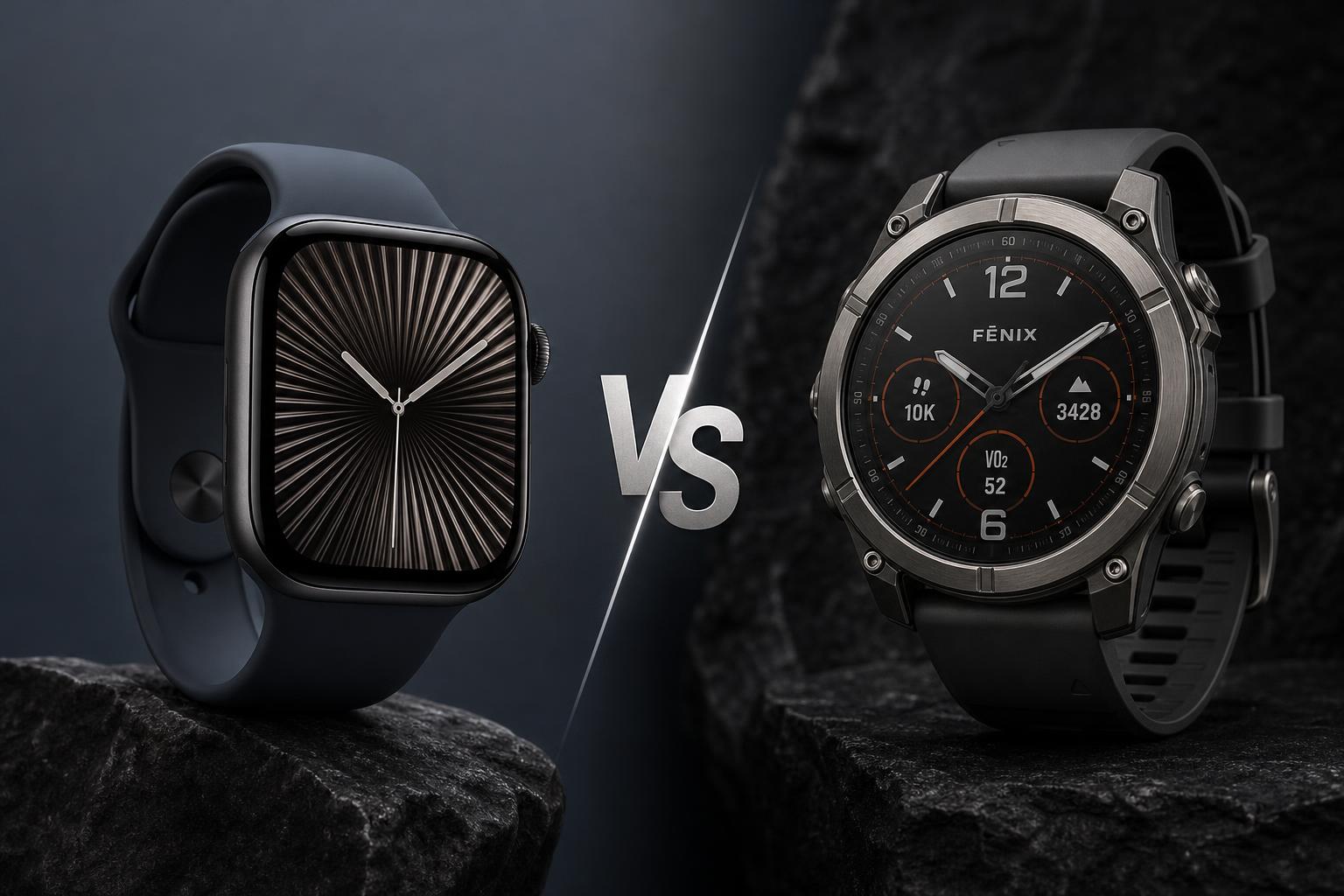
The Apple Watch Series 12 and Garmin fēnix 9 target different kinds of smartwatch buyer. Apple’s latest model is a comparatively compact, general-purpose smartwatch designed around the iPhone, watchOS, Apple services and everyday health features. Garmin’s fēnix 9 is a larger outdoor-focused watch aimed at athletes, adventurers and anyone who values long battery life, built-in maps and detailed training tools.
The price difference is substantial. Apple Watch Series 12 starts at $399 in the U.S., while Garmin fēnix 9 starts at $999.99. However, the Garmin offers a much longer stated battery life, rugged construction, extensive navigation features and 64GB of storage. The better choice depends less on brand preference than on whether you want a versatile everyday smartwatch or a specialist endurance and outdoor watch.
Quick verdict
Apple Watch Series 12 is the better choice for most iPhone owners. It costs considerably less, has a bright always-on display, supports a broad app and communications ecosystem, and offers extensive health and safety features including ECG, fall detection, crash detection, sleep apnea notifications and hypertension notifications. It also has fast charging, with up to 80% available in about 30 minutes.
Garmin fēnix 9 is the better choice for serious outdoor and endurance users. Its 51mm version is rated for up to 29 days in smartwatch mode, and it adds built-in routable maps, multi-band GPS, extensive multisport tools, training metrics, a sapphire lens, a titanium bezel and a 10 ATM water rating. It is much more expensive and substantially larger than the Apple Watch, but its capabilities are tailored to users who will make regular use of them.
Key specifications comparison
| Specification | Apple Watch Series 12 | Garmin fēnix 9 |
|---|---|---|
| U.S. starting price | Starts at $399 | Starts at $999.99 |
| Sizes | 42mm and 46mm | 43mm, 47mm and 51mm |
| Display | Always-on Retina wide-angle OLED, LTPO3, 1Hz refresh rate, 326ppi, up to 2,000 nits | AMOLED touchscreen with sapphire lens; 51mm model has a 1.4-inch, 454×454-pixel display |
| Processor | Apple S11, 64-bit dual-core processor, 4-core Neural Engine | Not specified in the cited product materials |
| Storage | 64GB | 64GB, with space for up to 7,000 songs according to Garmin |
| Battery | Up to 24 hours normal use; up to 38 hours Low Power Mode | 51mm model: up to 29 days smartwatch mode; up to 42 days Low Power Watch Mode |
| Charging | Up to 80% in about 30 minutes | Charging details are not specified in the cited research |
| Water and dust resistance | Water resistant to 50 metres; IP6X dust resistant | 10 ATM water rating |
| Connectivity | Bluetooth 5.3, Wi-Fi 4, Precision L1 GPS and optional cellular | Multi-band GPS; standard model does not include the fēnix 9 Pro’s inReach LTE and satellite connectivity |
| Phone compatibility | Requires iPhone 11 or later, including iPhone SE 2nd generation or later, with iOS 27 or later | Supports compatible Apple and Android phones through Garmin’s pairing and app ecosystem |
Specifications can vary by case size, material and connectivity configuration. Garmin’s battery figures in this comparison refer specifically to the 51mm fēnix 9 model.
Design and build
Apple Watch Series 12
Apple Watch Series 12 uses a rectangular case and is available in 42mm and 46mm sizes. The design is comparatively compact next to the 51mm Garmin fēnix 9, and buyers can choose from aluminum, titanium and ceramic models. The 42mm aluminum and titanium cases measure 42×37×9.7mm, while the 46mm versions measure 46×40×9.7mm. The aluminum GPS versions weigh 32.2g in 42mm and 39.5g in 46mm, although other materials and cellular configurations vary.
Material choice also affects the front glass. Aluminum models use Ceramic Shield 2, while titanium and ceramic models use sapphire crystal. Apple lists water resistance to 50 metres and IP6X dust resistance, which gives the Series 12 useful protection for everyday wear, exercise and swimming-related use within its stated rating.
The Apple Watch is the less imposing option, particularly in its smaller sizes. That matters if you prefer a watch that sits discreetly on the wrist or if a large outdoor watch would feel uncomfortable during sleep or daily wear. Its rectangular shape also makes it well suited to notifications, apps and text-heavy information.
Garmin fēnix 9
Garmin takes a more traditional outdoor-watch approach, with a round case available in 43mm, 47mm and 51mm sizes. The cited 51mm model measures 51×51×14.7mm and weighs 91g including the band, or 65g for the case alone. That is substantially larger and heavier than the listed Apple Watch aluminum models.
The construction is designed for demanding outdoor use. The fēnix 9 has a titanium bezel, a fibre-reinforced polymer case with a titanium rear cover, a sapphire crystal lens and leakproof inductive buttons. It also has a 10 ATM water rating, which is a stronger stated water-resistance rating than the Apple Watch Series 12’s 50-metre rating.
This rugged construction is one of the Garmin’s main reasons for existing. It is a better fit for users who regularly hike, run trails, navigate, train across multiple sports or spend extended periods outdoors. The trade-off is clear: the Garmin’s larger case may provide more room for battery and outdoor features, but it is less compact and costs much more.
Display
Both watches use bright colour displays and touchscreen interaction, but their shapes and priorities differ. Apple specifies an always-on Retina wide-angle OLED display using LTPO3 technology, a 1Hz refresh rate and 326 pixels per inch. Brightness reaches up to 2,000 nits. Resolution is 374×446 pixels on the 42mm model and 416×496 pixels on the 46mm model.
The Apple display is therefore focused on clear everyday viewing, notifications and apps in a compact rectangular format. Its always-on design means key information can remain visible without requiring a full wrist raise or tap.
Garmin specifies an AMOLED touchscreen with a sapphire lens. The 51mm model has a 1.4-inch display with 454×454-pixel resolution. The round format suits Garmin’s traditional watch design and its navigation and activity screens. The sapphire lens should also appeal to buyers who place a high value on scratch resistance and outdoor durability, although the cited research does not provide a direct scratch-resistance comparison.
There is no single winner here. Apple offers more published display detail, including its 2,000-nit brightness rating and 326ppi figure. Garmin combines an AMOLED panel with a sapphire lens and larger-case options. Buyers who prefer a rectangular interface for apps and messages may favour Apple, while users who want an outdoor watch face with a protective sapphire lens may prefer Garmin.
Performance and everyday use
Apple’s general-purpose platform
Apple specifies an S11 chip with a 64-bit dual-core processor and a four-core Neural Engine. The watch has 64GB of capacity and runs watchOS. These published specifications, combined with Apple’s app ecosystem, make the Series 12 the stronger general-purpose smartwatch platform on paper.
It is designed to handle health and fitness tracking alongside notifications, Apple Pay, the App Store, Siri AI and other Apple services. Optional cellular connectivity is available, although the exact experience and availability depend on the configuration and region. Apple’s close integration with the iPhone is a major part of the product’s appeal.
There is an important compatibility restriction: Apple Watch Series 12 requires an iPhone 11 or later, including the iPhone SE 2nd generation or later, with iOS 27 or later. Android phone owners cannot choose it as a comparable cross-platform option.
Garmin’s specialist performance focus
Garmin does not specify a processor for the fēnix 9 in the cited product materials. That means a direct chip comparison is not possible. Garmin instead highlights faster map panning, 50% more RAM than the fēnix 8, and its extensive outdoor and endurance features.
The fēnix 9 supports Garmin Connect and Connect IQ, built-in routable maps, multi-band GPS, Garmin Pay, music storage, training readiness, training status, sleep score and sleep insights. It also supports extensive multisport, navigation, rucking, rowing and outdoor features. These tools make it more specialised than the Apple Watch, particularly for people who want structured training information and navigation directly on the watch.
Garmin supports compatible Apple and Android phones through its pairing and app ecosystem. This gives it a broader phone compatibility advantage, although the overall experience differs depending on the connected phone and the user’s preferred apps and services.
Health, fitness, camera and graphics
Apple Watch Series 12 has a broad health and safety feature set. The cited specifications include ECG, blood oxygen sensing, temperature sensing and depth sensing to 6 metres. Apple also lists fall detection, crash detection, sleep apnea notifications and hypertension notifications among the Series 12’s capabilities. These health and medical-related features can have device, language, regional, subscription or regulatory limitations, so buyers should check availability for their location and setup.
Garmin fēnix 9 is more focused on fitness, endurance and outdoor performance. Its feature set includes training readiness, training status, sleep score and insights, multisport tools, navigation, maps, rucking and rowing functions. Garmin also lists ECG support. The watch includes multi-band GPS, which is particularly relevant to users who prioritise route tracking and outdoor navigation.
Neither manufacturer specifies a built-in camera for these watches. Apple does specify the S11 chip and four-core Neural Engine, but that should not be interpreted as a camera or graphics specification. Garmin specifies the display and 64GB storage but does not disclose a processor or graphics processor in the cited materials.
For creators or people looking for camera-related features, neither product is a camera-focused choice. Garmin Epic can group activities into shareable stories and can include photos through Garmin Connect, but the watch itself does not have a manufacturer-specified built-in camera.
Battery and charging
Battery life is the clearest advantage for Garmin. The 51mm fēnix 9 is rated for up to 29 days in smartwatch mode and up to 42 days in Low Power Watch Mode. Garmin also lists up to 54 hours in normal activity mode, 21 hours with activity and music, 145 hours in Max Battery mode, 65 hours in Extended Battery mode, 45 hours in Max Accuracy mode and 31 days in Expedition mode.
Those figures vary significantly according to the selected mode and activity. Even so, the headline difference is substantial. The Garmin is intended to reduce charging interruptions during long training sessions, trips and expeditions.
Apple Watch Series 12 is rated for up to 24 hours of normal use, up to 38 hours in Low Power Mode and up to 10 hours of workout tracking. Its advantage is charging speed: Apple says the watch can reach up to 80% in about 30 minutes.
Apple’s battery life is adequate for daily use if charging is part of your routine, but it is far shorter than Garmin’s stated smartwatch-mode figure. Garmin wins decisively for multi-day and expedition use. Apple is more convenient for a user who prefers short, frequent charging sessions and wants to get back to a high charge quickly.
Software and features
watchOS gives Apple Watch Series 12 a broad smartwatch identity. The watch supports Apple Pay, the App Store, Siri AI, health and fitness tools, safety features and third-party apps. For someone already using an iPhone and Apple services, that integration is likely to be more important than raw specifications.
Apple’s feature list is extensive, but some functions have limitations. The manufacturer notes regional and compatibility restrictions for health, cellular and medical-related features, while Apple Intelligence-related functions may also depend on device, language, region or other requirements.
Garmin’s software is less centred on general-purpose apps and more focused on training, navigation and outdoor activity. Garmin Connect provides the wider companion experience, while Connect IQ supports compatible additions. Built-in routable maps, music storage, Garmin Pay, a LED flashlight, multi-band GPS and extensive activity profiles give the fēnix 9 a strong specialist feature set.
The standard fēnix 9 does not include the fēnix 9 Pro’s built-in inReach LTE and satellite connectivity. Buyers who need those specific communication features should not assume they are included with the standard model.
Price and value
Apple Watch Series 12 starts at $399 in the U.S., compared with $999.99 for Garmin fēnix 9. The difference is $600.99 before considering any variation caused by case size, materials, cellular configurations or other options.
At its lower starting price, Apple offers strong value for iPhone owners who want notifications, apps, payments, health tracking, safety features and everyday fitness tools in one device. Its fast charging and compact case also make it easier to fit into a normal daily routine.
Garmin’s higher price is easier to justify for users who will actively use its built-in maps, long battery life, multisport tracking, endurance metrics, multi-band GPS and rugged materials. For that audience, the fēnix 9 is not simply a more expensive lifestyle smartwatch; it is a specialist training and navigation tool.
For most casual smartwatch buyers, Apple is the value winner. For serious athletes, hikers, expedition users and outdoor enthusiasts, Garmin may provide better value despite its much higher entry price.
Apple Watch Series 12: pros and cons
Pros
- Much lower starting price of $399 in the U.S.
- Bright always-on OLED display with up to 2,000 nits and 326ppi.
- Strong integration with iPhone, watchOS, Apple services and third-party apps.
- Broad health and safety feature set, including ECG, fall detection, crash detection, sleep apnea notifications and hypertension notifications.
- Fast charging can reach up to 80% in about 30 minutes.
- Available in 42mm and 46mm sizes, with aluminum, titanium and ceramic options.
Cons
- Requires an iPhone 11 or later and iOS 27 or later.
- Battery life is substantially shorter than the Garmin fēnix 9.
- The manufacturer does not specify a built-in camera.
- Some health, cellular, Apple Intelligence and medical-related features have regional, compatibility, language, subscription or regulatory limitations.
Garmin fēnix 9: pros and cons
Pros
- Much longer battery life, with the 51mm model rated for up to 29 days in smartwatch mode.
- Built-in routable maps and multi-band GPS.
- Strong navigation, multisport, endurance-training and outdoor features.
- 64GB storage with capacity for maps and up to 7,000 songs according to Garmin.
- Sapphire crystal lens, titanium bezel, rugged case construction and 10 ATM water rating.
- Compatible with supported Apple and Android phones through Garmin’s ecosystem.
Cons
- Starts at $999.99, substantially more than Apple Watch Series 12.
- The 51mm model is substantially larger and heavier than the Apple Watch Series 12 models listed here.
- Garmin does not specify a processor or built-in camera in the cited materials.
- The standard model does not include the fēnix 9 Pro’s inReach LTE and satellite connectivity.
Which watch is better for different buyers?
For iPhone owners wanting an everyday smartwatch
Choose Apple Watch Series 12. It offers the broader general-purpose smartwatch experience, stronger iPhone integration, access to Apple services and a much lower starting price. Its health, safety, payment and app features make it the more flexible daily companion.
For Android phone owners
Choose Garmin fēnix 9 if you want one of these two products. Apple Watch Series 12 requires a compatible iPhone, while Garmin supports compatible Apple and Android phones through Garmin Connect and its pairing ecosystem.
For runners, hikers and endurance athletes
Choose Garmin fēnix 9 if your priorities are training depth, route navigation, multisport activity tracking and long periods away from a charger. Apple still offers fitness and health features, but Garmin’s maps, multi-band GPS and endurance-oriented tools are more closely aligned with this use case.
For users who prioritise battery life
Choose Garmin fēnix 9 by a wide margin. The 51mm model’s stated smartwatch-mode battery life is up to 29 days, compared with up to 24 hours for Apple Watch Series 12. Apple is the better option only if fast charging is more important than charging frequency.
For smaller wrists or a lighter watch
Choose Apple Watch Series 12, especially the 42mm version. The available Apple case sizes are more compact, while the 51mm Garmin model measures 51×51×14.7mm and weighs 91g with the band. Garmin does offer 43mm and 47mm sizes, but buyers should still compare the individual case and band configurations.
For maps and outdoor navigation
Choose Garmin fēnix 9. Built-in routable maps, multi-band GPS and outdoor activity features are central strengths. Apple Watch Series 12 has Precision L1 GPS and fitness tools, but the cited research does not list the same built-in mapping emphasis.
Final verdict
The Apple Watch Series 12 and Garmin fēnix 9 are not direct substitutes in every respect. Apple is the more affordable and versatile smartwatch for iPhone users. It has the broader app and services ecosystem, a bright always-on display, extensive health and safety capabilities, compact sizing and fast charging. For everyday notifications, payments, fitness tracking and connected convenience, it is the stronger overall recommendation.
Garmin fēnix 9 is the specialist option. Its value comes from features that are particularly useful for athletes and outdoor users: exceptionally long battery life, built-in maps, multi-band GPS, detailed training functions, generous storage and rugged construction. The price and size are difficult to justify if you only need basic smartwatch features, but they may be worthwhile for someone who will use the watch for endurance training, navigation, multisport activity or extended outdoor trips.
Overall, choose Apple Watch Series 12 for the better everyday value and Garmin fēnix 9 for the better outdoor and endurance experience.
FAQs
Is Apple Watch Series 12 cheaper than Garmin fēnix 9?
Yes. Apple Watch Series 12 starts at $399 in the U.S., while Garmin fēnix 9 starts at $999.99. The Garmin costs $600.99 more at the stated starting prices.
Which has better battery life, Apple Watch Series 12 or Garmin fēnix 9?
Garmin fēnix 9 has much better battery life. The 51mm model is rated for up to 29 days in smartwatch mode and up to 42 days in Low Power Watch Mode. Apple Watch Series 12 is rated for up to 24 hours in normal use, although it can reach up to 80% charge in about 30 minutes.
Can Apple Watch Series 12 work with an Android phone?
No. Apple Watch Series 12 requires an iPhone 11 or later, including iPhone SE 2nd generation or later, with iOS 27 or later.
Does Garmin fēnix 9 work with iPhone and Android?
Garmin states that the fēnix 9 supports compatible Apple and Android phones through its pairing and Garmin app ecosystem. The exact experience depends on phone compatibility and the features being used.
Which watch is better for hiking and navigation?
Garmin fēnix 9 is the stronger choice for hiking and navigation because it includes built-in routable maps, multi-band GPS and extensive outdoor features. Its long battery life is also better suited to extended activities.
Do either of these watches have a built-in camera?
Neither manufacturer specifies a built-in camera for these watches. Apple specifies the S11 processor and Neural Engine, while Garmin specifies display, storage and outdoor features but does not list a camera.
Sources
- Introducing Apple Watch Series 12, with the all-new Health Sensing System — Apple
- Apple Watch Series 12 Technical Specifications — Apple
- Apple Watch Series 12 — Apple
- Garmin expands its flagship performance smartwatch lineup with fēnix 9 and fēnix 9 Pro — Garmin
- Garmin fēnix 9 Product Comparison and Specifications — Garmin
- Garmin fēnix 9 51mm Product Page — Garmin